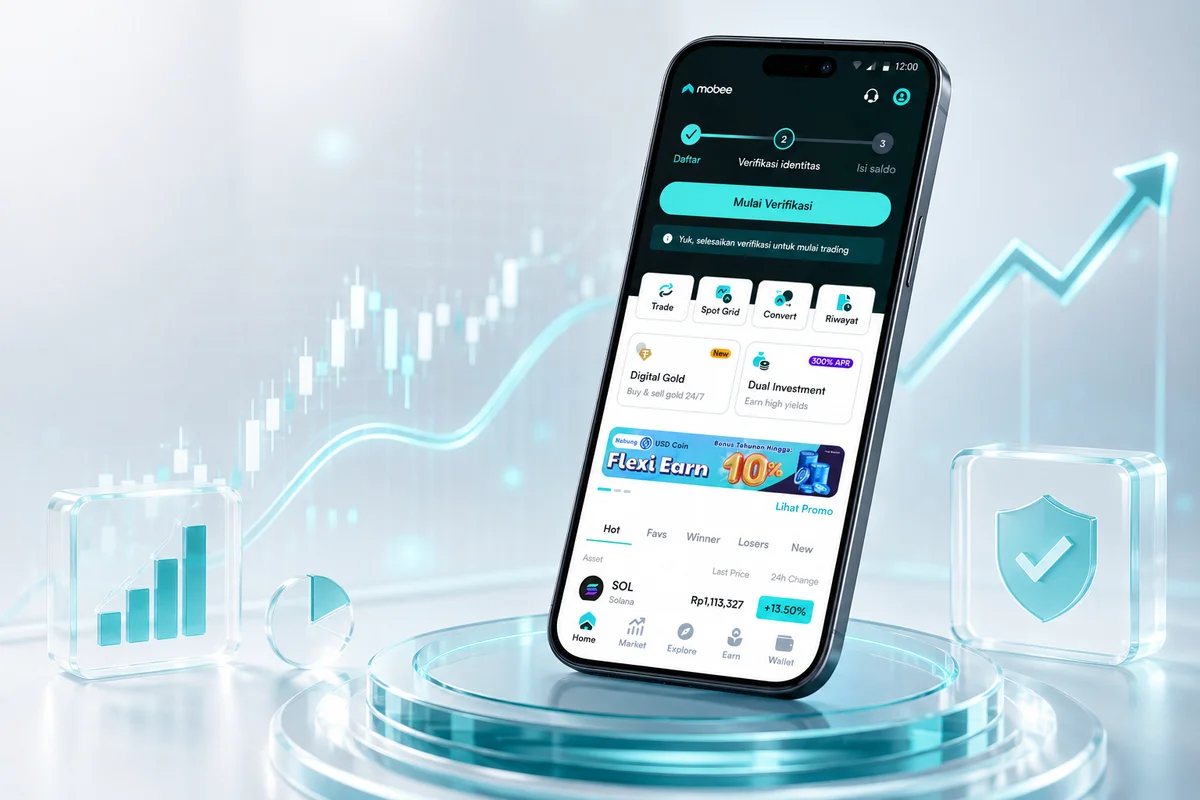
A trading platform is a digital service that connects traders and investors to financial markets so they can buy and sell assets like stocks, crypto, forex, or commodities. It shows real-time prices, processes orders, stores funds, and provides analytical tools in one interface. In short, a trading platform is the bridge between an investment decision and trade execution. The right platform determines how safe your funds are, how fast your orders fill, and how much transaction cost you pay. Start by understanding price behavior through crypto trading tips.
Key Points
- Definition: A trading platform is the main gateway for buying and selling digital and traditional assets.
- Security: Choose a platform with a license and a clear operating history.
- Fees: Transaction fees strongly affect short-term trading results.
- Liquidity: High-volume platforms make entries and exits easier.
- Risk: A good platform reduces technical risk but cannot remove market risk.
How Trade Execution Works
Every time you press the buy or sell button, the platform runs a series of behind-the-scenes processes.
1. Order created: You select the asset, amount, and order type such as market or limit.
2. Order routing: The system sends your order to the order book or a liquidity provider.
3. Order matching: Bid and ask prices meet, and the transaction is recorded.
4. Fund settlement: Assets enter your platform balance and are recorded in an internal ledger.
5. Portfolio update: Your holdings are updated, and transaction history becomes available for tax reporting.
Speed determines the final price you get. In a volatile market, a market order can fill at a slightly different price from what you saw on screen.
Core Functions of a Trading Platform
A trading platform is more than a buy and sell button. Several core functions help you manage risk and spot opportunities.
• Real-time prices: Shows bid, ask, and price changes within seconds.
• Order execution: Supports market orders, limit orders, stop loss, and Spot Trade features.
• Portfolio management: Displays positions, balances, history, and profit-loss automatically.
• Fund security: Stores assets in hot and cold wallets with access controls.
• Analysis tools: Provides charts, indicators, and historical data for on-chain analysis.
The more complete these functions are, the easier it becomes to manage risk and read market moves.
Benefits of Using a Trusted Trading Platform
According to CoinGecko data as of March 2026, the global crypto market capitalization is around 3.2 trillion US dollars. A larger market increases the need for platforms with deep liquidity. In addition, Crypto.com Market Sizing recorded about 617 million global crypto owners as of June 2024.
• Faster execution: Deep liquidity reduces price gaps and slippage.
• Stronger security features: Includes identity verification, address whitelisting, and transaction alerts.
• Global market access: Lets you buy foreign assets without opening an overseas bank account.
• Clean transaction records: Makes it easier to track profits and report crypto tax.
These benefits do not appear automatically. You still need to check the platform reputation and compare providers.
Key Risks and How to Reduce Them
Every trading platform carries different risks. According to CoinMarketCap data as of April 2026, 24-hour crypto trading volume often exceeds 100 billion US dollars on busy days. That volume creates opportunity, but also demands fast execution.
• Hacking risk: Funds can disappear if the platform has security gaps. Mitigation: choose a platform with reserve funds and layered security.
• Liquidity risk: Low volume makes orders hard to fill when prices move quickly. Mitigation: check 24-hour volume before entering.
• Scam risk: Many fake sites imitate popular platforms. Mitigation: always open the official website and verify the OJK license status.
• User error risk: Choosing the wrong order can cause major losses. Mitigation: learn the basics of day trading before execution.
• Regulatory risk: Changes in tax and supervision rules can affect platform operations. Mitigation: monitor the latest policies.
Market risk remains even if the platform is safe. Use small position sizes while you are still learning.
How to Choose a Trading Platform
No single platform fits everyone. Bappebti recorded Indonesia crypto asset transactions reaching IDR149 trillion in 2023, showing that the local base remains active. Since January 2025, OJK officially supervises crypto assets under the P2SK Law.
1. Check legality: Make sure the platform is registered or licensed by a regulator such as OJK.
2. Compare costs: Compare spot fees, withdrawal fees, and price spreads.
3. Evaluate security: Review breach history, asset storage, and authentication features.
4. Test the interface: Use a demo account or start with a small amount.
5. Read user complaints: Look for issues around withdrawals and customer support.
Once you have a shortlist, test the platform with small transactions. Do not move all assets from another platform immediately.
Trading Platform Comparison Table
This table shows the trade-off between convenience and control. Choose based on your priorities, not just the current trend.
Conclusion
A trading platform is the foundation of all asset buying and selling activities, but security and costs heavily affect the final result. You need to match the platform type with your asset, capital, experience, and feature needs. Data such as market capitalization and trading volume helps you understand how large the ecosystem is. Start with a licensed platform, test with small funds, and keep learning about risk before increasing your position.
FAQ
Start with Mobee
Mobee is a digital asset platform licensed and supervised by OJK, helping users explore crypto and investment products with clearer access and practical learning. Start your investment journey through Mobee and choose products that match your goals and risk profile.