Money Depreciation: Causes, Impacts, and Investment Strategies
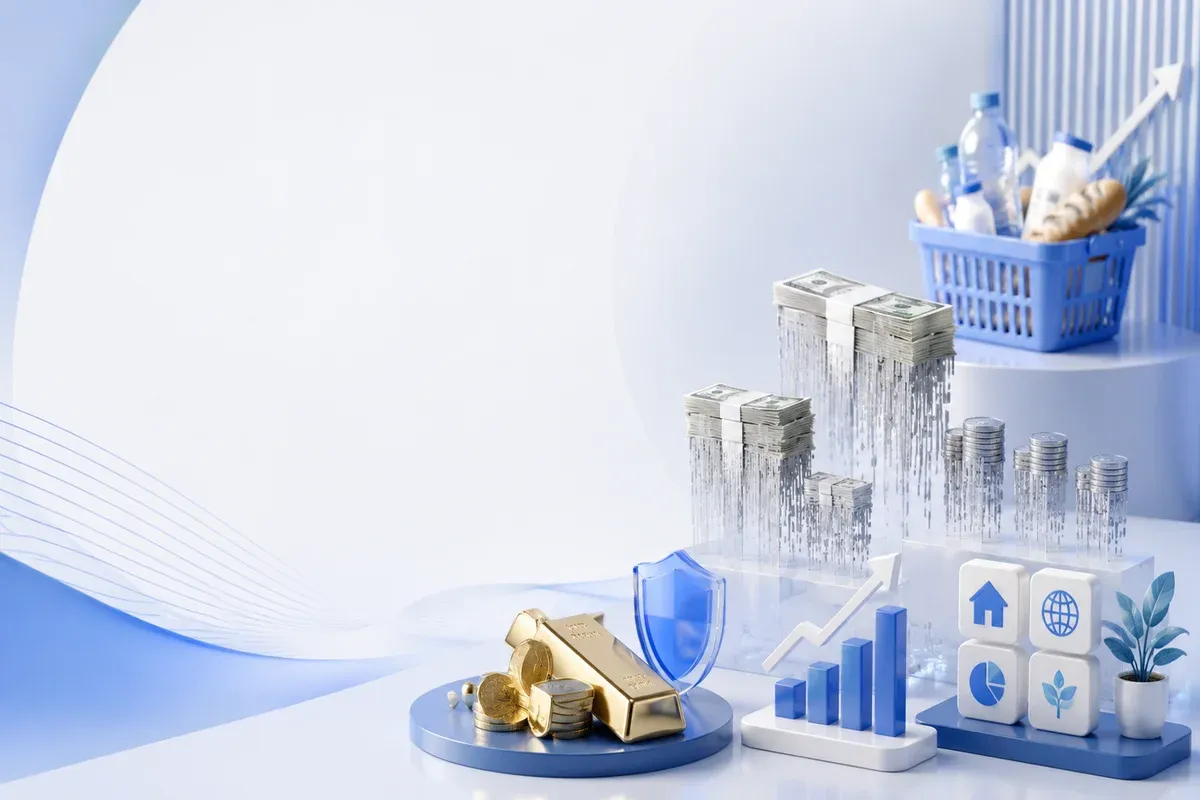
Depreciation of money value refers to the decline in purchasing power of a currency over time, meaning the same amount of money can buy fewer goods and services than before. This phenomenon occurs when the money supply grows faster than the production of goods and services, gradually eroding the intrinsic value of currency. For individuals, the impact is felt through rising prices of daily necessities, shrinking savings, and higher living costs. Understanding the causes and ways to hedge against currency depreciation is crucial for maintaining financial stability amid global and domestic inflationary pressures.
Key Points
-
Definition: Depreciation of money value is the reduction in purchasing power due to inflation or other economic factors.
-
Main causes: High inflation, loose monetary policy, and supply-demand imbalances.
-
Direct impact: Lower purchasing power, eroded savings, and higher cost of living.
-
Hedge assets: Gold, real estate, and measured investment instruments can protect wealth.
-
Current data: Indonesia's inflation is estimated at 3-4% in 2026, while gold prices have risen an average of 8-10% per year.
What Is Depreciation of Money Value
Depreciation of money value is the condition where the purchasing power of money declines, so with the same amount of money, you can buy fewer goods or services compared to an earlier period. This term is often equated with inflation, but inflation is the primary cause, while depreciation is the effect. In modern economies, most fiat currencies gradually lose value because central banks continuously print new money.
According to Bank Indonesia data as of February 2026, core inflation stands at around 2.8-3.2%, meaning the Rupiah's purchasing power erodes each year. If left unaddressed, savings that are not invested will lose significant value over the long term. Therefore, understanding this mechanism is essential to take protective measures.
Main Causes of Money Value Depreciation
Several key factors drive the continuous decline in money value:
• Excess inflation: When the money supply grows faster than economic output, prices rise and purchasing power falls. For example, quantitative easing policies by global central banks during 2020-2022 fueled high inflation in many countries.
• High aggregate demand: A surge in demand for goods and services without a matching supply pushes prices up, as seen after lockdowns.
• Inflation expectations: If households and businesses expect prices to rise, they tend to raise prices early, creating a self-reinforcing inflation cycle.
• Currency depreciation: When a currency weakens against foreign currencies, import prices rise, driving domestic inflation.
• Fiscal and monetary policy: Large budget deficits encourage governments to print money or borrow, ultimately weakening the currency.
Direct Impact on Purchasing Power
The most tangible impact of money value depreciation is the decline in purchasing power. According to a survey by Statistics Indonesia (BPS) as of March 2026, staple goods prices rose an average of 5.2% year-on-year. This means that with IDR 100,000 In 2026, you could only buy about 95% of the same goods in 2026.
Other effects include:
• Loss of real savings value: If interest rates are below inflation, the purchasing power of saved money decreases.
• Rising cost of living: Education, healthcare, and transportation also rise, burdening middle- and lower-income groups.
• Economic inequality: Those with productive assets are more protected, while those relying on fixed wages or pensions are hit hardest.
• Changes in consumption patterns: People tend to reduce non-essential spending and switch to cheaper substitutes.
Relationship with Inflation and Historical Examples
Inflation is the primary driver of money value depreciation. Historical data shows that high inflation in Indonesia during the 1998 crisis (over 50%) devastated the Rupiah's purchasing power. Similar hyperinflation in Zimbabwe (2008) and Venezuela (2018) caused currencies to lose nearly all value.
In the US, as reported by the Federal Reserve as of April 2026, the dollar has lost about 85% of its purchasing power since 1970. This means one dollar in 1970 is worth only about 15 cents today. This example shows how currency depreciation happens gradually but continuously, even in stable monetary systems.
How to Protect Against Money Value Depreciation
To protect wealth from currency depreciation, you need to allocate funds to assets that tend to rise with inflation. Common strategies include:
• Investing in gold: Gold is a classic inflation hedge. According to gold price history, gold prices in Indonesia have risen an average of 8-10% per year over the past decade.
• Stock investments: Stocks of fundamentally strong companies tend to adjust product prices with inflation, so share values rise over time. Learn more about stock investing for beginners.
• Real estate: Property prices usually increase with inflation, though liquidity is lower.
• Mutual funds and bonds: Instruments with yields above inflation can preserve purchasing power.
• Limited crypto: Some cryptocurrencies like Bitcoin have limited supply, but volatility is high. Read about crypto types to understand risks.
• Staking and Earn: Platforms like Mobee offer crypto staking and Earn products yielding up to 15-20% per year, helping fight inflation.
Comparison of Hedging Assets
Each hedge asset has different benefits and risks. The table below summarizes:
| Asset | Average Annual Return | Main Risk | Liquidity |
|---|---|---|---|
| Gold | 8–10% | No direct passive income and potential storage costs | Medium |
| Real Estate | 5–10% | High maintenance costs and relatively low liquidity | Low |
| Stocks | 10–15% with market risk | Market volatility and changes in company performance | High |
| Mutual Funds | 5–10% | Portfolio management risk and management fees | Medium |
| Crypto (Bitcoin) | 20–50% with high volatility | Extreme volatility, regulatory changes, and market sentiment | High |
| Staking/Earn | 10–25% | Smart contract, platform, underlying asset, and lockup risks | Varies |
Note: Return ranges are illustrative estimates based on historical performance and do not guarantee future results.
Conclusion
Currency depreciation is an unavoidable feature of fiat monetary systems, but its impact can be minimized with proper financial strategies. Understanding the causes of inflation, monitoring economic data, and selecting hedge assets aligned with your risk profile are essential first steps. Do not let idle savings lose real value over time.
FAQ
What is the difference between currency depreciation and inflation?
Inflation is a general increase in the prices of goods and services over time. A decline in purchasing power is one of its effects, as the same amount of money can buy fewer goods and services. This differs from exchange-rate depreciation, which refers to a currency losing value against another currency.
Can currency depreciation be stopped?
A gradual decline in purchasing power is difficult to eliminate completely because many central banks aim to maintain low and stable inflation. However, excessively high inflation and hyperinflation can be reduced through disciplined monetary policy, responsible fiscal management, and stable supplies of goods and services.
How do you calculate currency depreciation?
The decline in purchasing power can be estimated by comparing the cost of the same basket of goods over time. For example, if its price rises from $100 to $110, the reduction in purchasing power is calculated as 1 − (100 ÷ 110), which is approximately 9.1%.
Does saving in a bank protect against currency depreciation?
It depends on whether the net interest earned is higher than inflation. When the interest rate after taxes and fees is below the inflation rate, the account balance may increase in nominal terms while its purchasing power continues to decline.
Which asset is safest from currency depreciation?
No asset is completely protected from inflation or changes in market conditions. Gold and real estate are often used to preserve value over the long term, while stocks and mutual funds may offer higher return potential with different levels of risk. Diversification should be aligned with investment goals, time horizon, liquidity needs, and risk tolerance.
Start with Mobee
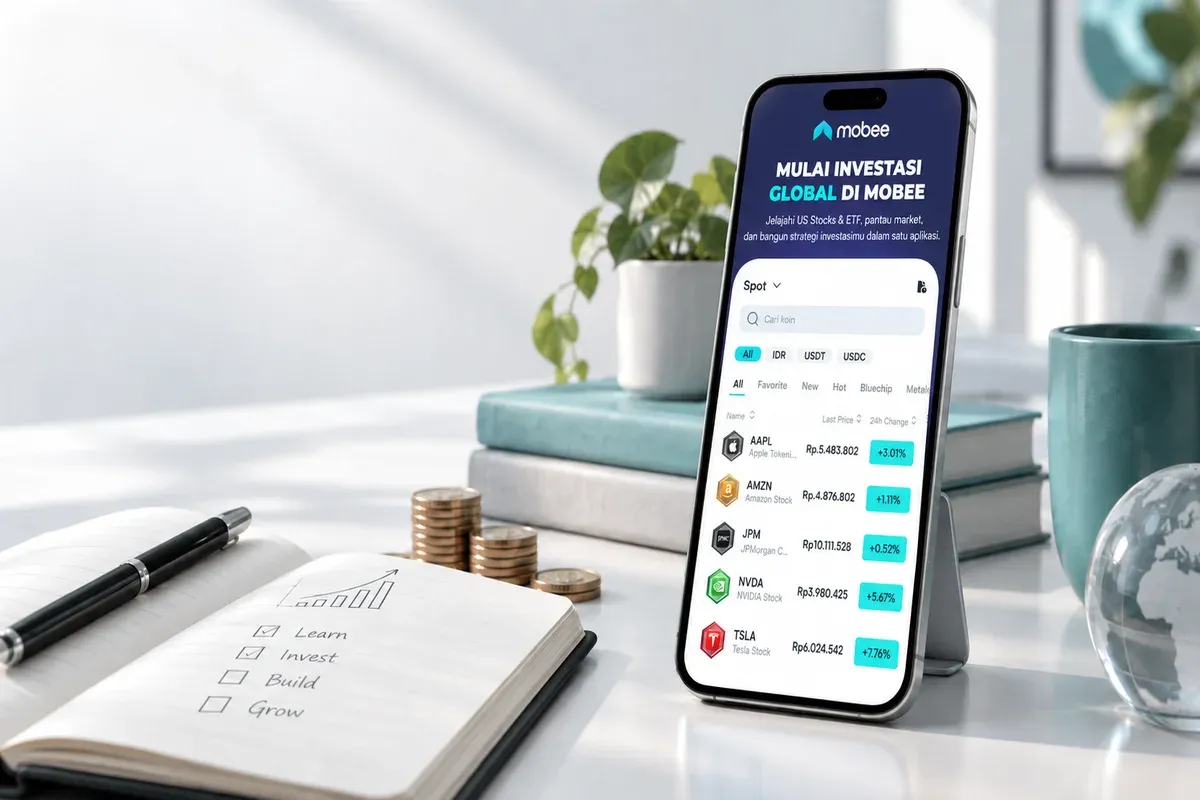
Mobee is a digital asset platform licensed and supervised by OJK, helping users explore crypto and investment products with clearer access and practical learning. Start your investment journey through Mobee and choose products that match your goals and risk profile.
 Direct market access from the app
 Start exploring digital assets with Mobee
Track the market, learn about digital assets, and start trading more conveniently with the Mobee App.
Mobee is licensed and supervised by the OJK. Not a solicitation to buy or sell any asset.