Binance Coin: Investment Opportunity and Profit Potential
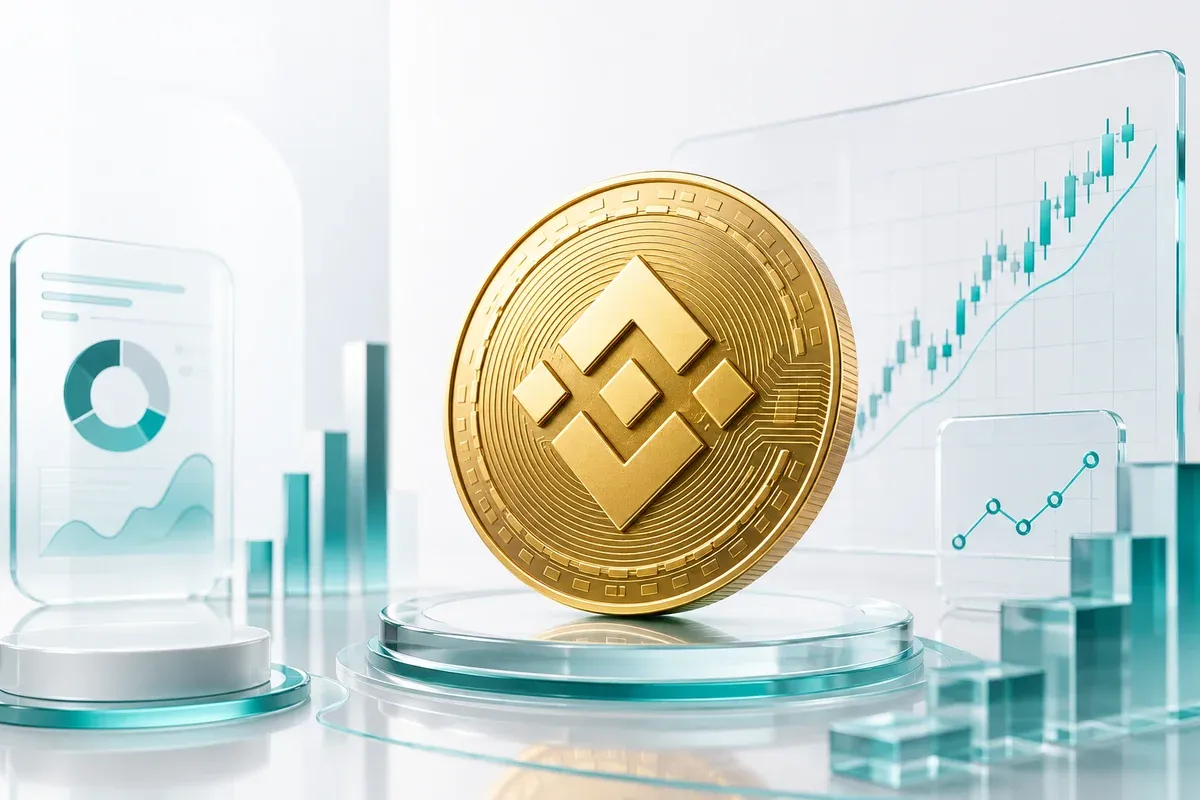
Binance Coin (BNB) is the native cryptocurrency of the Binance ecosystem, originally launched in 2017 as a fee-discount token and now powering the BNB Smart Chain. BNB is consistently ranked among the top five cryptocurrencies by market cap, and its use cases have expanded into gas fees, staking, DeFi, and token launches.
Because BNB is closely tied to one of the largest crypto exchanges and a major layer-1 network, beginners should understand how its supply, utility, and risks work before deciding whether to hold it. This guide answers those questions with current data and practical risk checks.
Key Points
-
Strong ecosystem: BNB is the official token of Binance and BNB Smart Chain, used for network fees and trading discounts.
-
Limited supply: BNB started with a total supply of 200 million and has a burn mechanism targeting 100 million BNB.
-
Wide utility: BNB supports staking, Launchpool, on-chain payments, and various DeFi applications.
-
Market position: BNB has stayed in the top five cryptocurrencies by market cap for years.
-
Real risks: Regulation, price volatility, and layer-1 competition remain the main concerns.
What Is Binance Coin?
Binance Coin was created by Binance through an initial coin offering in July 2017. According to the Binance whitepaper released in 2017, the initial total supply of BNB was 200 million tokens. Binance later introduced a quarterly burn program designed to reduce the circulating supply toward 100 million tokens. This gives BNB a deflationary model that is rare among large crypto assets. You can compare BNB with other assets by reading our guide on crypto types before building your portfolio.
How Does BNB Work?
BNB powers transactions on the BNB Smart Chain, where every transfer of a BEP-20 token requires BNB as gas. On the Binance exchange, holders can also use BNB to pay trading fees and receive a discount. In addition, Binance buys back BNB and burns it quarterly, which gradually reduces the supply over time.
Here are the main ways BNB works:
• Gas fee: BNB is required for transactions on BNB Smart Chain.
• Trading discount: Binance users get lower fees when paying with BNB.
• Quarterly burn: Binance uses part of its revenue to buy back and destroy BNB.
To understand execution in a real market, you can explore Spot Trade after learning the basics.
Main Use Cases of BNB
BNB is no longer just an exchange token. It supports a broad ecosystem that includes DeFi, staking, and token launch platforms. On BNB Smart Chain, BNB is the main asset for paying network costs and interacting with decentralized applications.
- Gas fee payment: Every BNB Smart Chain transaction requires BNB.
- Exchange fee discount: BNB lowers trading costs on Binance.
- Staking and Earn: BNB can be locked to generate rewards.
- Token launches: BNB is often used in Launchpad and Launchpool participation.
- DeFi activities: BNB is a core asset in lending and trading protocols on BSC.
Before using staking features, learn how staking crypto works so you understand lock-up periods and reward conditions.
BNB Market Performance and Key Data
BNB has maintained a strong position in the crypto market. The Binance whitepaper of 2017 set the initial supply at 200 million BNB, with a burn target of around 100 million BNB. CoinGecko data as of June 2026 places BNB among the top five cryptocurrencies by market cap, which shows deep liquidity and sustained demand.
BscScan recorded more than 3 million daily transactions on BNB Smart Chain as of June 2026, proving that BNB has real usage as a gas asset. DefiLlama estimates the total value locked on BNB Smart Chain at more than $5 billion as of June 2026, indicating that the DeFi ecosystem is still active. Binance also continued its quarterly burn in Q1 2026, reinforcing the deflationary narrative.
Key market data for BNB:
• Initial supply: 200 million BNB, according to Binance whitepaper 2017.
• Market cap rank: Top five globally, according to CoinGecko as of June 2026.
• Network activity: More than 3 million daily transactions, based on BscScan data for June 2026.
• DeFi activity: TVL above $5 billion, based on DefiLlama estimates for June 2026.
• Burn progress: Quarterly burns continued in Q1 2026.
These figures do not guarantee price increases, but they show that BNB has real utility. Higher network activity and a shrinking supply can reduce selling pressure over time.
Key Catalysts for BNB
BNB tends to strengthen when BNB Smart Chain adoption grows, when Binance introduces supportive policies, or when the broader crypto market enters a bullish phase. Catalysts also include rising daily transactions, new DeFi products, and new narratives such as AI and Web3.
Catalysts to watch:
• Ecosystem expansion: More DEXs, lending apps, and infrastructure are launching on BNB Smart Chain.
• AI and Web3 integration: BNB Chain is attracting AI, gaming, and decentralized infrastructure projects.
• Quarterly burn schedule: Burn announcements shape short-term supply expectations.
• Binance product updates: New listings, Earn products, or trading features can move sentiment.
• Institutional adoption: Large capital inflows into Binance and BSC could raise demand for BNB.
Use on-chain analysis to monitor exchange inflows, active addresses, and large transfers before making decisions.
Main Risks of Owning BNB
Beginners often focus on the upside, but BNB has risks that need to be managed.
- Regulatory risk: Binance agreed to pay more than $4 billion in penalties to U.S. regulators in November 2023, according to the U.S. Department of Justice.
- Binance dependency: BNB sentiment is strongly tied to Binance, so exchange liquidity or legal trouble can hurt the token.
- Market volatility: BNB remains a high-risk crypto asset that can drop sharply during risk-off phases.
- Layer-1 competition: Ethereum, Solana, and Avalanche offer alternative ecosystems with deep liquidity.
- Smart contract risk: DeFi protocols on BSC can be exploited, even if the base chain remains stable.
Follow crypto trading tips so you have a clear entry and exit plan.
BNB Compared With Other Layer-1 Assets
BNB is often compared with Ethereum and Solana because all three compete in the layer-1 segment. The key differences lie in ecosystem models, transaction costs, and community appeal.
Quick comparison:
- BNB: Tightly connected to Binance, low fees, and shrinking supply through burns.
- Ethereum: Largest DeFi liquidity, but gas fees can spike during congestion.
- Solana: High throughput and strong community, but price can be more momentum-driven.
To see how BNB fits among the world's largest assets, read our breakdown of the largest assets for context.
BNB Quick Reference Table
| Aspect | Key Data | Investor Implication |
|---|---|---|
| Initial Supply | 200 million BNB | Market expects burns toward 100 million BNB |
| Network | BNB Smart Chain | BNB is required for gas and DeFi activity |
| Market Rank | Top five globally | Liquidity is stronger than most small tokens |
| Burn Model | Quarterly | Supply shrinks if Binance revenue stays healthy |
| Main Risk | Regulation and Binance sentiment | Monitor legal and operational news |
How to Evaluate BNB Before Buying
After understanding the data and risks, you need a framework to analyze BNB without making emotional decisions.
- Check fundamentals: Study BNB Chain development, daily transactions, and total value locked.
- Track catalysts: Monitor burn schedules, network upgrades, and Binance policy changes.
- Compare valuation: Look at BNB market cap and volume against Ethereum or Solana.
- Manage position size: Start with a small allocation and add only when the trend confirms.
- Set risk limits: Decide your exit level in advance and follow that plan.
Conclusion
BNB is a fundamentally strong crypto asset because it has practical use across the Binance exchange and BNB Smart Chain. Its burn mechanism and large ecosystem make BNB worth studying for beginners, but it still carries real risks. Regulation, Binance dependency, and market volatility should not be ignored. Understand what BNB does, read the latest market data, and use a clear risk framework before making any investment decision.
FAQ
Is BNB the same as Binance?
No. BNB is a cryptocurrency issued by the Binance ecosystem, while Binance is the exchange company behind it. BNB is also used on BNB Smart Chain, but its price is heavily influenced by Binance's reputation and operations.
What is the total supply of BNB?
According to the Binance whitepaper published in 2017, the initial supply was 200 million BNB. Binance uses a quarterly burn mechanism to reduce the total supply toward around 100 million BNB.
Can BNB be staked?
Yes. BNB can be staked on BNB Smart Chain, used in Launchpool, and deployed in Earn products. Always check the lock-up period, reward rate, and conditions before staking.
How do I buy BNB legally?
You can buy BNB through a licensed cryptocurrency platform. The usual process starts with registration, KYC verification, depositing fiat currency, and then trading in the Spot market using a BNB pair.
Is BNB safe for long-term investment?
BNB has a large ecosystem, but it is still a highly volatile crypto asset. Long-term investors should monitor regulation, BNB Chain development, and the burn schedule before deciding how much to allocate.
Start with Mobee
Mobee is a digital asset platform licensed and supervised by OJK, helping users explore crypto and investment products with clearer access and practical learning. Start your investment journey through Mobee and choose products that match your goals and risk profile.
 Direct market access from the app
 Start exploring digital assets with Mobee
Track the market, learn about digital assets, and start trading more conveniently with the Mobee App.
Mobee is licensed and supervised by the OJK. Not a solicitation to buy or sell any asset.