How to Choose the Most Secure Cold Storage
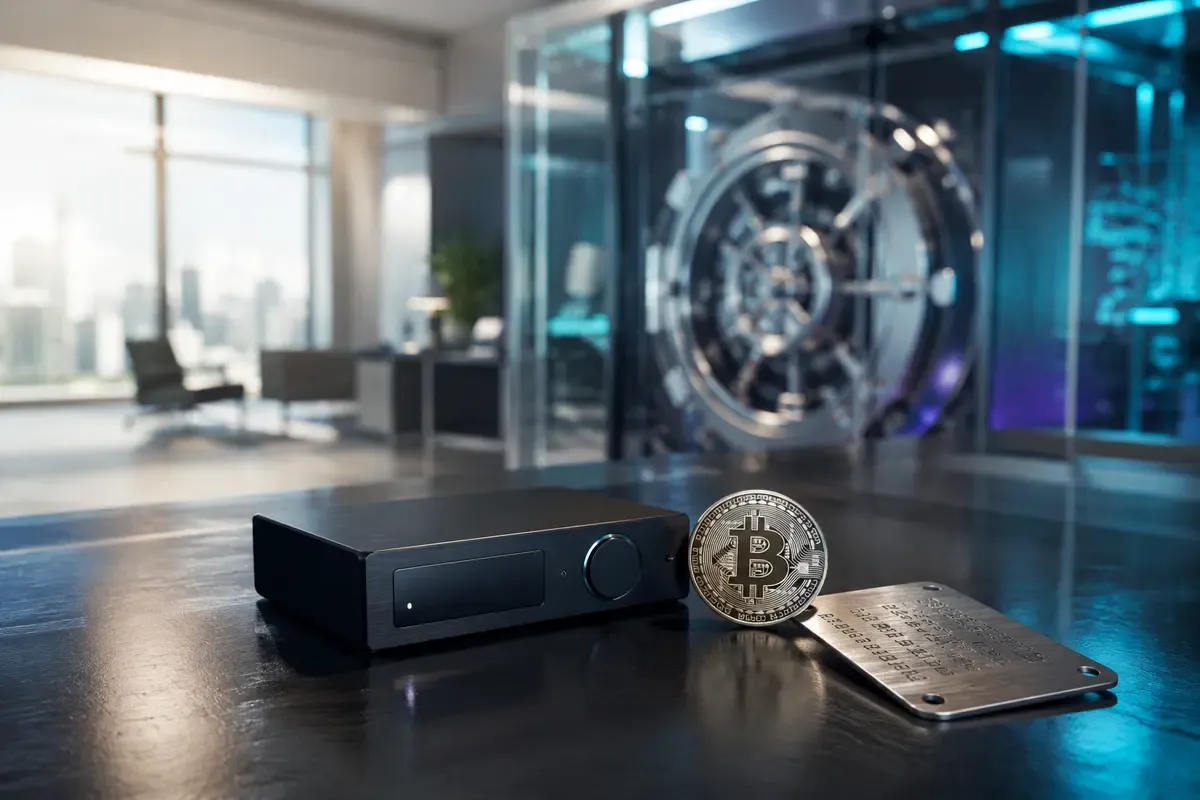
Before choosing cold storage, understand one core principle: cold storage is an offline crypto asset storage solution that holds your private keys without any internet connection. Without internet access, hackers cannot steal your private keys through malware, phishing, or remote attacks, regardless of how sophisticated their methods are.
Here is a step-by-step guide to choosing the cold storage that best fits your needs.
Read more: Reasons to Use a Hardware Wallet for Large Cryptocurrency Balances
Step 1: Understand the Types of Cold Storage
Hardware Wallet
A physical USB-like device that stores private keys offline. This is the cold storage standard for most individual investors. Every transaction requires physical confirmation directly on the device, so even if your computer is infected with malware, assets cannot be moved without pressing a button on the physical device.
| Device | Key Advantage | Estimated Price | Best For |
|---|---|---|---|
| Ledger Nano X | Bluetooth, large screen, multi-coin | $149 - $179 | Active investors with diverse assets |
| Ledger Nano S Plus | Compact, multi-coin, affordable | $79 - $99 | Beginner to intermediate investors |
| Trezor Safe 3 | Open-source firmware, touchscreen | $129 - $159 | Users prioritizing transparency |
| Coldcard Mk4 | Air-gapped, Bitcoin only, highest security | $219 - $279 | Bitcoin maximalists and power users |
Paper Wallet
Private and public keys printed on paper. This is the most basic form of cold storage — no device purchase needed. However, it is vulnerable to physical damage (water, fire, tearing), loss, and human error during creation. Not recommended for significant balances in 2026.
Air-Gapped Computer
A computer that has never been connected to the internet, used exclusively for signing crypto transactions. An option for technical users wanting full control. Requires deeper technical understanding.
Step 2: Check These 6 Security Criteria Before Buying
- Buy only from official sources — the manufacturer's website directly (ledger.com, trezor.io, coldcard.com). Never buy from third-party marketplaces, as devices could be tampered with before reaching you.
- Check packaging integrity — ensure seals, holograms, and packaging condition are intact. If there are signs of damage or broken seals, reject and request a replacement.
- Verify firmware during setup — a legitimate device will prompt you to verify the firmware when first powered on. Follow this procedure.
- Check if seed phrase is already written on a card inside the box — this is a major red flag for fraud. The seed phrase must be generated by you during setup, not provided by the manufacturer.
- Confirm open-source firmware (for Trezor) or verifiable firmware (for Ledger) — this allows the security community and researchers to independently audit the code.
- Research the manufacturer's security track record — have there been data breaches or vulnerabilities found previously? How did the manufacturer respond?
Step 3: Correct Setup (Do Not Skip This)
- Generate your seed phrase in a secure environment — turn off cameras, keep phones away, ensure no one can see the screen.
- Write the seed phrase physically on paper or fire-resistant material — NEVER photograph it, type it on a computer, or store it in the cloud.
- Keep copies of the seed phrase in two separate physical locations — for example, at home and in another secure location (bank safety deposit box or trusted location).
- Enable an additional passphrase (BIP39 passphrase) — an extra security layer on top of the standard seed phrase. If the device is stolen, two factors are required to access assets.
- Perform a recovery test before storing large amounts — enter the seed phrase on a new device to confirm recovery works correctly.
- Update firmware regularly — manufacturers periodically release security updates that patch newly discovered vulnerabilities.
Step 4: Daily Operational Security
Having a good hardware wallet is not enough. Operational security determines whether your assets are truly protected over the long term.
| Situation | What to Do | What to Avoid |
|---|---|---|
| Receiving assets | Verify address on the device screen | Copy-paste address from email or chat |
| Sending assets | Double-check recipient address on hardware wallet screen | Send without visual verification on device |
| Storing seed phrase | Physical offline media, two separate locations | Photos, phone notes, Google Drive, iCloud |
| Finding a new/used device | Factory reset and setup from scratch | Use a second-hand device without resetting |
| Firmware update | Update from official app on manufacturer's website | Update from email links or social media |
What Asset Value Requires Cold Storage?
A general rule of thumb for 2026: if your crypto asset value already exceeds the cost of the hardware wallet itself (typically $80–$280), the investment in cold storage is already fully justified. For assets above $500, using cold storage is no longer optional — it is the minimum security standard.
Many investors apply a fund-splitting strategy: approximately 20% in a hot wallet (regulated exchange or software wallet) for active transaction liquidity, and 80% in cold storage for long-term storage.
Read more: 7 Effective Ways to Keep Your Crypto Wallet Secure
Conclusion
Choosing the most secure cold storage is not about buying the most expensive device; it is about choosing the right device, setting it up correctly, and maintaining operational security every day.
A hardware wallet from a reputable manufacturer purchased directly from an official source, combined with physically secure seed phrase storage, is the solid protection standard for serious crypto investors.
If you want to start investing in digital assets with a platform that prioritizes security, download the Mobee app now. Mobee is a crypto asset platform that is regulated and supervised by the OJK, allowing you to transact more securely and comfortably while continuing to implement the asset storage strategy that best suits your needs.
Sources:
Best Crypto Cold Storage Wallets 2026. Diakses pada 2026. Backpack Exchange Learn.
Cold Storage in Cryptocurrency: Definition and How It Works. Diakses pada 2026. Investopedia.
Hardware Wallet Security Guide. Diakses pada 2026. Ledger Academy.
How to Safely Store Your Crypto. Diakses pada 2026. Coinbase Learn.
Disclaimer:
This content is for informational purposes only. Always conduct your own research before making investment decisions. All cryptocurrency trading and investment activities are solely the responsibility of the reader.
 Direct market access from the app
 Start exploring digital assets with Mobee
Track the market, learn about digital assets, and start trading more conveniently with the Mobee App.
Mobee is licensed and supervised by the OJK. Not a solicitation to buy or sell any asset.