Reasons to Use a Hardware Wallet for Large Cryptocurrency Balances
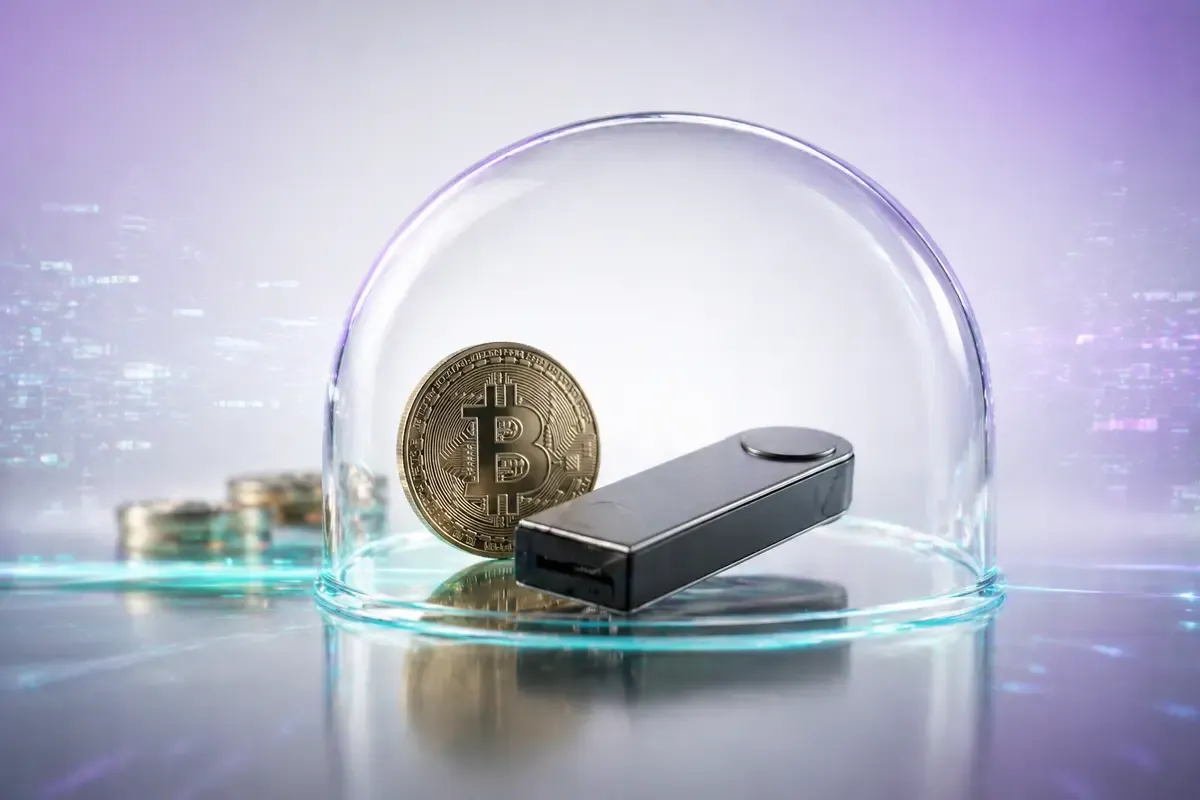
A hardware wallet is a physical device that stores your cryptocurrency private keys offline, making them inaccessible to online attackers. For significant crypto holdings, this is not just an option, but the minimum security standard you should meet.
What Is a Hardware Wallet and How Does It Work?
A hardware wallet (such as Ledger or Trezor) functions as a physical vault for your private keys. Unlike software wallets or exchange apps, hardware wallets never expose your cryptographic keys to the internet during storage.
The mechanism is straightforward: every time you want to execute a transaction, the device requires physical confirmation via a button press on the device itself. This means that even if your computer or phone is infected with malware, an attacker cannot move your funds without physical access to the device.
Read more: Understanding Non-Custodial Wallets, How They Work, and Their Benefits
Why Large Balances Need Extra Protection
The larger your crypto balance, the greater the target on your back. Common threats facing high-value crypto holders include:
- Wallet-drainer malware: software that automatically signs malicious transactions without your knowledge.
- Sophisticated phishing: including deepfake attacks and social engineering targeting high-net-worth holders.
- SIM-swap attacks: criminals steal your phone number to bypass two-factor authentication.
- Supply chain attacks: compromised devices are manipulated before they reach you.
Security experts recommend keeping 80–90% of crypto holdings in cold storage, and hardware wallets are the most practical implementation of cold storage for individual users.
Hardware Wallet vs. Software Wallet: Key Differences
Hardware wallets excel by storing private keys offline (cold storage), resulting in significantly lower malware risk compared to always-connected software wallets. By severing network access when not in use, these physical devices automatically close the gaps that hackers use to exploit a device's operating system.
The most crucial difference lies in transaction validation; while software wallets rely on digital confirmations that can be exploited in seconds, hardware wallets require a physical button press. This mechanism ensures that remote attacks are impossible, as every asset transfer necessitates the owner's physical interaction with the device.
Strategically, hardware wallets are the gold standard for long-term storage, whereas software wallets are better suited for temporary, active trading. By isolating private keys from the internet ecosystem, hardware wallets provide a much more solid layer of protection that cannot be compromised by digital system failures.
Security Best Practices for Hardware Wallet Users
Owning a hardware wallet is only the starting point. Follow these practices:
- Buy directly from the manufacturer by avoiding third-party marketplaces to prevent tampered devices.
- Store your seed phrase physically. The 2026 standard is to never store seed phrases digitally. Many users engrave them on stainless steel plates for fire and water resistance.
- Verify every transaction on the device screen. Confirm the destination address and amount shown on the hardware wallet before approving.
- Update firmware regularly. Threats evolve continuously, and firmware updates ensure your device has the latest security protections.
- Enable passphrase protection. Add an extra security layer on top of your standard seed phrase.
What Balance Level Warrants a Hardware Wallet?
There is no fixed threshold, but a practical rule of thumb is: if your crypto holdings exceed the cost of the hardware wallet itself (typically $80–$150 USD), the investment is already justified. For balances above $500, a hardware wallet is no longer optional — it is essential.
Read more: 7 Effective Ways to Keep Your Crypto Wallet Secure
Start With a Regulated Platform
Before thinking about cold storage, ensure you are trading on a regulated platform. Mobee, regulated and supervised by OJK (Indonesia's Financial Services Authority), provides a secure environment for crypto transactions. After purchasing on Mobee, you can transfer significant holdings to a hardware wallet for long-term storage.
Conclusion
A hardware wallet is the security standard for crypto holders with significant balances. By keeping private keys offline and requiring physical confirmation for every transaction, these devices effectively neutralize almost all common cyber attack vectors. Pair this with a regulated exchange like Mobee, and you have a solid security stack from purchase to long-term storage.
Sources:
What is a Hardware Wallet & How Does it Work? Accessed in 2026. Kaspersky Resource Center.
What is a Hardware Wallet? Accessed in 2026. Coinbase Learn.
Why Use a Hardware Wallet Instead of an Exchange for Cryptocurrency. Accessed in 2026. Infosecurity Magazine.
Disclaimer:
This content is intended to provide additional information to readers. Always do your own research before investing. All crypto asset trading and investment activities are the sole responsibility of the reader.
 Direct market access from the app
 Start exploring digital assets with Mobee
Track the market, learn about digital assets, and start trading more conveniently with the Mobee App.
Mobee is licensed and supervised by the OJK. Not a solicitation to buy or sell any asset.