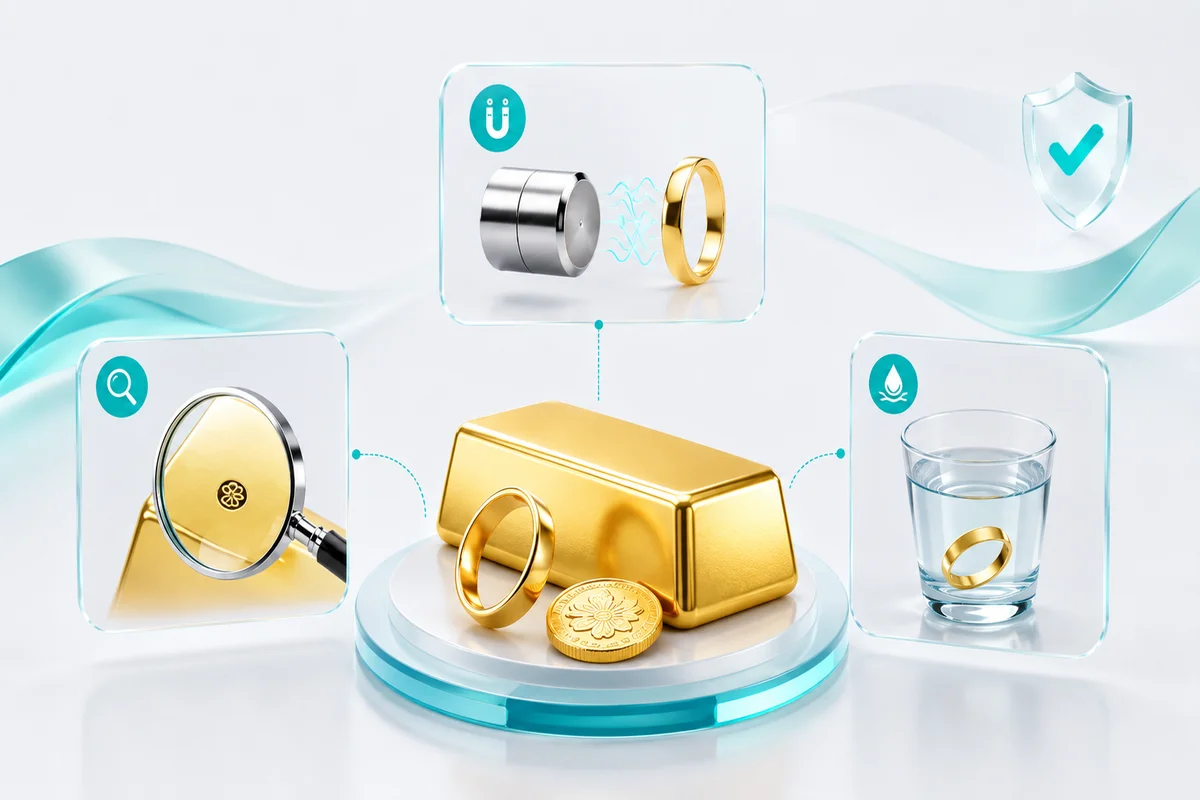
How to check real gold is a crucial step to ensure the authenticity of precious metals before buying or selling. With the increasing circulation of counterfeit gold, you need to know accurate testing methods, from magnet tests, density tests, to acid tests. This article will cover practical steps you can do at home or with professional equipment.
Key Points
- Magnet test: Real gold is non-magnetic, unlike counterfeit metals such as iron.
- Density test: Gold has a density of 19.32 g/cm³, higher than most metals.
- Acid test: Nitric acid solution can distinguish real gold based on karat purity.
- Hallmark and certificate: Real gold usually has karat stamps like 24K, 22K, or 18K.
- Tool calibration: Use a digital scale and graduated cylinder for accurate density testing.
What to Prepare
Before testing, gather the following tools. For the magnet test, use a strong neodymium magnet. For density test, prepare a digital scale with 0.01g precision and a graduated cylinder with water. Acid test requires nitric acid solutions of different concentrations for each karat. Also have a magnifying glass to inspect hallmarks or certificates. For more accurate results, consider taking your gold to a testing laboratory. To understand historical value, check gold price history for price trends.
Step-by-Step Gold Testing Guide
Follow these steps in order for optimal results.
1. Magnet Test: Bring the gold close to a neodymium magnet. Real gold will not be attracted. If attracted, it is likely counterfeit or mixed with other metals.
2. Density Test: Weigh the gold on a digital scale. Record the weight. Fill a graduated cylinder with water, note initial volume. Submerge the gold, note final volume. Calculate density = weight/volume. If close to 19.32 g/cm³, it is likely real.
3. Acid Test: Rub the gold on a testing stone to leave a mark. Apply nitric acid of appropriate concentration. If the mark dissolves, the gold is fake or low karat. 24K gold will not react.
4. Check Hallmark: Use a magnifying glass to look for karat stamps, manufacturer marks, or certificates. Real gold typically has stamps like 24K, 22K, 18K, or 14K.
5. Professional Test: If unsure, take it to a lab for fire assay or XRF testing. Familiarize yourself with fake gold codes to avoid deception.
Fees or Requirements
Testing costs vary. Magnet and density tests can be done at home for free with basic tools. Acid test requires nitric acid, which costs around $1-$5 per bottle. Professional lab testing ranges from $10 to $50 per sample depending on the method. Some jewelry stores offer free testing if you purchase gold there. Ensure the store has a good reputation. For comparison, learn about real silver characteristics to distinguish precious metals.
Common Mistakes When Checking Gold
Many people make errors during testing. Here are the most frequent ones.
• Relying only on magnet test: Non-magnetic metals like copper can also pass, so magnet test alone is not sufficient.
• Not cleaning gold before testing: Dirt or oil can affect density and acid test results.
• Using wrong acid concentration: Acid for 18K gold can damage 24K gold if misapplied.
• Ignoring hallmarks or certificates: Counterfeit gold often has fake stamps. Verify with a magnifying glass.
• Not calibrating the scale: An inaccurate scale will produce wrong density.
• Testing only one spot: Fake gold is often plated. Test on a scratched or hidden area.
• Using fire without expertise: Fire testing can damage gold if not done correctly. For more insight, read about real bitcoin as a digital asset comparison.
Checklist Before Buying Gold
Use this checklist to reduce the risk of buying fake gold.
• Check seller reputation: Look for online reviews or ask for recommendations.
• Request a certificate of authenticity: Ensure it comes from a trusted institution like PAMP or Perth Mint.
• Perform magnet and density tests on the spot if possible.
• Compare price with largest assets in the to see if pricing is fair.
• Record serial numbers and hallmarks for reference.
• Keep purchase receipts and certificates.
• If buying online, ensure the platform has a return policy.
Quick Testing Methods Table
Risks of Buying Fake Gold
Buying counterfeit gold can lead to significant financial loss. Here are the main risks.
• Capital loss: Fake gold has no resale value equivalent to real gold.
• Legal risk: Unknowingly selling fake gold can lead to fraud charges.
• Reputation damage: If you sell fake gold to others, trust can be lost.
• Additional testing costs: To verify authenticity, you may need extra expenses.
• Storage requirements: Real gold requires secure storage like a safe deposit box.
• Price fluctuation: Real gold prices fluctuate, but fake gold offers no investment return.
• Recurring fraud: Unscrupulous sellers may offer fake gold again. To mitigate investment risks, learn about stock investment for beginners as an alternative.
Conclusion
Checking real gold requires a combination of methods for accurate results. Magnet and density tests are easy first steps, but acid tests or professional testing are more recommended for certainty. Always inspect hallmarks and certificates, and buy from trusted sellers. By understanding testing techniques, you can avoid fake gold and protect your investment.
FAQ
Start with Mobee
Mobee is a digital asset platform licensed and supervised by OJK, helping users explore crypto and investment products with clearer access and practical learning. Start your investment journey through Mobee and choose products that match your goals and risk profile.