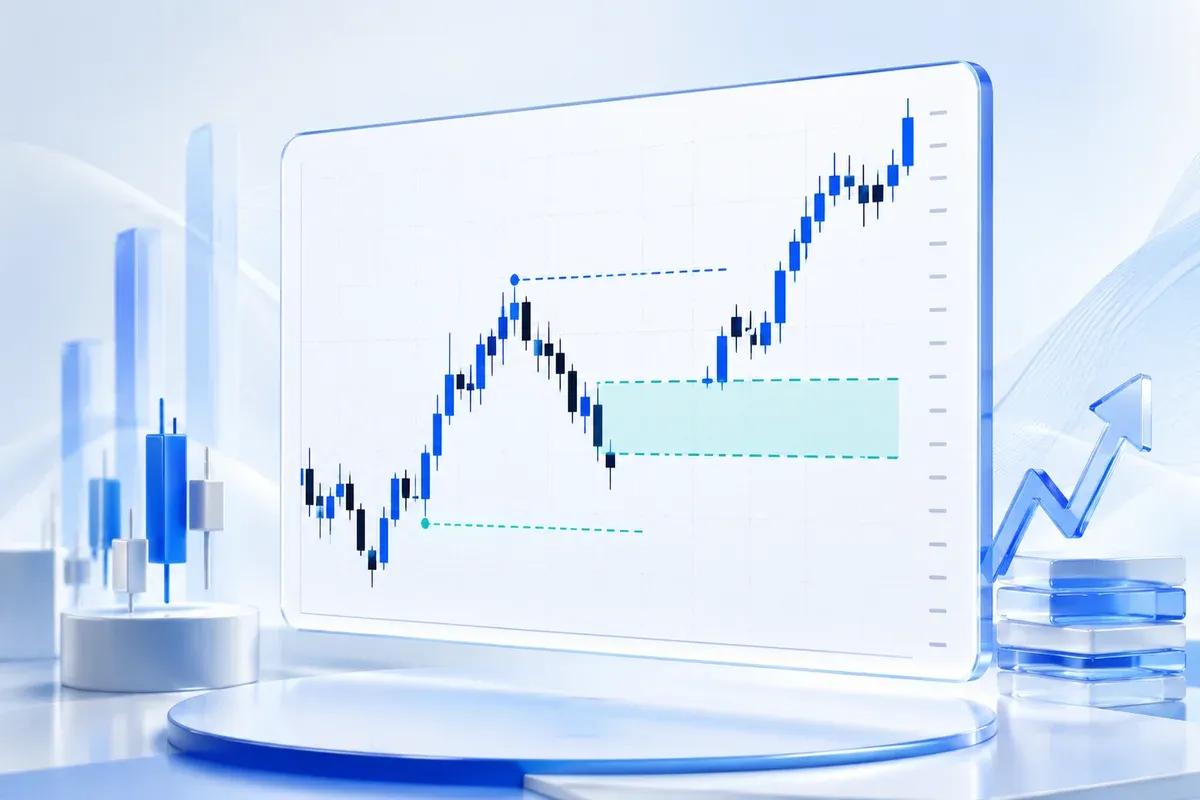
Candlestick Patterns: A Beginner's Guide to Reading Trading Signals
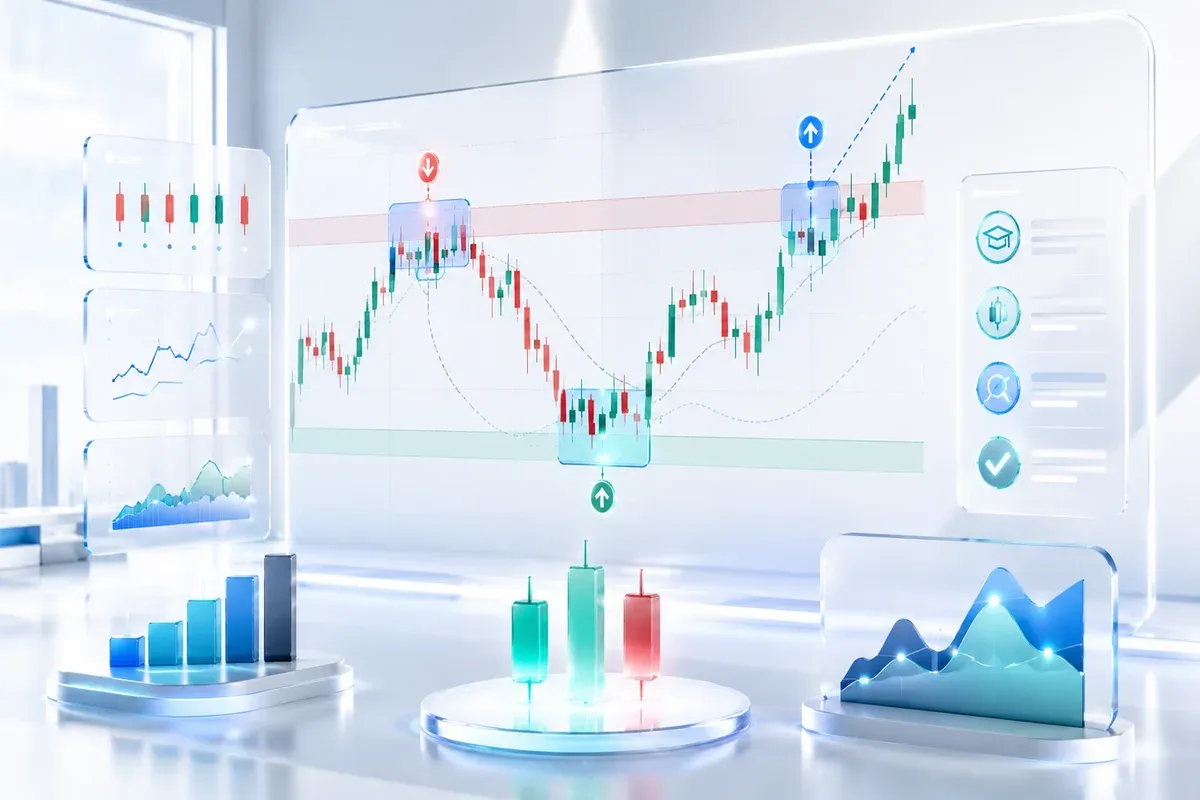
A candlestick pattern is a technical analysis tool that represents the price movement of an asset through a candlestick chart, showing the open, high, low, and close prices over a specific time period. Originating from 18th-century Japan, it is now a cornerstone of technical analysis in stocks, crypto, and forex. These patterns help traders interpret market sentiment and predict future price movements. Learn more with tips trading crypto to enhance your strategy.
Key Points
- Candlestick patterns provide a visual record of price action within a single period.
- Individual patterns like doji or hammer can signal reversals or continuation.
- Each pattern's success rate depends on the prevailing trend and confirmation.
- Common mistakes include reading single patterns without trend or volume context.
- Combining candlestick patterns with other indicators improves analysis accuracy.
What is a Candlestick Pattern?
How Candlestick Patterns Work
Candlestick patterns work by visually grouping market psychology into recognizable forms. For example, a candle with a long body shows strong buying or selling pressure, while long shadows indicate high volatility. Combinations of several candles form patterns like engulfing, morning star, or three black crows, which signal potential price reversals. For deeper understanding, check day trading crypto.
Types of Candlestick Pattern
• Bullish reversal patterns: hammer, bullish engulfing, morning star.
• Bearish reversal patterns: shooting star, bearish engulfing, evening star.
• Continuation patterns: rising three methods, falling three methods.
• Neutral patterns: doji, spinning top, marubozu.
How to Read Candlestick Pattern
Read candlestick patterns by focusing on three elements: body, upper shadow, and lower shadow. A long body with short shadows indicates strong momentum. Conversely, a small body with long shadows suggests indecision. Also consider trend context: bullish patterns are more reliable in downtrends, and bearish patterns in uptrends. Use on-chain analysis for additional confirmation.
Common Candlestick Pattern Mistakes
Mistakes in reading candlestick patterns can mislead analysis. Here are five frequent errors:
• Ignoring the main trend and focusing only on a single candle.
• Failing to use confirmation from other indicators like volume or RSI.
• Reading patterns on too small a timeframe without the bigger picture.
• Interpreting neutral patterns (like doji) as definite reversal signals.
• Over-relying on patterns without considering fundamental news.
When is a Candlestick Pattern More Reliable?
A candlestick pattern is more reliable when it appears in the right market context, not just because the candle shape looks familiar.
Candlestick patterns tend to be stronger when they form near key support or resistance levels, after a clear trend, and with confirmation from the next candle. For example, a hammer is more meaningful after a downtrend near support, while a shooting star is more relevant after an uptrend near resistance.
The signal is also more reliable when supported by higher trading volume, trend indicators, or momentum tools such as RSI and moving averages. Traders should avoid reading candlestick patterns in isolation because a single candle can produce false signals, especially in sideways or low-volume markets.
Candlestick Pattern Example
Imagine you are looking at a daily Bitcoin chart. After a 5-day downtrend, a candle with a small body and long lower shadow appears — that is a hammer pattern. The next day, the price closes higher, confirming the reversal. If volume also increases, the odds of an uptrend strengthen. A doji pattern, according to a 2021 analysis by PatternSmart, indicates a reversal only 55% of the time, so further confirmation is needed.
Candlestick Pattern Quick Table
The table below summarizes aspects, functions, how to read them, and risk notes for key patterns.
| Aspect | Function | How to Read It | Risk Note |
|---|---|---|---|
| Hammer | Bullish reversal signal in downtrend | Small body, long lower shadow, short upper shadow | Requires subsequent up confirmation |
| Bullish Engulfing | Upward reversal | Green candle fully engulfs previous red candle | Fails if volume is low |
| Shooting Star | Bearish reversal signal in uptrend | Small body, long upper shadow, short lower shadow | Downtrend confirmation needed |
| Doji | Shows market indecision | Open and close are nearly equal | Not a definitive reversal signal |
```
These patterns are most effective when used alongside other technical analysis tools.
Candlestick Pattern for Beginners
Suitable for beginner traders due to visual simplicity. Start with basic patterns like hammer and engulfing. Avoid complex patterns until you understand trend context. Practice on a demo account first. Also explore how to trade crypto for practice.
Conclusion
Candlestick patterns are essential technical analysis tools that help read market sentiment. While not perfect, they provide valuable signals when combined with volume and other indicators. Start with simple patterns, always use confirmation, and never ignore the primary trend.
FAQ
A candlestick pattern is a graphical representation of price movement showing the open, high, low, and close within a specific period. It helps traders identify potential trend reversals or continuations based on the shape and sequence of candles.
Candlestick patterns are more visual because they highlight the candle body and shadows, while bar charts mainly show a vertical line with price ticks. Candlesticks make market psychology easier to read because bullish and bearish pressure can be seen more clearly.
An engulfing pattern consists of two candles. The first candle is usually red or green, while the second candle moves in the opposite direction and fully engulfs the body of the first candle. The signal is stronger when confirmed by higher trading volume.
No. Candlestick pattern accuracy depends on trend context, volume, and confirmation from other indicators. According to Bulkowski (2023), the bullish engulfing pattern succeeds around 67% in an uptrend, so traders should not rely on candlestick patterns alone.
Beginners should focus on 5-10 basic patterns first, such as hammer, engulfing, doji, morning star, and evening star. After mastering the basic patterns and their confirmations, traders can explore more complex candlestick formations.
```
Mobee helps users explore crypto and investment products through a platform designed for easier access and practical learning. Start your investment journey through Mobee and choose products that match your goals and risk profile.
 Direct market access from the app
Start exploring digital assets with Mobee
Track the market, learn about digital assets, and start trading more conveniently with the Mobee App.
Mobee is licensed and supervised by the OJK. Not a solicitation to buy or sell any asset.