.jpg)
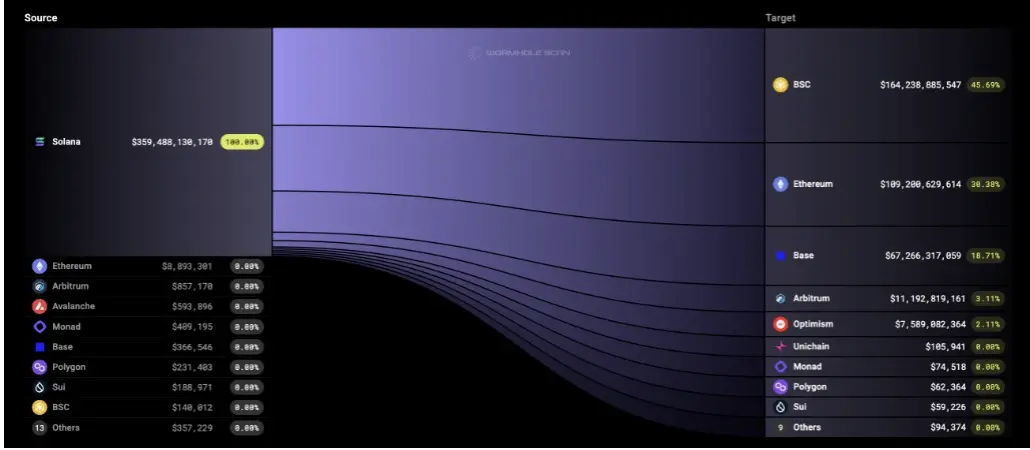
Unusual on-chain activity was detected on the Solana network over the past 24 hours. Data from Wormhole Scan (January 8, 2026) shows a massive outbound transfer totaling $359.4 billion, moving out of Solana toward three major networks: BNB Chain, Ethereum, and Base. The scale of this movement immediately drew market attention, as it far exceeded normal daily volumes.
Where Did the Funds Go?
Wormhole data indicate that the capital flows were concentrated across three primary destinations:
- BNB Chain (BSC) received the largest share, approximately $164.2 billion
- Ethereum recorded inflows of around $109.2 billion
- Base saw transfers totaling roughly $67.2 billion
At first glance, these figures may appear to reflect extreme speculative activity. However, a clearer picture emerges when this data is compared with cross-chain stablecoin liquidity conditions.
Measurable Impact on Liquidity
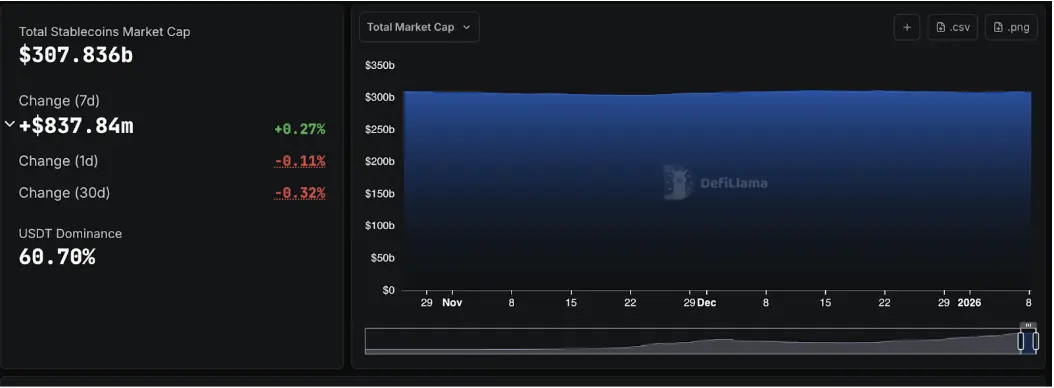
According to DeFiLlama data (January 8, 2026), total global stablecoin liquidity remains relatively stable. This suggests there has been no significant capital exit from the broader crypto ecosystem. That said, the impact becomes more pronounced when analyzed on a per-chain basis.
Solana recorded a 5.42% decline in stablecoin market capitalization within a single day, equivalent to roughly $760 million in net liquidity outflows. This indicates that the transfers were not merely technical round-trips, but were accompanied by a real reduction in available capital on the Solana network.
In contrast, Ethereum posted a 0.34% increase in stablecoin supply over the same period. This suggests liquidity absorption, with Ethereum acting as the primary destination where funds ultimately settle.
Liquidity Distribution Points to Rebalancing
This is where a clearer structural narrative begins to form. The observed pattern does not resemble panic selling, but rather a coordinated cross-chain liquidity rebalancing.
Solana appears to function as the liquidity source, with real capital exiting its ecosystem.
BNB Chain acts as a high-throughput transaction rail, absorbing the largest transfer volume, yet showing relatively flat stablecoin growth (+0.04%). This implies BNB Chain is being used primarily for transaction routing rather than capital parking.
Ethereum emerges as the end destination, where stablecoin liquidity increases and capital accumulates.
From a quantitative perspective, the rise in Ethereum’s stablecoin supply closely mirrors the decline seen on Solana, reinforcing the view that this movement is strategic rather than random.
Signals Ahead of Volatility
The combination of large technical volumes on BNB Chain—including tens of billions of dollars in BNB token activity—and stablecoin accumulation on Ethereum has historically served as a precursor to heightened volatility. Similar patterns often emerge ahead of:
- major price movements,
- market maker positioning,
- or the launch and activation of new infrastructure, particularly across Layer-2 networks such as Base and the broader BNB ecosystem.
Conclusion
While the $359 billion figure is striking, it is not the core signal. The more meaningful takeaway lies in the liquidity shift itself: Solana is experiencing a drawdown, while Ethereum is being replenished. In the near term, this dynamic could translate into elevated volatility, particularly across SOL/ETH and ETH/BNB pairs over the next 24–48 hours.
For market participants, this development goes beyond headline news and serves as an early signal to remain alert to potentially significant market moves ahead.

.webp)