Verasity (VRA): Opportunity, Tech, and Investment Risk
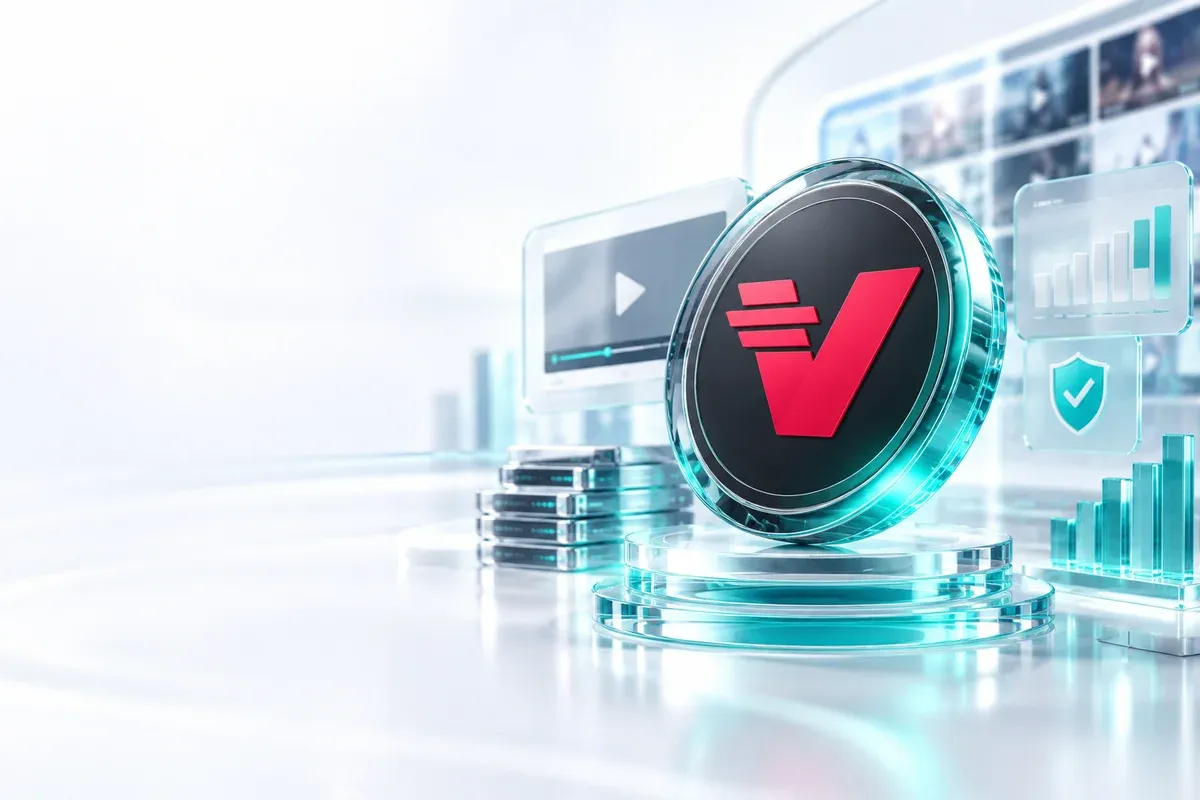
Verasity is a blockchain project that combines video view verification, ad fraud prevention technology, and the VRA token to reward viewers and publishers. Its core product, Proof of View, tries to ensure that video impressions come from real humans rather than bots. If you follow utility-focused crypto assets, Verasity offers a useful case study on how a token can connect to the digital advertising industry.
However, VRA also faces challenges around liquidity, adoption, and competition from large ad networks. Before going deeper, it helps to read crypto analysis so you can evaluate the project with a clear framework.
Key Points
-
Core definition: Verasity is a video verification and ad fraud network using VRA as its incentive token.
-
Business model: VeraViews sells verified view solutions to publishers and advertisers, with VRA capturing ecosystem value.
-
2026 data: VRA market capitalization remains small cap, so price volatility is higher than large crypto assets.
-
Main catalysts: New publisher integration, Proof of View upgrades, and digital ad spend recovery can move sentiment.
-
Main risks: Thin liquidity, adoption dependence, ad network competition, and utility token regulation remain key overhangs.
Main Risks of Holding VRA
VRA risk is not only about price declines. There are structural risks that can make positions difficult to exit during volatile markets. Here are the risks you need to measure.
• Liquidity risk: Thin volume makes it hard to exit large positions without moving price. Monitor 24-hour volume and order book depth.
• Adoption risk: If publishers do not adopt VeraViews, token revenue can stagnate. Check partner reports and real usage.
• Competition risk: Ad giants like Google and large video platforms have their own anti-fraud solutions. Compare adoption speed.
• Regulation risk: Utility tokens can face securities rules in some jurisdictions. Follow official announcements and local legal status.
• Tokenomics risk: Unlocks or treasury sales can add supply. Track unlock schedules and whale addresses.
Forward Scenarios for VRA
VRA scenarios should be read with different liquidity and adoption assumptions. Do not only look at price projections, but watch the triggers that can change direction.
• Bullish scenario: VeraViews adoption rises and market volume improves, VRA could test medium-term resistance.
• Neutral scenario: Price moves sideways while adoption is slow and the crypto market lacks direction.
• Bearish scenario: Sell pressure from unlocks and thin liquidity can push price to lower levels.
• Change triggers: Major partner announcements, revenue reports, and global macro conditions.
Verasity and VRA Summary Table
| Aspect | 2026 Condition | Implication |
|---|---|---|
| Business Model | Anti-fraud video verification | Depends on publisher adoption |
| VRA Token | ERC-20, staking, and rewards | Real utility, but still speculative |
| Market Capitalization | Estimated at $60–90 million | Small-cap and volatile |
| Daily Volume | Often below $10 million | Higher slippage risk |
| Main Catalysts | Integrations and advertising recovery | Sentiment can change quickly |
| Main Risks | Liquidity, adoption, and regulation | Requires strict risk management |
How Beginners Can Monitor VRA
The safest strategy is to measure data before buying. Use these steps so your decision is not based only on hype.
1. Track volume and liquidity: Check 24-hour volume and order book depth before entering.
2. Read official updates: Follow Verasity's blog and partner reports to see real adoption.
3. Note unlock dates: Mark token unlock dates so new supply does not surprise you.
4. Use risk management: Set a stop loss and limit position size to 1-3% of your portfolio.
5. Diversify: Do not put all your funds into one small cap token.
6. Evaluate the narrative: Compare VRA with other ad and video infrastructure projects.
Conclusion
Verasity is a project trying to solve a real problem in video advertising through Proof of View and VeraViews. VRA has utility for staking and rewards, but its long-term value depends heavily on publisher and advertiser adoption. As a small cap asset with thin volume, VRA offers potential catalysts and high liquidity risk. A reasonable approach is to monitor data, limit position size, and avoid making VRA your only portfolio asset.
FAQ
What are Verasity and VRA?
Verasity is a video verification and advertising anti-fraud network that uses the VRA token for incentives, staking, and payments within the VeraViews ecosystem. VRA runs on the Ethereum network and focuses on Proof of View technology to validate genuine human views.
Does VRA have real utility?
Yes. VRA is used for staking, rewards, and access to features in VeraWallet, as well as for transferring value within VeraViews services. However, its real-world utility depends on how widely publishers and advertisers adopt Verasity's technology.
What is VRA's market capitalization in 2026?
Based on CoinGecko estimates from February 2026, VRA's market capitalization was around $60–90 million, although this figure can change quickly. As a small-cap asset, VRA can experience daily price movements of 5–10% more easily than Bitcoin.
What are the biggest risks of buying VRA?
The main risks include low liquidity, slow adoption, competition from major advertising platforms, and regulatory uncertainty surrounding utility tokens. Risk can be managed by limiting the position size to 1–3% of a portfolio and monitoring the token unlock schedule.
How can I start trading VRA on Mobee?
You can start by creating a Mobee account, completing KYC, and then searching for an available VRA trading pair on the platform. Make sure you understand the order book and use risk management features before making a purchase.
Start with Mobee
Mobee is a digital asset platform licensed and supervised by OJK, helping users explore crypto and investment products with clearer access and practical learning. Start your investment journey through Mobee and choose products that match your goals and risk profile.
 Direct market access from the app
 Start exploring digital assets with Mobee
Track the market, learn about digital assets, and start trading more conveniently with the Mobee App.
Mobee is licensed and supervised by the OJK. Not a solicitation to buy or sell any asset.