Moving Average: A Complete Guide to Trend Indicators for Investing
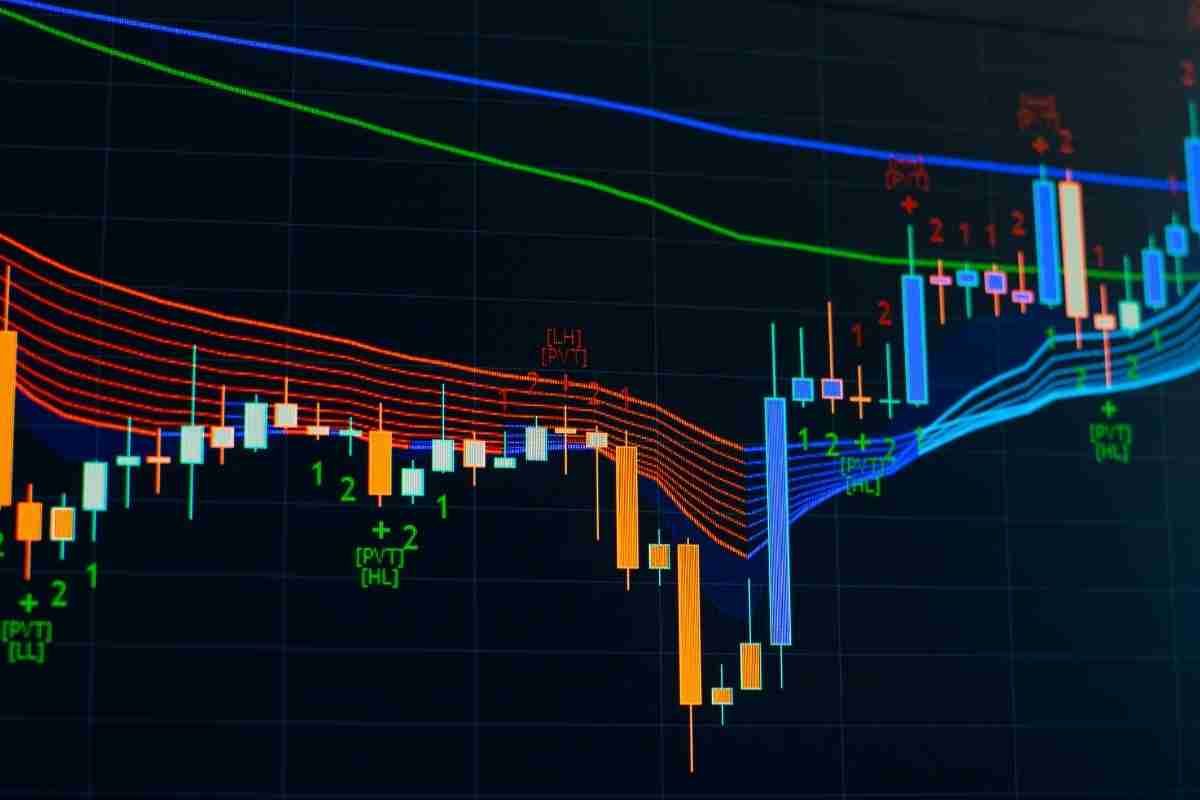
In investing and trading—especially in stocks and crypto assets—understanding price trends is key to making better decisions. One of the most basic and widely used tools by technical analysts is the Moving Average (MA). This indicator helps investors filter out market “noise” or minor price fluctuations and focus on the broader trend direction.
Read also: Understanding Margin Call, Its Risks, and How to Avoid It
What is a Moving Average?
Moving Average (MA) is a technical indicator that shows the average price of an asset over a specific time period. By calculating the average price over recent days, moving averages smooth out price movements, making the underlying trend easier to identify.
For example, a 20-day MA represents the average price over the last 20 days. As new data comes in, the oldest data point drops off—this is why the line “moves” or averages over time.
Moving Average is classified as a lagging indicator, meaning it reacts to price movements that have already occurred rather than predicting future prices. This makes it useful for confirming existing market trends.
Functions of Moving Average
Moving averages are used for various purposes in technical analysis, including:
- Identifying trend direction: An asset is considered to be in an uptrend when the price is above the MA, and in a downtrend when it is below.
- Determining dynamic support and resistance: MA lines often act as support or resistance levels depending on the trend direction.
- Reducing market noise: By averaging prices, short-term fluctuations become less disruptive to analysis.
Types of Moving Average
In practice, several types of moving averages are commonly used:
1. Simple Moving Average (SMA)
SMA is the most basic form of MA. It is calculated by summing prices over a certain period and dividing by the number of periods. For example, a 5-day SMA is calculated by adding the last five closing prices and dividing by five.
2. Exponential Moving Average (EMA)
EMA assigns greater weight to more recent prices, making it more responsive to price changes compared to SMA.
3. Weighted Moving Average (WMA)
WMA is similar to EMA in that it applies different weights to prices within a period. However, the weights in WMA are assigned proportionally based on how recent the data is.
How to Read Moving Average
Reading moving averages is relatively intuitive:
- Price above MA → uptrend (bullish)
- Price below MA → downtrend (bearish)
- Crossovers → a popular strategy where a short-term MA crosses above a long-term MA (such as MA 50 crossing above MA 200), known as a golden cross and considered bullish. Conversely, when a short-term MA crosses below a long-term MA (death cross), it is often seen as bearish.
Traders also use two moving averages with different periods to confirm signals. For instance, when EMA 20 crosses above EMA 50 from below, it may signal the start of an uptrend.
Read also: Understanding the Shooting Star Candle and Effective Trading Strategies
Practical Tips for Using Moving Average
To use this indicator effectively, consider the following tips:
1. Choose periods based on your investment style
- Short-term traders typically use shorter periods such as 10–20 days.
- Long-term investors often focus on MA 100–200 days to observe broader trends.
2. Combine with other indicators
Moving Average should not be used alone. Combining it with indicators like RSI, MACD, or volume can help reduce false signals.
3. Understand market conditions
Moving Average works best in trending markets rather than sideways conditions. In sideways markets, false signals tend to occur more frequently.
Strengths and Limitations of Moving Average
Strengths:
- Easy to understand and suitable for beginners.
- Helps clearly identify trend direction.
Limitations:
- Because it relies on historical data, MA often responds late to trend changes.
- It is not effective for accurately predicting reversal points without additional confirmation.
Conclusion
Moving Average is one of the most fundamental technical indicators that helps investors and traders understand trend direction, identify support and resistance levels, and reduce market noise. By combining different types of moving averages with additional indicators, analysts can develop more structured and well-measured investment strategies.
Take control of your trading by monitoring moving averages and other indicators on real-time charts! Download the Mobee app now and unlock comprehensive charting features that make technical analysis a breeze!
Disclaimer:
This content is intended to provide additional information for readers. Always conduct your own research before making any investment decisions. All crypto trading and investment activities are entirely the responsibility of the reader.
 Direct market access from the app
 Start exploring digital assets with Mobee
Track the market, learn about digital assets, and start trading more conveniently with the Mobee App.
Mobee is licensed and supervised by the OJK. Not a solicitation to buy or sell any asset.