Fake Gold Hallmarks: What 375, 585, 750 Mean, How to Check
A gold hallmark like 375, 585, 750, or 999 can be faked, so the hallmark alone is not proof that your gold is real. Do three checks: read the stamp carefully, test its weight and density, then verify with a certificate or a professional tester.
Below you will find what each hallmark means, how to read letter stamps, and the steps you can take before you pay.
Key Points
- Hallmarks like 375, 585, 750, and 999 can be stamped by anyone, so a hallmark alone is not proof of real gold.
- Do three checks: read the stamp, run a physical test (weight and density), then verify with a certificate or a professional tester.
- The number on a stamp shows purity, for example 750 means 75% gold or 18 karat. Letters are usually the maker's initials or a plating mark, not purity.
- Gold without a hallmark is not necessarily fake, but its purity is unverified. Imitation gold can also have a hallmark, usually a plating code like GP or GF.
- Digital gold like XAUt has no physical stamp, but it carries other risks: the price can go up and down, and you depend on the issuer and its custody.
What Is a Gold Hallmark and Why Is It Easy to Fake?
A hallmark or code on gold is a mark that states the purity of the metal. For official producers, this code is stamped with precision tools.
The problem is that a physical hallmark on gold can be engraved, stamped, or attached by anyone. There is no instant verification system that works just by looking at the number on the piece. This is what makes gold hallmarks a prime target for counterfeiting, especially for products sold informally or through unlicensed sellers.
If you want a more general guide to testing gold, also read how to tell real gold from fake and how to check real gold at home.
What Common Gold Hallmarks Mean: 375, 585, 700, 750, 999
The number on a stamp shows the gold content per thousand. A 750 hallmark means 750 out of 1,000 parts are gold, or 75%. To work out karats: purity (%) divided by 100, then multiplied by 24.
| Hallmark | Purity | Karat | Notes |
|---|---|---|---|
| 999 | 99.9% | 24 | Pure gold. Common for certified bars and coins. |
| 916 | 91.6% | 22 | Commonly sold in Indonesia, Dubai, and Bangkok. |
| 875 | 87.5% | 21 | Widely produced in Arab countries. |
| 750 | 75% | 18 | Common for jewelry. Mixed with other metals to make it stronger. |
| 700 | 70% | about 16.8 | Common in Indonesia. Some sources round it to 16 or 17 karat. |
| 585 | 58.5% | 14 | Widely used on jewelry made abroad. The pure calculation for 14/24 is 58.3%, and 585 is the stamp number that is used. |
| 375 | 37.5% | 9 | Strong and holds its shape, but the gold content is low, so the value per gram is much lower than 750 or 999. |
| 333 | 33.3% | 8 | The lowest purity in this table. Its pricing is covered in 8K gold price. |
Fakers usually do not invent strange hallmarks. They stamp numbers buyers already know, like 750, 916, or 999, on metal with much lower purity. That is why the numbers above only answer "what purity is claimed", not "is it real or not".
A Common Question: Letter Stamps Like SJ
Besides numbers, many pieces of jewelry have letters on the stamp. Keep two things in mind: letters are usually not purity, and the meaning of letters is not the same at every shop.
| Stamp | Usually means | Notes |
|---|---|---|
| K (18K, 14K) | Karat | 18K equals 750, 14K equals 585. |
| UBS, KH, MT, HWT | Maker's initials or brand | Example: UBS is PT Untung Bersama Sejahtera and KH is PT King Halim. This is the maker's identity, not purity. |
| P or KP (10KP) | Purity per the number shown | Example: 10KP means 41.7%. |
| SJ | A combination of letters on the stamp | No official source explains what SJ means, so do not guess. See the explanation below. |
Is an SJ hallmark real or fake? Whether the letters SJ are there or not does not prove the gold is real or fake. Letters on a stamp generally show the maker or brand, not purity, and we have not found an official source that explains what SJ means. What you can do: look for a purity number near the letters (for example 750 or 375), ask the shop or the maker, then test it with a professional tester. If the seller cannot explain the stamp on their own piece, treat that as a sign to be careful.
Gold Without a Hallmark: Is It Always Fake?
Not always. Fake gold often has no stamp at all, so a missing hallmark is a warning sign. But it is not proof. A stamp can wear off, be too small to read, or sit in a hidden spot like the inside of a ring or the clasp of a necklace.
Treat gold without a hallmark as "unverified", not "definitely fake" and not "definitely real". Do not pay yet. Check the weight, ask for a receipt or documents, then take it to a tester who can test the purity, for example through an appraisal test (uji taksir) at a Pegadaian branch or a licensed gold shop.
Does Imitation Gold Have a Hallmark?
Yes, but a different one. Imitation or plated gold is usually marked with a plating code, such as GP (gold plated, a thin layer on the surface), GE or GEP (gold electroplated), RGP (rolled gold plate), GF (gold filled), and HGE (heavy gold electroplate). XP, which refers to the Xuping alloy, is also used on imitation jewelry.
Look at the number before the plating code. On 18KGP or 18KGF, the 18 is only the purity of the plating, not the purity of the whole piece. Plated jewelry has no value as investment gold. What is dangerous is a seller who stamps a purity number like 750 or 916 on a plated piece. If the stamp has a plating code, the piece is honest about being plated, and its price should be much lower than real gold.
6 Signs of a Fake Gold Hallmark to Watch For
Here are the signs to look at before you buy:
- The hallmark looks rough or imprecise. On real gold, the stamp or engraving is made with precision machines and looks neat, consistent, and sharp. A fake hallmark often looks blurry, asymmetrical, or has uneven edges.
- The hallmark fades or rubs off easily. The stamp on real gold is permanent because it is engraved straight into the metal. If the hallmark looks like a sticker, a screen print, or rubs off easily, that is a red flag.
- The color is inconsistent. Fake gold that is plated (gold plating) often shows uneven color, especially on parts that rub often like edges or clasps.
- The weight does not match the size. Gold is very dense (19.3 g/cm³). If a piece feels too light for its size, it is almost certainly not pure gold.
- No certificate or documentation. Real gold bars from a trusted producer always come with a certificate that can be verified. Gold without any documents deserves suspicion.
- The price is far below the market price. This is the most classic red flag. If a price is too good to be true, it most likely is not true.
How to Test Gold Authenticity Yourself
Before taking gold to a professional tester, there are a few first tests you can do yourself. Treat all of them as an initial filter, not proof.
Magnet Test
- Hold a strong magnet close to the gold.
- Real gold is not magnetic and will not be attracted.
- If it is attracted, it is definitely not pure gold.
Note: passing the magnet test does not guarantee the gold is real, because other non-magnetic metals can also plate or replace gold.
Density Test
Pure gold has a density of about 19.3 g/cm³, far above water at only 1 g/cm³. That is why gold sinks in water instead of floating. If a gold-colored object floats, it is clearly not gold. But sinking alone proves nothing, because copper, brass, and silver also sink.
Here is how to measure it through water displacement:
- Weigh your gold in grams. Use a digital scale with 0.01 g precision.
- Fill a measuring cup with water and note the volume.
- Lower the gold in on a thread until it is fully submerged, then note the new volume.
- The volume of the gold is the difference. Density equals weight divided by volume.
Example: gold weighing 38 g that raises the water by 2 ml has a density of 38 / 2 = 19 g/ml, close to pure gold.
There are three important notes. First, alloyed jewelry is lighter than pure gold: 22K gold is about 17.7 to 17.8 g/cm³, 18K about 15.2 to 15.9, and 14K about 12.9 to 14.6. Compare your result with the purity on the stamp, not with 19.3. Second, tungsten has a density of 19.25 g/cm³, almost the same as gold, and has been used to fake bars, so passing this test does not guarantee it is real. Third, for small items like rings, the change in water volume is very small, so it is easy to get it wrong.
Color and Wear Test
- Rub the gold gently on a rough surface like ceramic. Do this only on items that can be scratched.
- Real gold will leave a golden-colored mark.
- If the mark is blackish or another color, the gold is most likely fake or plated.
Temperature Test
- Gold conducts heat well, so it feels cold when you first hold it, then quickly warms up to match your hand.
- Mixed metals with lower conductivity often feel slower to change temperature.
- This test is rough and cannot tell gold apart from other metals that also conduct heat, so do not use it as your only basis.
Professional Checks: When and Where?
For high-value gold or gold you plan to hold as a long-term investment, self-tests are not enough. Here are the professional checks you can use:
- Nitric acid test: done by a gold shop or a licensed metal tester. A specific color reaction shows the gold content accurately.
- XRF (X-Ray Fluorescence): a technology that can detect the metal composition without damaging the gold. Available at some premium gold shops and metal testing institutions.
- Checking at Antam or a licensed shop: for gold bars, verifying directly with the producer or an official store is the most trustworthy way.
Do not hesitate to spend a small fee on professional verification before buying gold in large amounts. That fee is far smaller than the loss from buying fake gold.
Tips for Buying Gold Safely and Avoiding Scams
- Buy only from registered official gold shops, licensed producers like Antam, or investment platforms supervised by OJK.
- Always ask for a certificate of authenticity, especially for gold bars worth more than Rp1 million.
- Avoid buying gold from unknown sellers on social media, unofficial marketplaces, or word-of-mouth offers that cannot be verified.
- Compare the price with today's gold market price before you transact. A big discount with no clear reason is a sign of a scam.
- Keep all proof of purchase, certificates, and transaction documents as legal protection in case of a dispute.
- If you are unsure, hold off on buying and do more research. Gold scams often exploit time pressure and false urgency.
- Make sure the investment platform you use has an official licence.
Digital Gold XAUt: How Is It Different From Physical Gold?
If what you want is exposure to the gold price without holding a physical item, there is digital gold like XAUt (Tether Gold). One XAUt token represents one troy ounce of London Good Delivery quality gold stored in a vault in Switzerland. There is no stamp or code for you to check, but the risk moves somewhere else:
- The price fluctuates. The XAUt price follows the global gold price, and it can fall like physical gold. If you transact in rupiah, the exchange rate also has an effect.
- You depend on the issuer and the custodian. You rely on the token issuer to issue in line with the gold held and on the custodian to safeguard the gold. Reserve information can be checked through the Tether Gold lookup system.
- Wallet and platform risk. Tokens are kept in a wallet or on a platform, so choose a licensed platform and keep your account secure.
The practical benefits: you can transact at any time, you do not need to store physical gold, and you can start with a small amount. Learn more in how XAUt works and what digital gold is.
Digital Gold on Mobee
Mobee is operated by PT CTXG Indonesia Berkarya, which is licensed and supervised by OJK. You can see the XAUT/IDR price and transact through Spot Trade or the Digital Gold menu, so you do not need to handle the dollar conversion yourself. If you want to try it, install the Mobee app from the App Store or Google Play and understand the risks first.
Conclusion
Fake gold hallmarks are a real threat, and the reason is simple: anyone can make a stamp. So do not stop at reading the hallmark. Read the stamp and match it against the weight, run physical tests as an initial filter, then verify with a certificate or a professional tester for high-value purchases.
Gold without a hallmark is not necessarily fake, and imitation gold can have a plating code, so both still need to be tested. If you prefer to skip the stamps and physical tests, digital gold like XAUt can be considered, as long as you understand that its price can go up and down and that it depends on the issuer and its custodian.
FAQ
Is a 999 hallmark always real gold?
No. A 999 hallmark is only an initial indicator of gold purity. It can still be engraved or stamped on other metals, so the authenticity of the gold still needs to be checked through physical tests and verification by a professional or the official producer.
What is the fastest way to check real gold?
The magnet test can be the fastest way because real gold is not attracted to a magnet. However, this method only helps filter out obviously fake gold. For more accurate results, use the density test or take the gold to a licensed gold shop.
Is jewelry gold harder to verify than gold bars?
Yes. Jewelry gold is usually harder to verify because its shapes vary and it does not always come with a standard certificate. Gold bars from official producers like Antam, on the other hand, generally have a stricter verification system.
What should I do if I have already bought fake gold?
Gather all proof of purchase, then report it to the authorities and consult the Indonesian Consumers Foundation (YLKI). Do not resell gold that you suspect is fake, because that could cause legal problems.
Can digital gold be an alternative to physical gold?
In terms of the risk of physical counterfeiting, digital gold can be an alternative because there is no stamp or physical item to check. For example, XAUt represents physical gold stored in a vault and its information can be checked. However, digital gold still has its own risks: the price can go up and down, and you depend on the issuer and its custodian. Choose a licensed platform that is supervised by the relevant authorities.
Is an SJ gold hallmark real or fake?
The letters SJ on a stamp cannot be used as proof of real or fake. Letters on a stamp generally show the maker or brand, not the gold purity, and there is no official source that explains what SJ means. Look at the purity number near it, for example 750 or 375, then match it with the weight and test the piece with a professional tester. If the number is low like 333, that is equivalent to about 8 karat gold; read 8K gold price for an idea of its value.
Is gold without a hallmark always fake?
Not always. Fake gold often has no stamp, but the stamp on real gold can also wear off, be too small, or sit in a hidden spot like inside a ring or on a necklace clasp. Treat gold without a hallmark as unverified: check the weight, ask for a receipt or documents, and test the purity with a tester before you pay.
Does imitation gold have a hallmark?
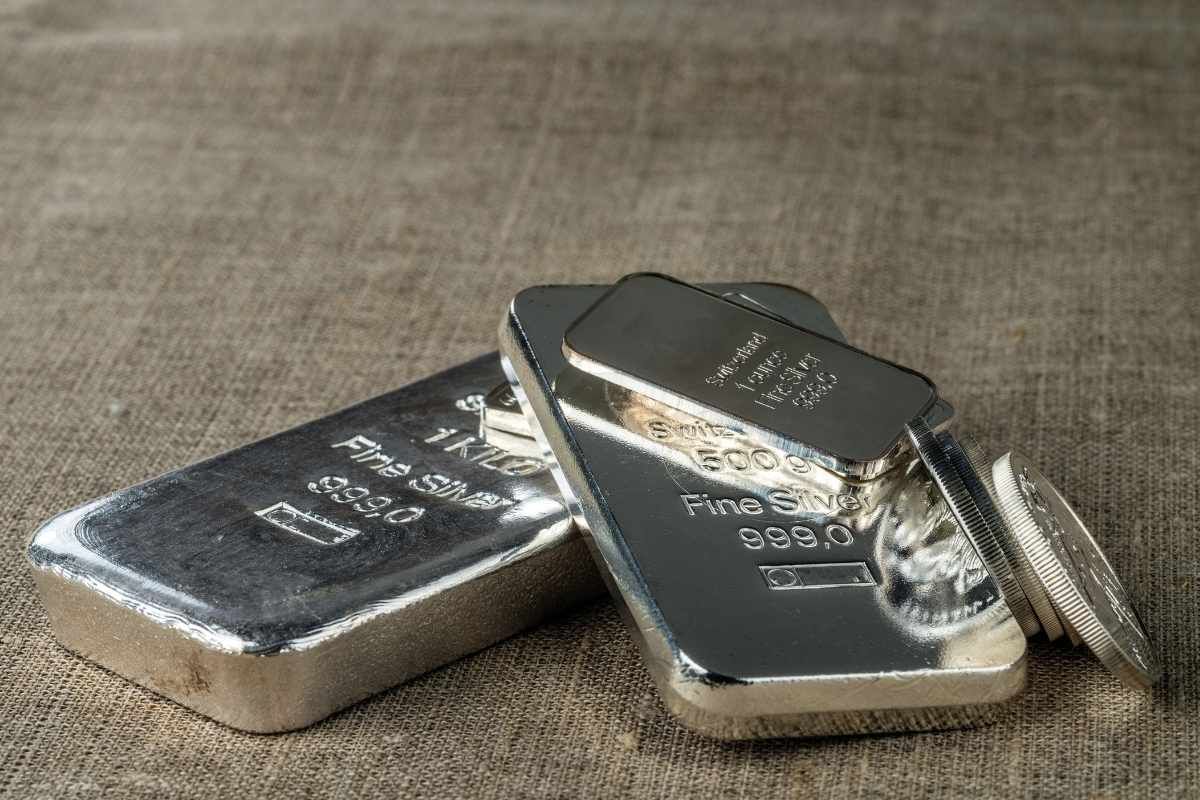
Yes. Imitation or plated gold is usually marked with a plating code like GP, GF, RGP, or HGE, and the number before it is only the purity of the plating, not the purity of the whole piece. Also watch out for white metals with a number code: the 925 code is commonly used on silver, not gold. How to tell them apart is covered in signs of real silver.
This content is meant to give readers additional information and is not investment advice. Crypto assets, including gold tokens, carry high risk and their prices can change at any time. Always do your own research before investing. All buying, selling, and investing in crypto assets is entirely the reader's responsibility.
 Direct market access from the app
Start exploring digital assets with Mobee
Track the market, learn about digital assets, and start trading more conveniently with the Mobee App.
Mobee is licensed and supervised by the OJK. Not a solicitation to buy or sell any asset.