Inflation and Purchasing Power: Why Idle Cash Is Still Risky
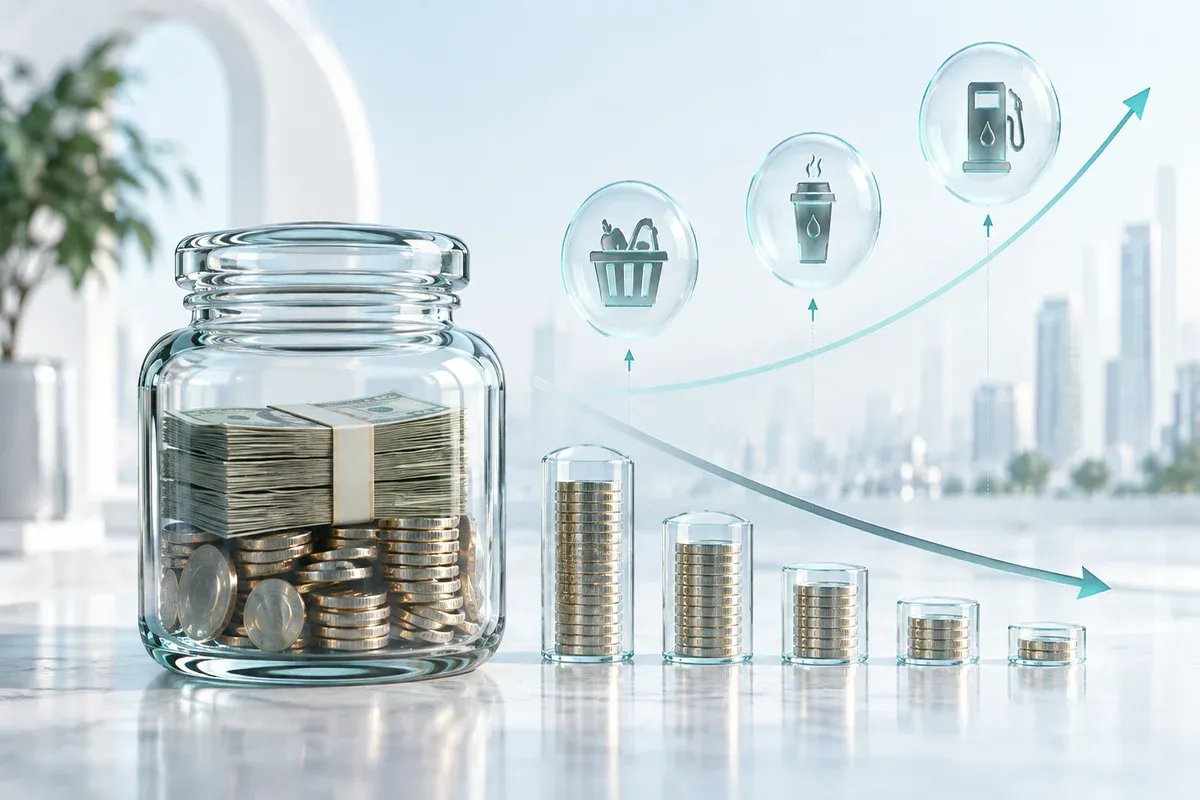
Rp100,000 that covered a few needs last year might now force you to leave one or two items behind. The change rarely feels big in a single trip, but when it keeps happening, the effect shows up clearly in your monthly spending.
That is how inflation affects purchasing power: the nominal amount of money stays the same, but its ability to buy goods and services quietly shrinks.
Key Takeaways
- Indonesia's inflation in July 2026 was recorded at 2.88% year-on-year, still within Bank Indonesia's 2026 target range of 2.5% ±1%.
- Money that just sits without growing still loses purchasing power. Rp10 million today is worth about Rp9.72 million in a year and Rp8.68 million in five years, measured in today's value.
- National inflation is an average, not a personal experience. Spending patterns differ from person to person, so the real impact can be higher or lower than the official BPS figure.
- Emergency funds and daily necessities should stay liquid. What's worth rethinking is long-term money left idle without a clear purpose.
- Crypto is one option for part of your long-term funds, not a replacement for savings, and it still carries volatility risk far higher than inflation itself.
The Money Is Still There, Its Buying Power Isn't
Indonesia's Central Statistics Agency (BPS) recorded inflation at 2.88% year-on-year in July 2026. In other words, prices of goods and services generally rose 2.88% compared to July 2025, a figure still within Bank Indonesia's 2026 target range of 2.5% ±1%. (BPS, Bank Indonesia)
2.88% sounds small, but the impact is easier to grasp in rupiah terms. Something you can buy today for Rp10 million will need about Rp10,288,000 a year from now to buy the same goods and services. On the other hand, if that Rp10 million is simply kept without generating any growth, the nominal amount stays Rp10 million, but its purchasing power in today's value drops to around Rp9.72 million.
The money isn't gone. There's just less it can buy.
Purchasing Power Simulation: Rp10 Million Left Idle
If inflation holds at 2.88% a year, here's the projected purchasing power of Rp10 million in today's value, assuming the money is only kept without any growth:
| Year | Nominal Value | Purchasing Power in Today's Value |
|---|---|---|
| 0 | Rp10,000,000 | Rp10,000,000 |
| 1 | Rp10,000,000 | Rp9,720,062 |
| 3 | Rp10,000,000 | Rp9,183,477 |
| 5 | Rp10,000,000 | Rp8,676,513 |
| 10 | Rp10,000,000 | Rp7,528,188 |
| 20 | Rp10,000,000 | Rp5,667,361 |
This is only an illustration, since actual inflation rates change from year to year. But the pattern holds: the longer money sits idle without growing, the more purchasing power it loses.
Inflation Isn't the Same for Everyone
The national inflation figure is an average. BPS calculates it from price changes across various household needs, from food and housing to transportation, healthcare, and education. (BPS)
But everyone's spending pattern is different. Parents may feel rising school costs more directly. Young people living alone might be hit harder by rent and food prices. Commuters who travel daily may notice transportation costs the most. Because of that, 2.88% inflation doesn't necessarily match the rise in your personal cost of living.
To see the real impact on your own finances, compare last year's spending records with this year's: food, housing, transportation, and other routine expenses. That comparison shows whether your personal cost of living is rising faster or slower than national inflation.
Can Crypto Help Protect Purchasing Power?
Once routine needs and an emergency fund are covered, there's one question worth thinking through: what should be done with money that won't be used anytime soon?
Leaving all of it in cash for too long lets inflation quietly erode its purchasing power, as the simulation above shows. One option worth considering for part of your long-term funds is crypto, though it's neither the only option nor free of risk.
Cash is fundamentally a payment tool and a store of liquidity, not something designed to generate growth. Crypto assets carry potential for value appreciation, but with much higher risk attached. Some crypto assets also have a supply capped by design. Bitcoin, for example, is built with a hard limit of 21 million units, a trait that leads some investors to include it in long-term asset storage strategies. How currency value connects to purchasing power is covered further in fiat money and what is devaluation.
But a capped supply doesn't guarantee Bitcoin's price will always rise. Its value is still driven by market demand and can swing sharply in a short time. That's why crypto is better viewed as an asset with growth potential, not a risk-free place to park money.
Where Your Money Should Work, Based on Its Purpose
Every portion of your money has a different job. This table helps map out what suits daily needs versus what could be considered for long-term funds.
| Fund Type | Example Instrument | Liquidity | Potential to Beat Inflation | Volatility |
|---|---|---|---|---|
| Daily expenses | Savings account, e-wallet | Very high | Low, usually below inflation | Very low |
| Emergency fund | Savings, short-term deposits | High | Low to moderate | Low |
| Medium to long-term funds | Yield-bearing instruments such as Flexi Earn | Moderate to high | Moderate | Low to moderate |
| Long-term funds with higher risk tolerance | Crypto assets, Dual Investment | Varies | Potentially high, not guaranteed | High |
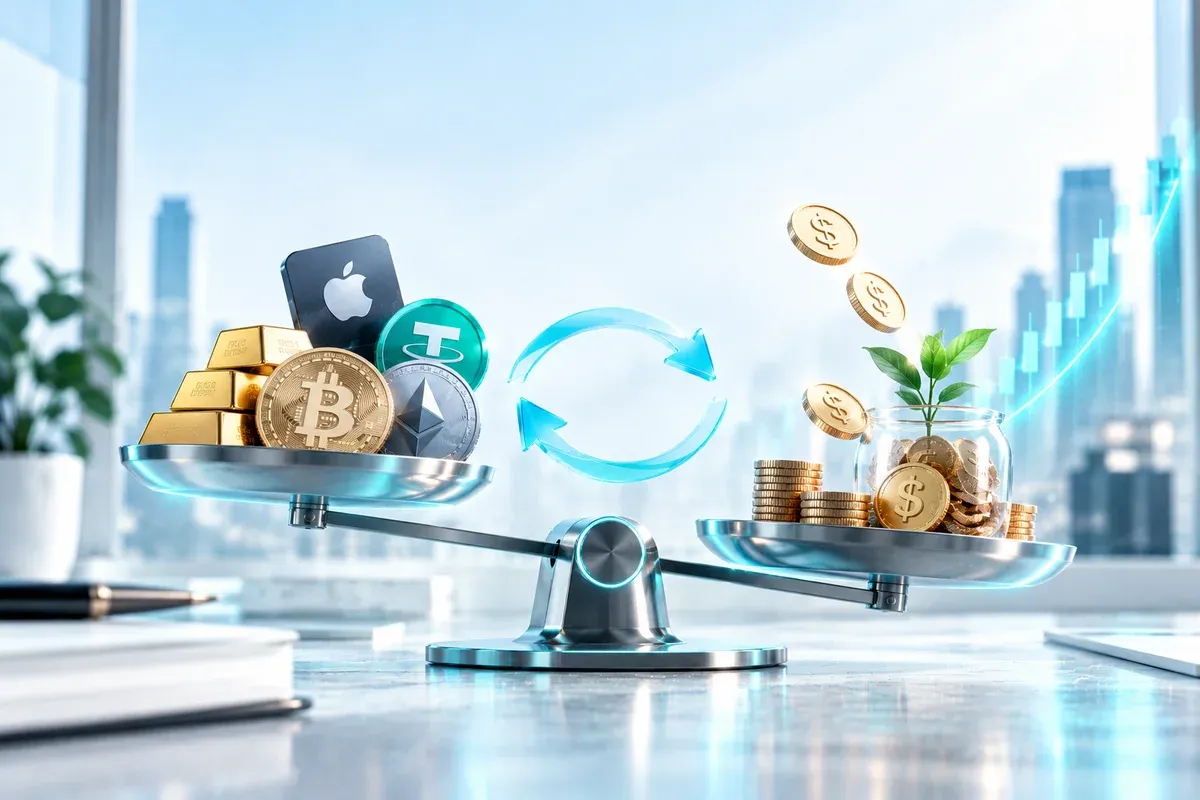
Money for daily needs and emergencies should stay liquid and easy to access. Meanwhile, part of the funds that won't be needed soon can be gradually allocated to crypto, provided the investment goal is clear, the time horizon is adequate, and the risk is understood. A framework for building this kind of allocation is covered in crypto portfolio for beginners.
The goal isn't to move your entire balance into crypto. Cash protects today's needs, while assets with growth potential give part of your funds a chance to work toward the future.
FAQ
Why can money lose value even if the amount you have does not decrease?
Because the value of money is measured by its purchasing power, not just its nominal amount. If prices rise by 2.88% per year while your money does not grow, the amount of goods and services you can buy gradually decreases even though the nominal balance remains the same.
How long does it take before the impact of inflation becomes significant?
The impact may still seem small after one year, but it continues to accumulate. At an annual inflation rate of 2.88%, the purchasing power of Rp10 million falls to around Rp8.68 million after five years and Rp7.53 million after ten years when measured in today's value.
Should all funds be moved into assets with growth potential?
No. Funds for daily expenses and emergencies should remain liquid and easily accessible. What may need to be reconsidered is long-term money that will not be needed anytime soon and is currently sitting idle without a clear purpose.
Can crypto always beat inflation?
No. Crypto has the potential to appreciate in value, but prices can also fall sharply within a short period. Crypto is better viewed as an asset with long-term growth potential rather than a risk-free instrument that is guaranteed to outperform inflation.
What percentage of funds should ideally be allocated to crypto?
There is no standard percentage that works for everyone because it depends on your risk profile, financial goals, and investment horizon. As a basic principle, only use funds that you will not need in the near future, and consider starting gradually while understanding the risks involved.
Put This Opportunity to Work on Mobee
Mobee is a licensed Digital Financial Asset Trader supervised by OJK, operating under the legal entity PT CTXG Indonesia Berkarya. Here are a few steps to start allocating part of your long-term funds:
- Start with Bitcoin in small fractions, and understand the risk first through crypto trading tips.
- Check current yields on the Earn products page if you want your funds to work with relatively more controlled volatility than direct trading.
- Store your assets safely with the guide on best crypto wallets, and learn how to read the market in how to analyze crypto.
Rupiah deposits can be made via QRIS, bank transfer, or virtual account, with the full guide available at Mobee Tutorial.
Disclaimer. This article is for educational purposes only and is not a recommendation to buy or sell any particular asset. Crypto assets carry high risk and price volatility. All purchasing power simulations are illustrative, based on a constant inflation assumption, and are not official projections. Learn about the product, its costs, and its risks before making any financial decision.
 Direct market access from the app
 Start exploring digital assets with Mobee
Track the market, learn about digital assets, and start trading more conveniently with the Mobee App.
Mobee is licensed and supervised by the OJK. Not a solicitation to buy or sell any asset.