US Dollar Analysis: Drivers, Impacts, and 2026 Outlook

The US dollar is the official currency of the United States and the primary unit for global trade, commodity pricing, and many foreign exchange reserves. As of March 2026, the dollar exchange rate against the Indonesian rupiah remains a key reference for investors because it affects import prices, travel costs, and crypto valuations.
For beginners, understanding the dollar is not only about converting USD to IDR but also about reading inflation, interest rate, and liquidity signals. This article explains the dollar's function, how it moves, its risks, and practical strategies for dealing with a stronger or weaker dollar.
Key Points
-
Global function: The US dollar is used in about 88% of global forex transactions, according to BIS 2026.
-
Rate signal: The Fed funds rate and US inflation in 2026 shape the direction of the dollar index.
-
Rupiah impact: A higher USD/IDR makes imports and foreign-currency debt more expensive.
-
Crypto link: A strong dollar often pressures risk assets and stablecoin flows.
-
Safe strategy: Monitor DXY, CPI, and JISDOR before making any investment decision.
Why the US Dollar Still Dominates
Dollar dominance is not only about the US economy but also about liquidity networks built over decades. Many central banks hold dollars as reserves because the US Treasury market is deep and easy to sell during crises.
As of April 2026, the BIS Triennial Survey estimates the dollar was involved in about 88% of global foreign exchange transactions, a figure that shows how difficult it is to replace the dollar quickly. For anyone investing in fiat money or crypto assets, this dominance means dollar moves will still be felt across almost every asset class.
• Transaction share: The dollar appeared in about 88% of global forex transactions, according to BIS April 2026.
• Reserve share: IMF COFER April 2026 placed the dollar's share at around 57% of global reserves.
• Commodity pricing: Oil, gold, and copper are generally priced in dollars.
• Safe liquidity: The US Treasury market becomes a parking place for large funds when global risk rises.
• Payment network: Many cross-border transactions still pass through dollar-based systems.
Functions of the Dollar in Daily Economics
The dollar works as an international medium of exchange, a unit of account, and a store of value. When the dollar rises, imported goods, international flight tickets, and global software subscriptions adjust accordingly.
In crypto, digital dollars such as USDT and USDC act as a bridge between rupiah and risk assets. Understanding devaluation matters because rupiah weakness against the dollar can erode purchasing power even if domestic prices do not change.
• Medium of exchange: The dollar is widely accepted for international trade payments.
• Unit of account: Commodity and global bond prices are often quoted in dollars.
• Store of value: The dollar is used as a safe haven when markets panic.
• Reserve asset: Central banks hold dollars to maintain exchange rate stability.
• Stablecoin peg: USDT, USDC, and other stablecoins are pegged to the dollar.
How the Dollar Index and Exchange Rates Work
The dollar index, or DXY, measures dollar strength against a basket of major currencies such as the euro, yen, and pound sterling. According to Federal Reserve H.10 data as of March 2026, DXY traded around 104.2, a level that still shows a relatively strong dollar.
This figure matters because DXY often sets the macro backdrop for rupiah moves, US stocks, and crypto. To read the dollar's direction, you need to compare US bond yields with those of other countries and track Fed rate expectations.
1. Understand DXY: This index measures the dollar against the euro, yen, and other major currencies.
2. Check interest rates: Compare the Fed funds rate with policy rates from other central banks.
3. Read inflation: A high US CPI can push the Fed to keep rates higher for longer.
4. Watch jobs data: NFP and unemployment rate data shape market expectations.
5. Form a view: The dollar tends to strengthen when US real yields rise.
Impact of a Strong Dollar on Rupiah and Crypto
A strong dollar can be bad news for risk assets in the short term. Based on BI JISDOR March 2026, USD/IDR stood at around 16,350, meaning every 100 dollars equals about Rp1,635,000.
This exchange rate affects import costs, foreign-currency debt payments, and investor appetite for crypto. When the dollar strengthens, some investors move funds into stablecoins or dollar bonds to reduce risk.
• Rupiah weakness: A higher USD/IDR makes imported goods and raw materials more expensive.
• Foreign debt: Principal and interest costs on dollar debt increase for companies.
• Crypto pressure: Bitcoin and altcoins often fall when the dollar and US yields rise.
• Stablecoin demand: Demand for USDT and USDC increases when investors seek digital dollar assets.
• Gold shine: World Gold Council Q1 2026 recorded gold at around 2,900 dollars per ounce.
Key Drivers of the Dollar in 2026
The dollar's direction in 2026 is shaped by a mix of monetary policy, inflation, and geopolitical risk. The BLS recorded US inflation at 2.9% year-on-year in January 2026, still above the Fed's 2% target.
This figure makes it hard for markets to expect aggressive rate cuts. The IMF WEO April 2026 projects global growth at 3.1%, which means demand for the dollar as a safe asset may remain supported when uncertainty appears.
• Fed policy: High interest rates keep the dollar attractive.
• US inflation: CPI at 2.9% in January 2026 makes the Fed cautious.
• Global growth: IMF's 3.1% April 2026 projection influences capital flows.
• Geopolitics: Global tensions drive safe-haven demand.
• Capital flows: Foreign investors may pull funds from emerging markets when the dollar is strong.
How to Read Daily Dollar Data
Reading daily dollar data does not need to be complicated if you follow a consistent checklist. Start with the dollar index, then US bond yields, the JISDOR reference rate, and key economic data.
With this sequence, you can tell whether rupiah weakness is temporary or driven by a larger global factor. Record each observation so your investment decisions are not based only on feeling.
1. Check DXY: See whether the dollar is strengthening or weakening against major currencies.
2. Check US yields: Monitor the US 10-year Treasury yield as a dollar attraction gauge.
3. Check JISDOR: Compare Bank Indonesia's reference rate with the market rate.
4. Check CPI and NFP: These data points shape Fed rate expectations.
5. Check crypto markets: Watch USDT volume and exchange inflows or outflows.
Summary Table of Dollar Factors and Impacts
| Factor | Signal | Rupiah Impact | Crypto Impact |
|---|---|---|---|
| Fed funds rate | Rising | Rupiah tends to weaken | Selling pressure on risk assets |
| US CPI | Above 2% | Real yields rise | Crypto becomes more volatile |
| DXY | Above 104 | Strong dollar | Risk-off pressure increases |
| Gold price | Rising | Safe-haven demand rises | Crypto may face pressure |
| USDT market cap | Rising | Digital dollar liquidity rises | Buying interest may be delayed |
Risks and Common Mistakes When Dealing with the Dollar
Many beginners only look at the exchange rate and make a decision immediately. In reality, conversion fees, spreads, and taxes can erode returns. Another risk is assuming the dollar and crypto always move in opposite directions, while the relationship can change with liquidity and market narratives.
Use the latest 2026 data and do not act on a single news headline.
• Ignoring costs: Spreads and conversion fees can reach 1-3% per transaction.
• Overtrading: Daily dollar moves are often random and hard to predict.
• Wrong correlation: The dollar and crypto do not always move in opposite directions.
• No diversification: Putting all funds in one dollar asset increases risk.
• Panic during spikes: A dollar spike can trigger rushed selling decisions.
Practical Strategies for Indonesian Investors
Your dollar strategy should match your goal. If you need dollars for education or travel, buy gradually through a conversion feature. If you are a crypto investor, use USDT as a liquidity tool, not as the main investment target. Combine it with other instruments so your portfolio does not depend on only one scenario.
1. Set a goal: Separate short-term dollar needs from long-term investing.
2. Allocate gradually: Buy dollars or stablecoins in several stages, not all at once.
3. Use stablecoins: Hold only funds ready for trading or payments.
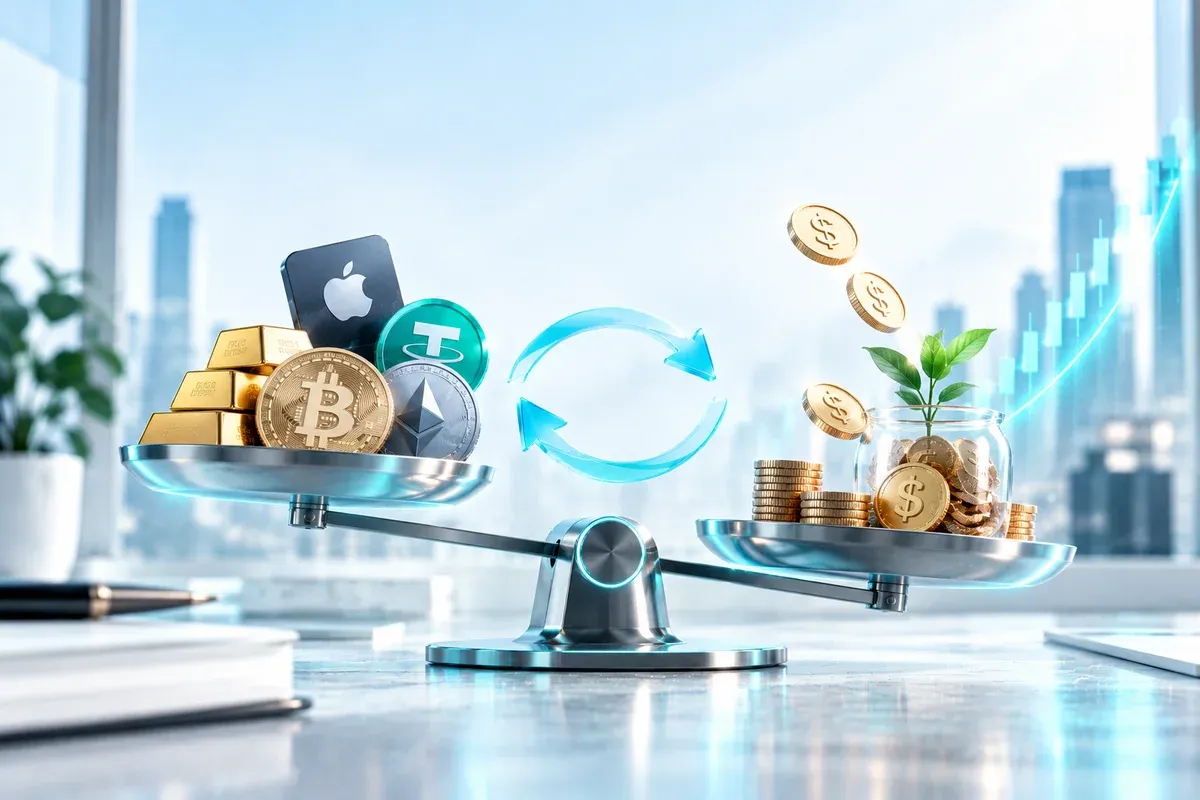
4. Simple hedging: Consider gold or US stocks as complementary assets.
5. Track rates: Keep a journal of buy and sell rates to evaluate decisions.
Conclusion
The US dollar remains at the center of the global financial system in 2026. Its movement is influenced by Fed rates, inflation, jobs data, and geopolitical risk. For Indonesian investors, the dollar is not only about exchange rates but also a risk signal that affects rupiah, stocks, gold, and crypto. By reading DXY, CPI, JISDOR, and stablecoin liquidity, you can make more measured decisions. Do not chase predictions; focus on process and risk management.
FAQ
What is the US dollar?
The US dollar is the official currency of the United States and is used in international trade, foreign exchange reserves, and commodity pricing. As of March 2026, the dollar was still involved in about 88% of global forex transactions, according to BIS.
Why is the dollar strengthening against the rupiah?
The dollar strengthens against the rupiah when US yields rise, US inflation stays high, or global investors avoid risk. For example, if the Fed funds rate stays above 4% and US CPI is 2.9% in January 2026, funds tend to flow into dollar assets.
Is a strong dollar always bad for crypto?
Not always. A strong dollar often pressures risk assets in the short term, but crypto can still rise if there are catalysts such as ETFs or institutional adoption. This correlation should be monitored with volume and stablecoin flows.
What was the dollar to rupiah rate in 2026?
Based on BI JISDOR March 2026, USD/IDR stood at around 16,350. That means 100 dollars equals about Rp1,635,000 before conversion fees. Rates can change daily, so verify the latest figure before transacting.
How can I safely start investing with the dollar in mind?
Start by setting a goal, allocating gradually, and defining risk limits. Use a licensed platform, understand fees, and do not put all funds in one asset. For crypto, hold stablecoins only for needed liquidity.
Start with Mobee
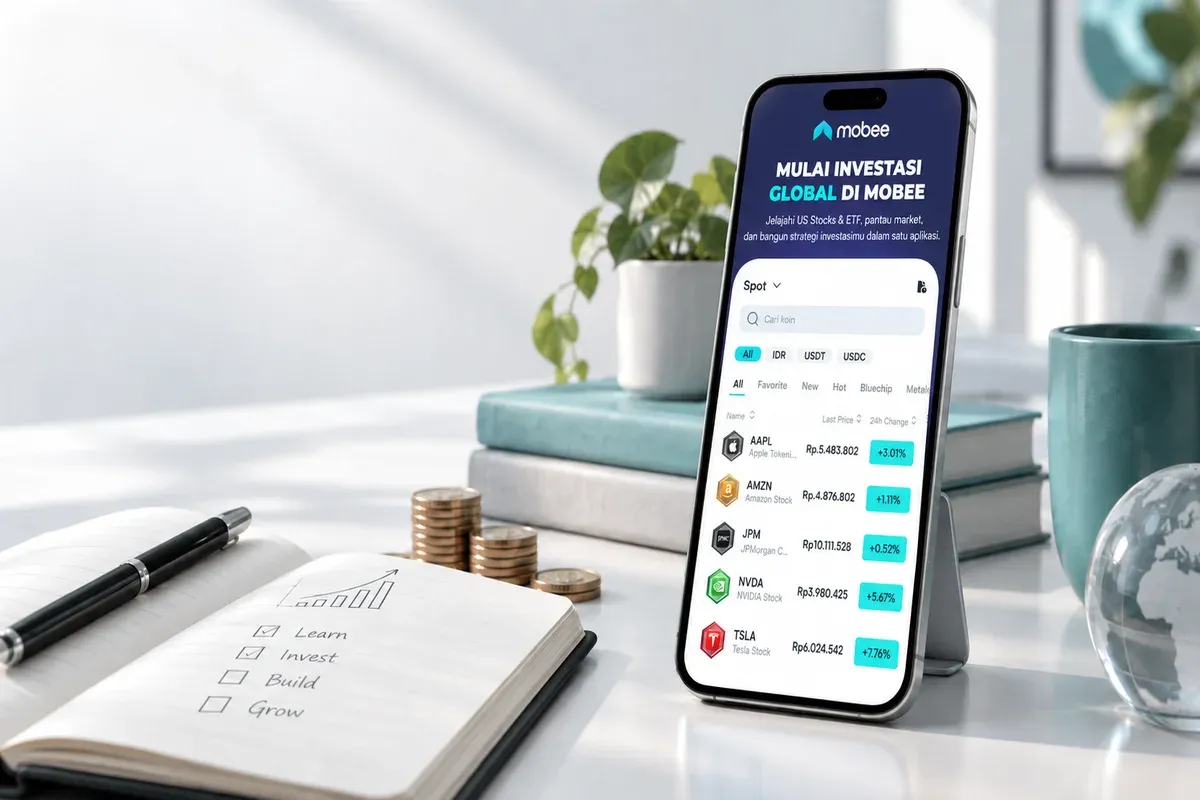
Mobee is a digital asset platform licensed and supervised by OJK, helping users explore crypto and investment products with clearer access and practical learning. Start your investment journey through Mobee and choose products that match your goals and risk profile.
 Direct market access from the app
 Start exploring digital assets with Mobee
Track the market, learn about digital assets, and start trading more conveniently with the Mobee App.
Mobee is licensed and supervised by the OJK. Not a solicitation to buy or sell any asset.