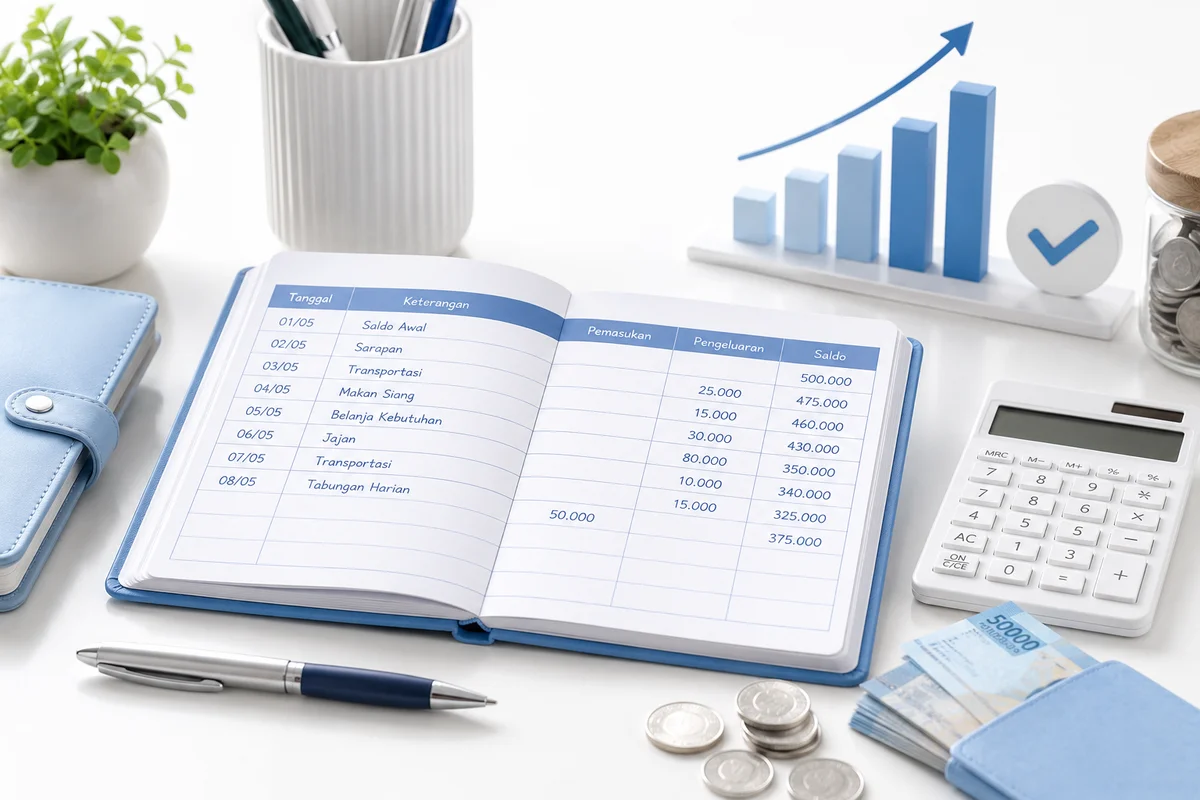
A daily savings book is a personal finance tool that records every income and expense on a daily basis to help you manage cash flow. By tracking your transactions, you can identify spending habits, cut unnecessary costs, and ensure you save a portion of your income. This simple method is effective for beginners who want to build a savings habit. A daily savings book can be a physical notebook, a spreadsheet, or a finance app. You can also leverage the Earn feature to store funds while monitoring expenses.
Key Points
- Main purpose: Record daily income and expenses to control cash flow.
- Key benefit: Helps you see spending patterns and set aside money for savings.
- Practical example: Notebook, Excel sheet, or app like Money Lover.
- Common risk: Inconsistent recording or forgetting small transactions.
- Success tip: Record every day, create categories, and review weekly.
- Practical example: Notebook, Excel sheet, or app like Money Lover.
- Common risk: Inconsistent recording or forgetting small transactions.
- Success tip: Record every day, create categories, and review weekly.
What Is a Daily Savings Book
A daily savings book is a personal financial record that logs every transaction within a single day. The format is simple: columns for date, description, income, expense, and balance. By recording routinely, you can track where your money goes and ensure spending stays within budget. For example, if you record a daily coffee expense of $2, after a month you'll see a total of $60, which could be saved instead.
Benefits of Daily Expense Tracking
Tracking daily expenses offers several advantages:
• Financial awareness: You know exactly how much money goes out each day.
• Spending control: Seeing the record helps you reduce unnecessary purchases.
• Savings target: The ending balance each day can motivate you to save more.
• Leak detection: Small expenses like transport or snacks often go unnoticed, but daily tracking reveals them.
• Financial evaluation: Compare expenses this month to last month to see progress.
According to an OJK survey in 2022, only 38% of Indonesians maintain regular financial records, meaning most struggle to control their finances.
How to Create a Simple Daily Savings Book
You can start with these steps:
1. Prepare a tool: Use a notebook, spreadsheet, or a finance app.
2. Create columns: Date, description, income, expense, and balance.
3. Record each transaction: Do it daily, ideally right after the transaction.
4. Calculate balance: Subtract expenses from income to get the daily balance.
5. Weekly review: Look at total expenses and compare to your budget.
Simple example: On Jan 1, you receive salary $1,000 and pay rent $300. Record: date 1/1, description 'salary', income 1000, expense 300, balance 700. Next day, you spend $50 on groceries, then record with new balance $650.
Sample Daily Savings Book Format
Here is a simple table format you can use:
Copy this table in your notebook or spreadsheet. Each row represents one transaction. The balance is the previous balance plus income minus expense.
Common Mistakes in Daily Recording
Beginners often make mistakes that reduce the record's effectiveness:
• Inconsistency: Recording only a few days then stopping, making data incomplete.
• Missing small transactions: Small amounts like parking or drinks accumulate significantly.
• Not updating balance: Only recording transactions without recalculating balance, so you lose track.
• Mixing savings with expenses: Transfers to savings should be recorded as an expense (to savings) to keep them separate.
• No categories: Without categories, it's hard to know your biggest spending areas.
To avoid these, get into a habit of recording at the same time each day, e.g., before bed.
Daily Savings Book Examples in Apps
Besides a notebook, you can use finance apps like Money Lover, Spendee, or BukuKas. These apps automatically calculate balances and display spending charts. With Money Lover, you create an account, add transactions by category (food, transport, etc.), and the app shows total spending per category. The advantage is no manual calculation; the disadvantage is you still need to input data daily. You can learn more through the Mobee tutorial for managing finances with apps.
Tips for Consistent Daily Recording
Consistency is the key to a successful daily savings book. Here are tips:
• Schedule recording time: Do it every night for 5 minutes.
• Set reminders: Use phone alarms so you don't forget.
• Record immediately after transaction: Prevents forgetting details.
• Involve a partner or family: Mutual reminders help.
• Reward yourself: If consistent for a month, treat yourself to something small.
With consistency, within three months you'll see your financial patterns and start saving more effectively. This principle is similar to beginner stock investing, where discipline and routine tracking help achieve financial targets.
Why Daily Savings Books Still Matter in the Digital Age
Despite advanced apps, the daily savings book remains relevant because:
• No internet needed: Can be done anywhere, anytime.
• More personal: You can add notes like savings goals.
• Builds discipline: Writing manually makes you more aware of each transaction.
• Easy to start: No app learning curve, just a book and pen.
• Great for beginners: A first step before moving to digital tools.
Many financial experts recommend beginners start with manual tracking before using apps. Compare with gold prices over the years; daily records help you see long-term spending trends.
Conclusion
A daily savings book is a simple but powerful tool for personal finance management. By recording every transaction, you can track cash flow, cut unnecessary expenses, and boost your savings. Start with a simple format, record daily, and review regularly. Consistency is key. To optimize your savings, you can combine it with other financial instruments like the largest assets in the world or staking crypto strategies for long-term fund growth.
FAQ
Start with Mobee
Mobee is a digital asset platform licensed and supervised by OJK, helping users explore crypto and investment products with clearer access and practical learning. Start your investment journey through Mobee and choose products that match your goals and risk profile.