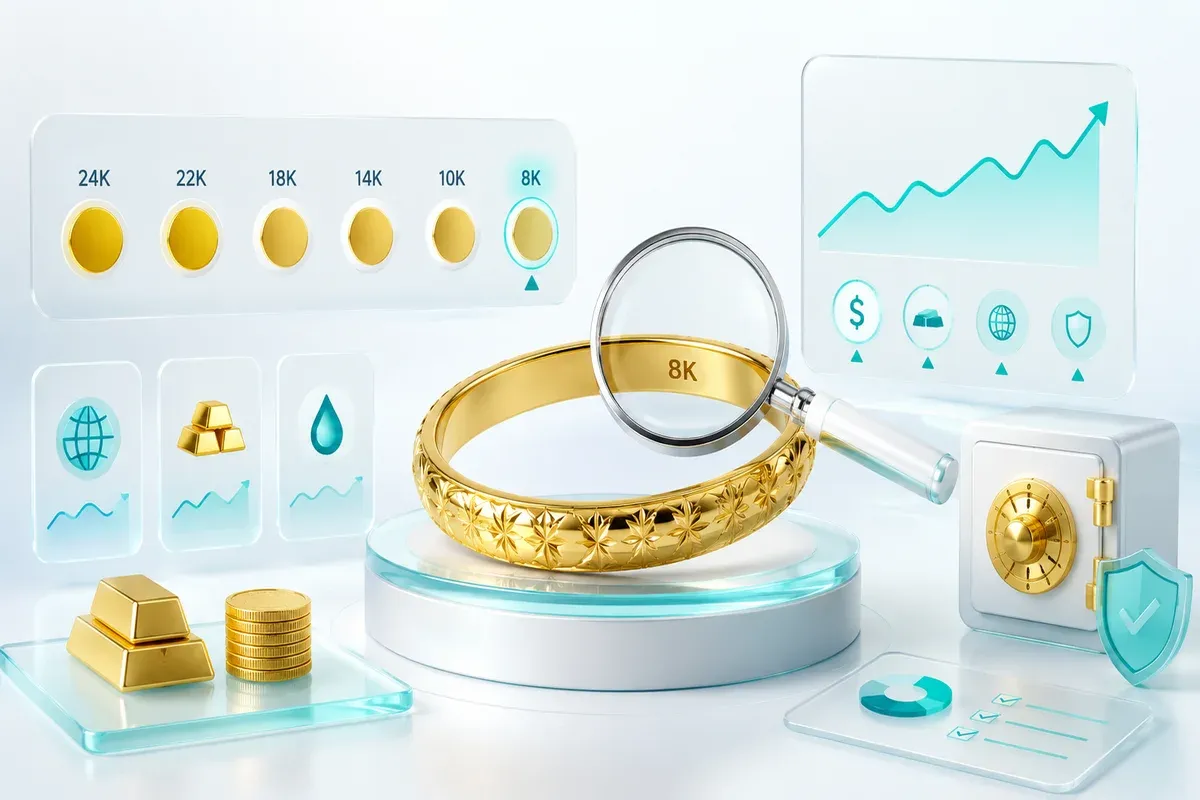
Bitcoin vs Gold: Which Is the Better Inflation Hedge?
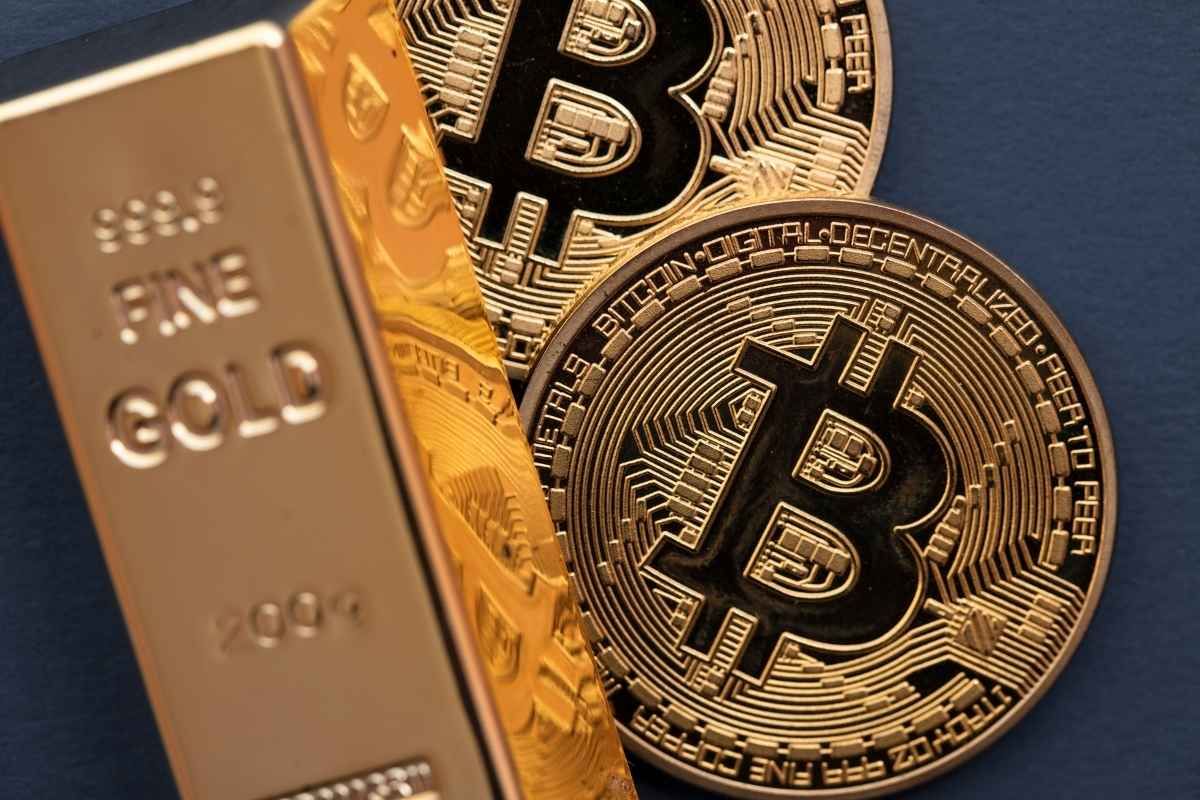
An inflation hedge is an asset that has historically been able to maintain or increase purchasing power when inflation erodes the value of fiat currency. Gold has held this position for thousands of years, while Bitcoin , often called digital gold, claims a similar position through mathematical scarcity and decentralization.
The question is not which one is absolutely better, but rather which instrument is more suitable for a specific risk profile, time horizon, and financial goal. This article provides a comprehensive comparison of Bitcoin vs. gold for the 2026 context, including how to interpret their roles within an investment portfolio .
Key Takeaways
- Gold has a 5,000+ year track record as a store of value, while Bitcoin has been around for only about 15 years but offers greater growth potential.
- Gold supply grows by about 1.5-2% per year, while Bitcoin supply is permanently capped at 21 million coins with a halvingmechanism.
- Bitcoin is highly volatile and tends to move in tandem with risk assets during market panics, making it less reliable as a short-term hedge.
- Gold is more stable and has historically tended to hold its value or rise during acute financial crises.
- The two are complementary, not mutually exclusive, in an asymmetric diversification strategy.
- Gold investment can now be done digitally through tokens such as Tether Gold (XAUt) on OJK-registered platforms.
Read also: How XAUt Works, Digital Gold Transactions via Smart Contracts
Gold as an Inflation Hedge
Gold has served as a store of value for over 5,000 years. This is not a marketing claim, but a historical fact documented across civilizations, from Ancient Egypt to the Bretton Woods system that lasted until 1971.
Why Does Gold Work as an Inflation Hedge?
- Physically limited supply. The total amount of gold ever mined in the world is estimated at approximately 212,582 tonnes (World Gold Council, 2023). The annual increase in supply is only about 1.5-2%, which is too slow to keep pace with aggressive money printing.
- Uncorrelated with business cycles. Unlike stocks, whose value depends on corporate profitability, gold does not generate income, and that is precisely its strength. When confidence in the financial system wavers, demand for gold rises.
- Central banks hold it as reserves. Bank Indonesia, the People's Bank of China, and the Federal Reserve hold gold as part of their foreign exchange reserves, a strong signal that gold remains relevant in the global monetary system.
- Mature market liquidity. The global gold market operates nearly 24 hours a day with relatively stable spreads, making it easy to sell when emergency funds are needed.
Gold Performance During High Inflation
During the 1970s inflation crisis in the United States, when inflation hit 14%, the price of gold rose by more than 1,000% over that decade. In 2022, as global inflation surged post-pandemic and the Federal Reserve raised interest rates aggressively, gold remained relatively stable in the 1,700-2,000 USD per troy ounce range, performing significantly better than most risk assets.
To understand the historical context of prices, also see our review of gold prices year by year.
Bitcoin as an Inflation Hedge
Bitcoin is designed with mathematical and programmed scarcity. Its total supply is permanently capped at 21 million coins, and no central bank, government, or individual can change this figure.
The Argument for Bitcoin as Digital Gold
- The halving mechanism. Every four years, the amount of new Bitcoin issued is reduced by 50%. This programmatically lowers the supply inflation rate of Bitcoin until it approaches zero around the year 2140. This mechanism is more predictable than the mining rate of physical gold.
- Absolute decentralization. Bitcoin is not controlled by any single entity. There are no monetary policy decisions, no quantitative easing, and no supply manipulation.
- Global accessibility and transferability. Gold is difficult to move across borders in large quantities. Bitcoin can be transferred anywhere in a matter of minutes at a relatively low cost.
- On-chain transparency. Supply, addresses, and coin flows can be verified by anyone via a blockchain explorer, something physical gold lacks.
Important Note: Bitcoin Volatility
Bitcoin fell more than 65% in 2022, the same year global inflation reached its peak. This is a direct contradiction to the inflation hedge narrative. During crises, Bitcoin behaves more like a risk asset correlated with tech stocks, rather than a safe haven that decouples from market pressure.
This is a fundamental weakness of Bitcoin as a short-term inflation hedge: its volatility is too high to provide reliable protection during periods of acute economic stress. To understand its price movement patterns, also study the Bitcoin 4-year cycle.
Direct Comparison: Bitcoin vs. Gold
The following table summarizes the key differences between the two for easier practical comparison.
| Aspect | Bitcoin | Gold |
|---|---|---|
| Track Record | Around 15 years | 5,000+ years |
| Supply | Capped at 21 million coins | Physically limited, with supply growing by around 1.5% per year |
| Volatility | Very high | Low to moderate |
| Inflation Correlation | Inconsistent | Tends to be positive over the long term |
| Accessibility | High and fully digital | Requires physical infrastructure or access through digital products |
| Behavior During Crises | Can decline alongside other risk assets | Can remain relatively stable or rise during some periods of stress |
| 10-Year Return Potential | Potentially very high, with substantial risk | Generally more moderate |
| Regulatory Clarity | Still evolving | More established |
Who Wins in Different Scenarios?
- If inflation rises gradually and the market is stable: Both are potentially profitable, but Bitcoin has greater upside potential.
- In the event of an acute financial crisis and market panic: Gold has historically performed better. Bitcoin tends to correct alongside risk assets during the initial phase of panic before eventually recovering.
- For a 10+ year horizon with high risk tolerance: Bitcoin offers historical return potential that far exceeds gold, but with significantly deeper drawdowns.
- For stable and predictable purchasing power protection: Gold remains a conservative choice that has been proven across generations.
- For cross-border liquidity needs: Bitcoin is more practical as it can be sent in minutes without physical infrastructure.
- For investors seeking gold exposure without physical storage: Digital gold like XAUt can serve as a bridge between the stability of gold and the convenience of crypto assets.
Read also: The Role of Tether Gold (XAUt) in Portfolio Diversification
Practical Examples of Portfolio Allocation
For instance, an investor with a 10-year horizon and moderate risk tolerance looking to protect purchasing power from inflation could allocate a portion of funds to digital gold as a stable foundation, a portion to Bitcoin as a growth component, and the remainder to other instruments such as Earn products to generate additional yield.
What matters is not the exact figure, but consistency. Use strategies like dollar cost averaging so that purchases do not depend on market timing, which is difficult to predict.
Conclusion
Bitcoin versus gold is not a question of which one to choose, but rather what the right proportion is for each.
Investors with a high risk tolerance and a long-term horizon can allocate a larger portion to Bitcoin for greater potential returns. Investors who prioritize stability and capital preservation will be better suited with a more dominant gold allocation.
A portfolio that includes both benefits from asymmetric diversification: gold as a stable foundation, and Bitcoin as a high-growth potential component. In the context of long-term inflation and global monetary uncertainty, the two play complementary roles.
Start Digital Gold Investing on Mobee
Nowadays, gold investment does not have to be in physical form. You can invest in gold digitally, one of which is through Tether Gold (XAUt). You can buy this tokenized digital gold on the Mobee App, a platform that is licensed and registered with the OJK. Also, check out the complete guide on Mobee and start building a more inflation-resistant portfolio today.
FAQ
Is Bitcoin really an inflation hedge?
Bitcoin has a limited supply and decentralized structure, which are reasons it is sometimes viewed as an inflation hedge. However, its high volatility means its ability to hedge short-term inflation has not been consistent.
Does gold always rise when inflation is high?
Not always. In the short term, gold is also influenced by real interest rates, the US dollar, and market sentiment. Over longer periods, gold is more commonly used as an asset intended to help preserve purchasing power.
Which is more suitable for beginners?
The choice between Bitcoin and gold depends on an investor's risk profile and objectives. Investors who prioritize price stability may consider gold or tokenized gold such as XAUt, while Bitcoin generally involves much higher price volatility.
What is the ideal allocation between Bitcoin and gold?
There is no single allocation that is suitable for every investor. The proportion of Bitcoin and gold should be adjusted based on risk tolerance, investment horizon, liquidity needs, and individual financial objectives.
Is digital gold as safe as physical gold?
Tokenized gold such as XAUt is designed to represent exposure to physical gold, but it also introduces issuer, custodian, technology, and platform risks. Investors should understand how the underlying reserves are managed and use a crypto asset trading platform licensed and supervised by OJK, such as Mobee.
Sources:
Gold vs. Bitcoin: Which Is Better? Accessed in 2026. Investopedia.
Bitcoin vs. 1-ounce gold bars: What's the better investment for 2026? Accessed in 2026. CBS News.
World Gold Council, Gold Demand Trends, 2026.
Disclaimer:
This content is intended to provide additional information to readers. Always conduct your own research before investing. All crypto asset trading and investment activities are the sole responsibility of the reader.
 Direct market access from the app
 Start exploring digital assets with Mobee
Track the market, learn about digital assets, and start trading more conveniently with the Mobee App.
Mobee is licensed and supervised by the OJK. Not a solicitation to buy or sell any asset.