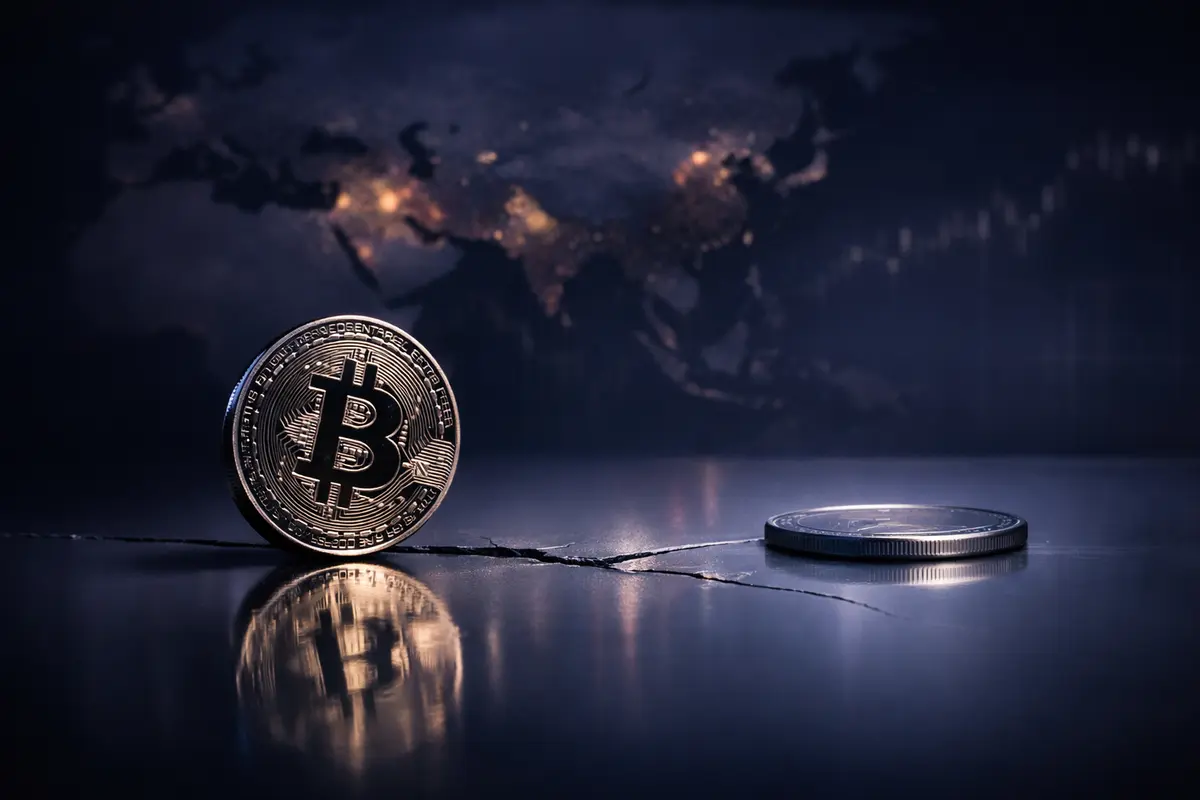
The global cryptocurrency ecosystem is currently at a critical crossroads between macroeconomic tensions, geopolitical conflicts, and deepening institutional integration. As war rhetoric intensifies in the Middle East and energy markets become increasingly unstable, digital assets are responding with complex market dynamics.
At the same time, the underlying technological and regulatory frameworks are evolving rapidly—from Japan’s strong push for market expansion to growing concerns over vulnerabilities in decentralized finance (DeFi) and quantum computing.
Geopolitical Escalation and Oil Shock
Rising tensions between the United States and Iran have triggered significant physical and psychological impacts on global markets. Following threats by U.S. President Donald Trump to target Iran’s civilian infrastructure, including bridges and power plants, prediction markets reacted sharply. On Polymarket, the probability of a U.S. invasion of Iran this year surged to 63%.
This uncertainty quickly spread to energy markets, pushing WTI crude futures up by 2.7% and driving Brent crude above $109 per barrel. While traditional equities brace for inflationary pressures from the oil shock, Bitcoin demonstrated its typical volatility—briefly touching $69,000 before falling back to the $66,000–$67,000 range.
The broader economic backdrop is increasingly turning “risk-off,” with analysts warning that rising energy costs could significantly impact consumer spending and future earnings expectations.
Institutionalization and the Bitcoin-Dollar Relationship
As retail participation declines, the crypto market is increasingly supported by corporate and institutional players. This shift is highlighted by the ongoing debate between prominent Bitcoin advocate Michael Saylor and gold proponent Peter Schiff.
While Schiff has warned investors to sell MicroStrategy (MSTR) amid looming risks and has criticized Trump’s aggressive geopolitical stance, Saylor and institutional buyers continue their strong accumulation strategies.
Interestingly, the narrative that Bitcoin poses an existential threat to fiat currencies is being challenged. Sam Lyman, head of research at the Bitcoin Policy Institute, recently highlighted a “symbiotic relationship” between Bitcoin and the U.S. dollar.
Comparing this dynamic to the petrodollar system of the 1970s, Lyman argues that the heavy reliance on dollar-backed stablecoins such as Tether to facilitate BTC trading effectively strengthens global demand for U.S. Treasury reserves. In this emerging “Crypto-Dollar” era, Bitcoin’s rise may directly reinforce the dominance of the greenback.
Regulatory Expansion in Japan
While Western countries navigate complex macroeconomic pressures, Japan is taking decisive steps toward regulatory clarity. Japanese authorities have recently recognized 100 crypto tokens across 28 platforms, advancing a comprehensive regulatory overhaul aimed at aligning digital assets with traditional financial market frameworks.
This proactive stance provides much-needed legitimacy and positions Japan as a growing hub for regulated digital asset innovation.
DeFi Vulnerabilities and Quantum Threats
Despite progressive regulation, the sector continues to face significant technological and security challenges. The DeFi space was recently shaken by a massive $285 million exploit on Drift Protocol.
Following the incident, a crypto lawyer suggested that the case could be classified as “civil negligence,” increasing legal risks for protocol developers. The platform has since resumed operations after a deleveraging process that imposed an average 2.61% write-down on lenders.
Looking ahead to long-term existential risks, the broader blockchain community was recently stirred by a breakthrough quantum research paper from Google, claiming a 20x improvement in quantum system efficiency.
This development has intensified industry debates around centralization and the security of elliptic curve cryptography, which underpins major networks like Bitcoin and Ethereum. It has also sparked urgent calls to develop quantum-resistant mainnet solutions.
Overall, current geopolitical tensions, regulatory developments, and technological risks are collectively reshaping the global crypto market. As these factors continue to evolve, they are likely to play a crucial role in determining the future direction of digital assets.

.webp)