RWA Tokenization in Indonesia: A New Digital Asset Era
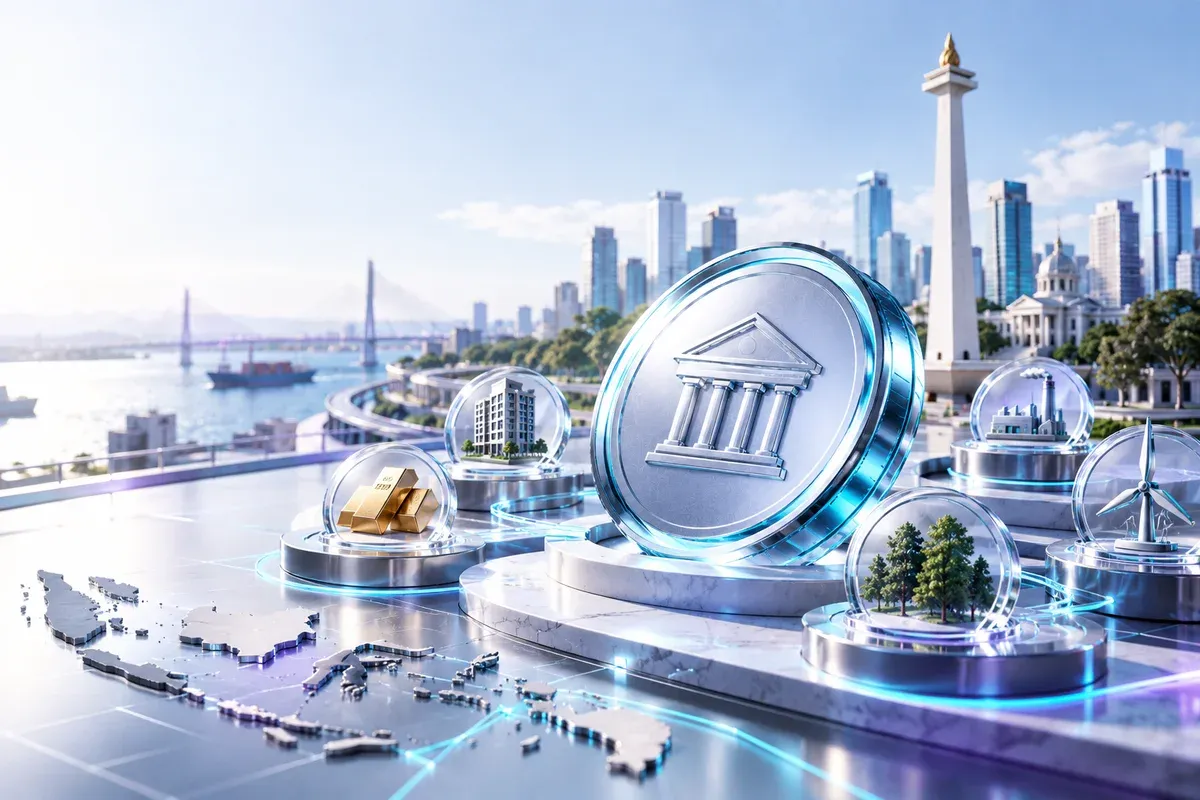
RWA (Real World Assets) tokenization is a way to represent rights or benefits tied to real-world assets, such as gold, securities, and property, as digital tokens. In Indonesia, the business models have been tested in OJK's regulatory sandbox, while the specific regulation is still being drafted.
This article sums up the latest developments: what RWA tokenization is, the three business models being tested, the opportunities, the regulatory status as of October 2026, and the challenges you should understand. It is not a recommendation to buy any asset.
Key Takeaways
- RWA tokenization does not always move ownership of an asset onto a blockchain. The rights you get depend on the legal structure and the product documents.
- OJK said four sandbox participants passed in early 2026, with business models in gold tokenization, securities tokenization under a Fund Management Contract (KPD) scheme, and property ownership benefits. OJK data through August 2026 shows seven participants have passed.
- Passing the sandbox is not a business license. Testing, registration, and licensing are separate stages.
- The draft OJK regulation on offering tokenized assets was still being prepared as of October 21, 2026, so the final rule has not been issued.
- Bappenas said RWA tokenization could become a new financing tool, provided governance, consumer protection, and regulatory harmonization are in place.
What Is RWA Tokenization
Real World Assets (RWA) are real-world assets represented in a digital ecosystem. Through tokenization, a right or interest in an asset is recorded as a token using blockchain or distributed ledger technology (DLT).
One point is often missed: a token does not automatically mean you own the physical asset. A gold token can be linked to physical gold held by a custodian. A property token can represent the economic benefits of a property, not the land title. That is why three questions always matter: what rights you receive, who is responsible for the underlying asset, and how you can exercise those rights.
For the basics, read What Are Real World Assets (RWA) and Asset Tokenization: Definition, How It Works, and Examples.
OJK Sandbox: Business Models Already Tested
A regulatory sandbox is a testing mechanism in which a regulator evaluates a financial innovation's business model, including how it operates and its risks, before the operator continues the process under the applicable rules.
In early 2026, OJK said four participants passed testing. The business models covered gold tokenization, securities tokenization under the KPD scheme, and tokenization of property ownership benefits. Based on OJK data through August 2026, the number of participants that passed rose to seven. Besides tokenization, that list also includes issuance of rupiah-based stablecoins, custodians of non-trading digital financial assets, and crypto fund managers.
Not every model on that list is RWA tokenization. But the list shows that OJK is testing a wide range of new business activities, each with different regulatory needs.
Three RWA Tokenization Business Models
| Model | Underlying asset | What the token represents | What you should check |
|---|---|---|---|
| Gold tokenization | Physical gold held by a custodian | A right linked to physical gold | Existence of the gold, match between gold and tokens, the custodian |
| Securities tokenization | An investment structure, including the KPD scheme | A right or interest in the investment structure | Legal documents, fund management, roles of the institutions involved |
| Property tokenization | Property | The economic benefits or interest in the property | Basis of valuation, property management, resale mechanism |
1. Gold Tokenization
Gold is the easiest asset to understand. The token is linked to physical gold stored through a specific custody arrangement. The technology is only part of the story. What decides how reliable this model is: whether the physical gold exists, whether the amount of gold matches the tokens in circulation, how custody is managed, and how clear the token holder's rights are.
2. Securities Tokenization
This model uses a specific fund management structure, including the Fund Management Contract (KPD) scheme. The token represents a right or interest in the investment structure, and the form of that right follows the product's legal documents. The model is interesting because it shows tokenization is not limited to commodities or physical assets. The technology can also be explored in financial market structures, as long as it follows the rules that apply to the related instruments and business activities.
3. Property Tokenization
In certain models, the token represents the economic benefits of a property. This differs from buying property directly, because a token holder's rights depend on the product structure and its agreements. Tokenization does not automatically make property investing cheaper, more liquid, or risk free. First understand how the asset is valued, how the property is managed, the rights attached to the token, and the resale mechanism if one is available.
Together, the three show that tokenization is not one uniform business model. Each asset has its own characteristics, management needs, and risks.
Opportunities for the Digital Economy
There are three main opportunities, and each has conditions.
Wider access to investing. An asset or economic interest can be split into smaller digital units, so investors with limited capital can take part. But not every tokenized product has a lower minimum amount. That depends on product design, fees, and the applicable rules.
Alternative financing for asset owners. Certain productive assets could be connected to investors through a suitable tokenization structure, for example in property, commodities, and infrastructure. Success depends on the quality of the asset, investor demand, the legal structure, and the issuer's ability to meet its obligations.
More efficient operations. Blockchain and smart contracts can make record keeping and transaction execution more structured and cut repetitive administrative work. This efficiency is not automatic. The digital system still has to connect with legal processes, operations, and financial infrastructure.
The government is also starting to see this potential. At a forum in Jakarta on July 27, 2026, Minister of National Development Planning and Head of Bappenas Rachmat Pambudy said RWA tokenization could become a new financing tool to widen investor access and fund productive sectors. He also pointed to governance of underlying assets, consumer protection, and regulatory harmonization as key challenges.
Regulation: Status as of October 2026
Regulatory certainty will shape where tokenization goes in Indonesia. Here is how it has developed:
- April 2026. At its monthly board of commissioners meeting, OJK said it was drafting an OJK regulation on the Offering of Tokenized Assets (real world asset tokenization). The scope covers the criteria for assets that can be tokenized, offering procedures, licensing, consumer protection, and financial recording and reporting by token issuers.
- October 8, 2026. OJK said the drafting was targeted for October 2026. Its explanation included these points: the physical underlying asset must be confirmed to exist before a token is issued, the rule will distinguish tokens that give direct ownership from tokens that only give economic benefits, and participants in the ecosystem must hold an OJK license.
- October 21, 2026. News reports still said OJK was preparing the regulatory framework. That means the final rule has not been issued.
The key message: passing the sandbox does not mean a product can automatically be marketed. Testing, operator registration, and business licensing are separate stages. For a summary of the rules, taxes, and complaint channels, read Regulation, Tax, and Risks of RWA in Indonesia.
Challenges to Resolve
- Validity and legality of the underlying asset. You need to know what asset backs the token, who owns or controls it, and how its existence and value are verified.
- Clear rights for token holders. A digital representation does not automatically give direct ownership. Investor rights must be explained in the legal structure and product documents.
- Investor protection. Handling of failed issuers, custodian risk, disputes, and the exercise of investor rights all need to be designed well.
- Liquidity. A token that can be traded digitally does not guarantee there is always a buyer or a fair selling price.
- Readiness of infrastructure and governance. Industry players, financial institutions, technology providers, and regulators need to coordinate.
For that reason, progress in tokenization should not be measured only by the number of tokens issued. Product quality, certainty of investor rights, and the sustainability of the business model matter more.
Tokenized Assets on Mobee
Tokenized assets on Mobee are different from the sandbox models above. The list follows the assets available on Mobee, so check the latest availability in the app.
- Gold tokens. XAUT and PAXG are international gold tokens. Learn more in XAUT (Tether Gold) and PAX Gold. For a different way to save in gold, see Digital Gold.
- US stock and ETF tokens. Mobee offers tokens that follow the price of certain stocks or ETFs, for example the Apple stock token and the S&P 500 ETF token (SPY). These tokens are not direct ownership. Learn the difference in US Stock Tokens vs Regular Stocks.
- On-chain treasuries. Read Ondo Finance for an example of tokenized US government bonds.
Mobee is operated by PT CTXG Indonesia Berkarya, which is licensed and supervised by OJK. Prices of tokenized assets can rise and fall, and you can lose part or all of your capital.
Conclusion
RWA tokenization in Indonesia has moved past the concept stage. The models are being tested in OJK's sandbox and the specific regulation is being drafted, but the final rule has not been issued. The opportunities are real: investment access, financing, and efficiency. But their value depends on a clear underlying asset, transparent token holder rights, and the right licenses. Before you hold any token, make sure you understand your rights, the issuer, and the risks.
FAQ
What is RWA tokenization?
RWA tokenization is a way to represent rights or benefits tied to real-world assets, such as gold, securities, or property, as digital tokens on a blockchain or DLT. The rights you receive depend on the product's legal structure.
Is RWA tokenization legal in Indonesia?
The business models have been tested in OJK's regulatory sandbox, but the specific regulation on offering tokenized assets was still a draft as of October 2026. Passing the sandbox is not a business license. Check an operator's license status with OJK before you transact.
Which RWA tokenization business models has OJK tested?
Gold tokenization, securities tokenization under the Fund Management Contract (KPD) scheme, and tokenization of property ownership benefits. OJK data through August 2026 also lists rupiah stablecoins, custodians of non-trading digital financial assets, and crypto fund managers.
Does holding a token mean I own the actual asset?
Not always. A token can represent certain rights or only economic benefits. Read the product documents to know what rights you actually receive.
What is the difference between passing the sandbox and having a license?
The sandbox is a stage for testing the business model. Licensing is a separate stage for running the business. Passing the sandbox does not automatically mean a product can be marketed to the public.
Does tokenization automatically make investing cheaper and more liquid?
No. The minimum amount, fees, and liquidity depend on product design and market demand. A token that can be traded is not always matched with buyers at a fair price.
What are the main risks of RWA tokenization?
An unclear underlying asset, opaque token holder rights, custodian and issuer risk, low liquidity, and rules that are still evolving. Read the full list in the article Regulation, Tax, and Risks of RWA in Indonesia.
Sources
- OJK press release from the April 2026 Monthly Board of Commissioners Meeting on the draft regulation on Offering of Tokenized Assets, via Katadata, September 26, 2026.
- OJK: drafting of the tokenized asset offering regulation targeted for October 2026. IDXChannel, via RCTI+, October 9, 2026.
- OJK: drafting of the tokenized asset offering regulation under way. Republika, October 21, 2026.
- OJK: four participants passed the sandbox with gold, securities (KPD), and property tokenization models. Bisnis.com, March 4, 2026.
- OJK: seven participants passed the sandbox, data through August 2026. Akurat.co, September 8, 2026, and Coinedition Indonesia.
- Minister of National Development Planning/Head of Bappenas Rachmat Pambudy on RWA tokenization, forum on July 27, 2026. Antara, August 5, 2026.
Disclaimer
This content is meant to give readers additional information and is not an invitation to buy or sell any asset. Prices of crypto assets and tokenized assets are volatile and carry risk. Regulatory information may change. Always do your own research before you trade.
 Direct market access from the app
Start exploring digital assets with Mobee
Track the market, learn about digital assets, and start trading more conveniently with the Mobee App.
Mobee is licensed and supervised by the OJK. Not a solicitation to buy or sell any asset.