Appreciation in Economics: Causes and Impact

Appreciation in economics is the increase in the value of an asset or currency relative to another asset or foreign currency over a specific period. This rise can occur in currencies, stocks, real estate, and even crypto. For example, if the rupiah strengthens from Rp15,000 to Rp14,500 per US dollar, that is called rupiah appreciation.
The opposite is devaluation, which you can learn about in devaluation. Understanding appreciation matters because it affects purchasing power, exports and imports, and your portfolio value. Read on for a complete explanation, including causes, impacts, and how to respond. Appreciation is often linked to currency strengthening, but it also applies to investment assets.
Key Points
- Definition: Appreciation is the increase in the value of an asset or currency against its benchmark over a specific period.
- Causes: Low inflation, high interest rates, and trade surpluses can trigger significant currency appreciation.
- Impact: Appreciation makes imports cheaper but can pressure export competitiveness in the global market.
- Assets: Stocks, real estate, and crypto can also appreciate due to demand and market expectations.
- Strategy: Diversification and hedging help manage the risk of fluctuating asset values in your portfolio.
What Is Appreciation in Economics?
Appreciation is a phenomenon of rising value that can occur across various instruments. In currency terms, appreciation means a currency strengthens against another currency. For instance, if 1 US dollar was initially worth Rp15,000 and then falls to Rp14,500, the rupiah appreciates by 3.3%. In asset terms, appreciation means the market price of that asset increases. You can compare this with currency depreciation, which is the opposite.
Appreciation is not always positive. For exporters, domestic currency appreciation can reduce revenue. For importers, appreciation is beneficial because imported goods become cheaper. Understanding the context is crucial so you do not make poor investment or business decisions.
Main Causes of Appreciation
Several factors drive appreciation. Here are the main ones:
• Low inflation: If a country's inflation is lower than others, its currency's purchasing power tends to strengthen.
• High interest rates: High rates attract foreign investors to park funds, increasing currency demand.
• Trade surplus: Exports exceeding imports raise demand for the domestic currency.
• Capital inflows: Foreign direct and portfolio investment boost demand for the local currency.
• Market expectations: If markets believe the economy will improve, speculation can accelerate appreciation.
According to Federal Reserve data in June 2026, the US benchmark interest rate held at 4.25%-4.50%. High rates drive capital flows to the US and strengthen the dollar against many currencies. You can learn about the role of central banks in controlling interest rates.
Impact of Appreciation on Consumers and Importers
Domestic currency appreciation makes imported goods cheaper. This directly affects consumers and importers.
• Cheaper imports: Prices of electronics, raw materials, and imported vehicles fall.
• Higher purchasing power: Consumers can buy more with the same amount of money.
• Lower production costs: Importers of raw materials gain better margins.
• Controlled inflation: Cheap imported goods help suppress inflation.
For example, if the rupiah appreciates 5% against the US dollar, an importer buying $10,000 worth of raw materials can save about Rp7.5 million. This improves profitability. Learn more about fiat money and how its value is determined.
Impact of Appreciation on Exporters and Producers
For exporters, domestic currency appreciation is a challenge. Their products become more expensive in international markets.
• Reduced competitiveness: Export prices rise, buyers switch to other countries.
• Margin pressure: Revenue in US dollars decreases when converted to rupiah.
• Layoff risk: Companies may reduce workforce for efficiency.
• Need for innovation: Exporters must increase product value added.
For instance, a textile exporter selling fabric at $1 per yard. If the rupiah strengthens from Rp15,000 to Rp14,000 per dollar, rupiah revenue drops from Rp15,000 to Rp14,000 per yard. This can erode profit by up to 6.7%. To mitigate, exporters can hedge or diversify markets.
Asset Appreciation: Stocks, Real Estate, and Crypto
Appreciation does not only happen to currencies. Investment assets can also appreciate.
• Stocks: Share prices rise due to growing corporate profits and positive sentiment.
• Real estate: Land and building values increase with demand and inflation.
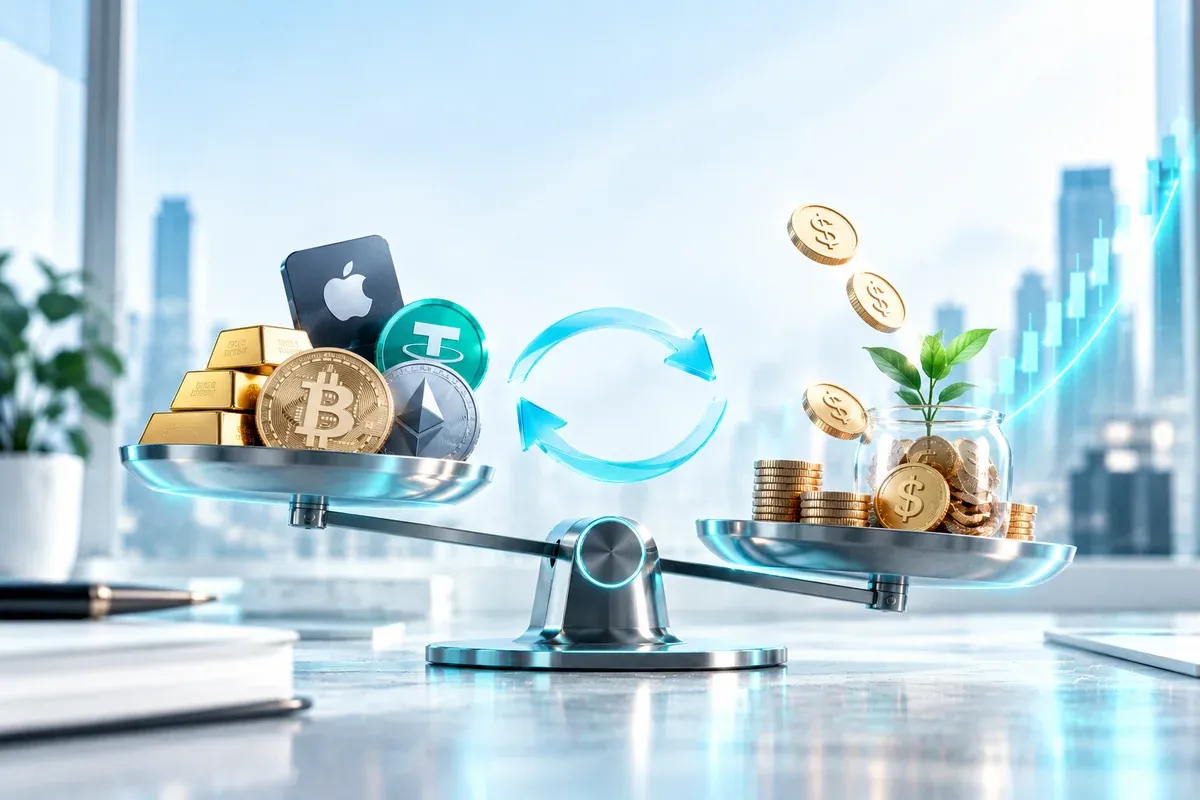
• Crypto: Bitcoin and altcoin prices rise due to adoption and market speculation.
• Gold: Gold prices tend to rise when global uncertainty increases.
According to CoinGecko as of June 2026, the global crypto market capitalization is around $3.2 trillion. This figure shows that crypto asset appreciation can be massive, but also volatile. The World Bank Commodity Markets Outlook April 2026 reported an average gold price of $2,200 per ounce in Q1 2026, reflecting gold's appreciation as a safe haven asset. You can monitor the price index to track asset price movements.
Appreciation vs Depreciation: Comparison Table
Here is a brief comparison between appreciation and depreciation.
| Aspect | Appreciation | Depreciation |
|---|---|---|
| Definition | Increase in asset or currency value | Decrease in asset or currency value |
| Exchange rate | Strengthens against foreign currency | Weakens against foreign currency |
| Import impact | Imports become cheaper | Imports become more expensive |
| Export impact | Exports become more expensive | Exports become cheaper |
| Example | Rupiah strengthens from Rp15,000 to Rp14,500 | Rupiah weakens from Rp14,500 to Rp15,000 |
From the table above, it is clear that appreciation and depreciation have opposite effects. For the economy, appreciation can lower inflation but pressure exporters. Depreciation is the reverse. According to the IMF World Economic Outlook April 2026, global economic growth is projected at 3.2% in 2026, while global inflation is expected to moderate to 4.5%. This data helps understand the macro context. Also learn about GDP to link appreciation with economic growth.
How to Measure Appreciation
There are several ways to measure appreciation. Here are the steps:
1. Compare exchange rates: Calculate the percentage change in exchange rates over time.
2. Use price indices: Observe movements in consumer or producer price indices.
3. Analyze asset returns: Calculate investment returns from the difference between buy and sell prices.
4. Consider inflation: Compare nominal appreciation with inflation to get real appreciation.
5. Monitor trading volume: High volume indicates appreciation is supported by market interest.
For example, if a stock price rises from Rp1,000 to Rp1,200, nominal appreciation is 20%. If inflation that year is 5%, real appreciation is around 15%. This figure better reflects actual purchasing power. Indonesia's Central Statistics Agency (BPS) recorded inflation in May 2026 at 2.8% year-on-year, which can be a reference for calculating real appreciation.
Strategies for Dealing with Appreciation
Both investors and businesses need strategies to face appreciation. Here are the strategies:
1. Diversify your portfolio: Spread investments across various assets and currencies.
2. Hedge: Use hedging instruments such as forward contracts or options.
3. Focus on intrinsic value: Choose assets with strong fundamentals, not just speculation.
4. Monitor macro indicators: Watch interest rates, inflation, and trade balance.
5. Adjust prices: Exporters can adjust prices or seek new markets.
With these strategies, you can reduce the risk of losses due to value fluctuations.
Risks and Common Mistakes
There are several risks and mistakes that often occur when dealing with appreciation.
• Overvalue: Assets are considered too expensive, then sharply correct.
• Bubble: Appreciation driven by speculation without fundamentals risks bursting.
• Wrong timing: Buying at the peak of appreciation leads to losses.
• Ignoring inflation: Nominal appreciation looks large but is eroded by inflation.
• Lack of research: Following trends without deep analysis.
An example of bubble risk occurred in crypto. Many tokens rose hundreds of percent then fell drastically. To avoid this, always do research and use stop loss.
Conclusion
Appreciation in economics is the increase in the value of an asset or currency against its benchmark. This phenomenon affects consumers, exporters, importers, and investors. By understanding the causes, impacts, and how to measure it, you can make better decisions. Remember to always diversify and monitor the latest economic indicators.
FAQ
What is the difference between appreciation and depreciation?
Appreciation is an increase in value, while depreciation is a decrease in the value of an asset or currency against its benchmark. Example of appreciation: rupiah strengthens from Rp15,000 to Rp14,500 per US dollar. Depreciation is the opposite.
What are the main causes of currency appreciation?
Main causes include low inflation, high interest rates, trade surplus, capital inflows, and market expectations. According to the Federal Reserve in June 2026, US interest rates at 4.25%-4.50% attract global capital.
How does appreciation affect exports?
Appreciation makes export prices more expensive in international markets, reducing competitiveness. Exporters can experience revenue declines of 5-10% if the currency strengthens significantly.
Is crypto asset appreciation the same as currency appreciation?
No. Currency appreciation is measured against other currencies, while crypto appreciation is measured against the US dollar or other assets. Crypto is more volatile, for example, the global crypto market cap was around $3.2 trillion as of June 2026 according to CoinGecko.
How can I protect my portfolio from appreciation risk?
Diversify across various assets and currencies, use hedging, and monitor macro indicators. For example, allocate 5-10% to gold or stablecoins to reduce risk.
Start with Mobee
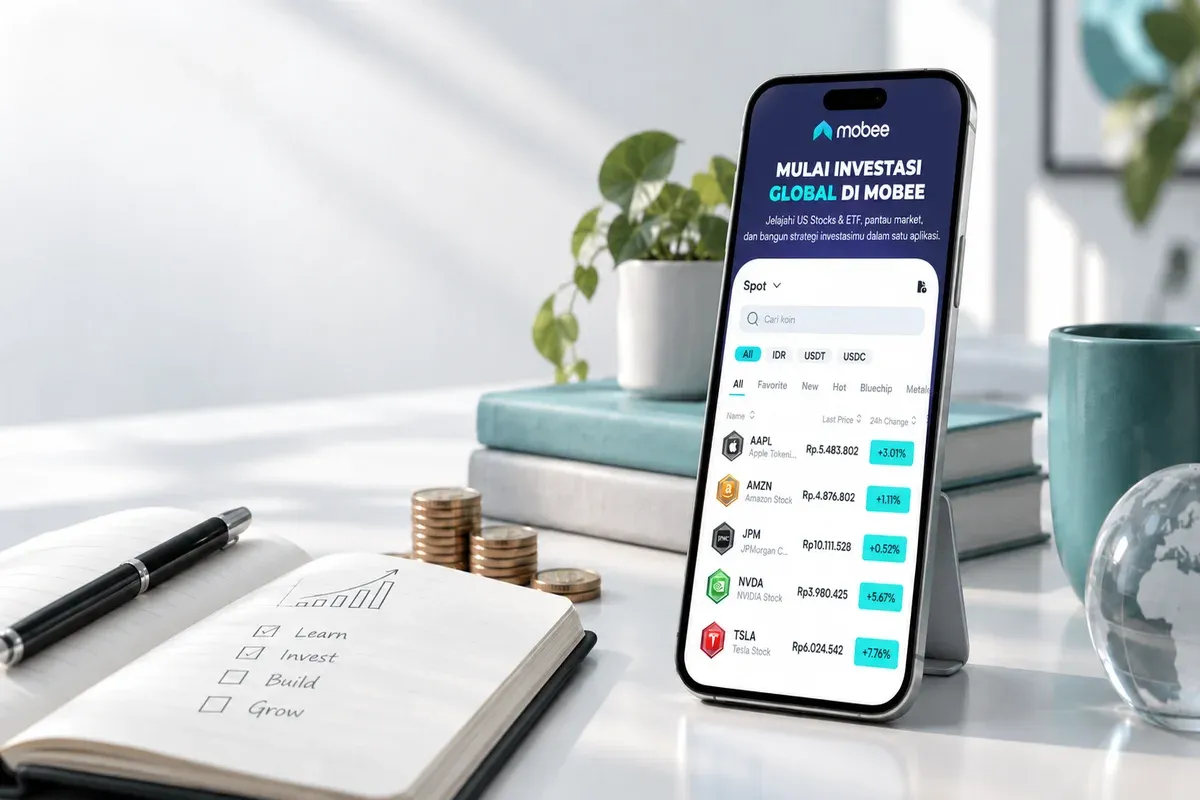
Mobee is a digital asset platform licensed and supervised by OJK, helping users explore crypto and investment products with clearer access and practical learning. Start your investment journey through Mobee and choose products that match your goals and risk profile.
 Direct market access from the app
Start exploring digital assets with Mobee
Track the market, learn about digital assets, and start trading more conveniently with the Mobee App.
Mobee is licensed and supervised by the OJK. Not a solicitation to buy or sell any asset.