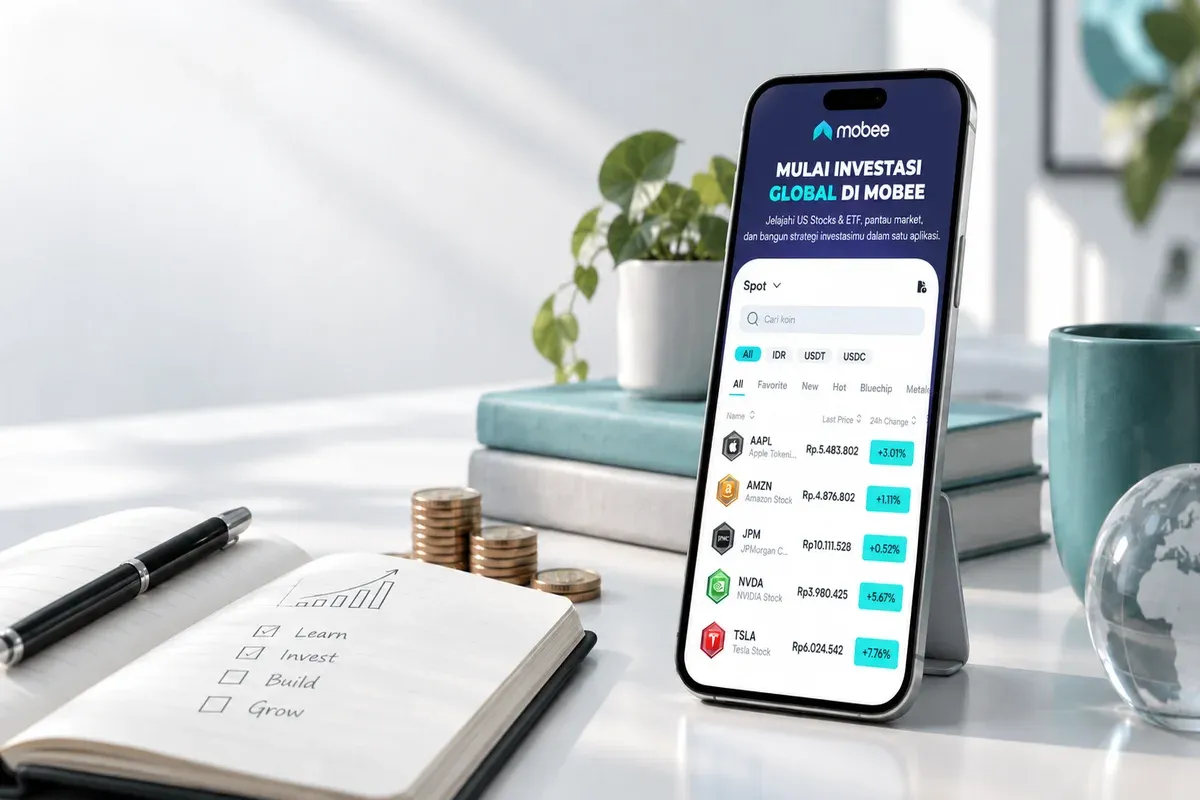
Understanding Rebalancing and Dividend Reinvestment

You build a portfolio with a set mix, say 60% stocks and 40% bonds. A year later, that mix has almost certainly changed, because each asset's price moves differently. Rebalancing is how you bring it back. Dividend reinvestment is how you put the income you receive back to work as extra assets instead of withdrawing it.
These two concepts sound technical, but the ideas are simple. This article explains them with numbers, then shows how the same concepts are used by portfolio tokens such as Ondo Intelligent Portfolios.
Key Takeaways
- Asset allocation is how you divide your money across different types of assets. A model portfolio is a list of asset types together with their weights.
- Because prices move, asset weights drift away from the target over time. Rebalancing brings them back by selling some of the assets that have grown and buying the ones that have shrunk.
- Rebalancing can follow a schedule (for example every quarter) or a drift threshold (for example when a weight moves more than 5% off target).
- Dividend reinvestment means dividends are used to buy more of the same asset, so growth can compound.
- Rebalancing keeps risk in line with your plan. It does not guarantee higher returns.
Asset Allocation and Model Portfolios
Asset allocation answers the question "what percentage of my money goes into each type of asset?" This choice often shapes a portfolio's risk profile more than picking any particular stock. A portfolio that is 90% stocks will swing far more than one that is 40% stocks.
A model portfolio is an allocation written out in detail: which assets and in what weights. Think of a recipe: the ingredients and their quantities. A model provider, such as an asset manager, writes the recipe, and anyone can follow it.
Why Weights Drift
Say you start with Rp100 million: 60% stocks (Rp60 million) and 40% bonds (Rp40 million). A year later stocks are up 20% while bonds are flat.
| Start | After one year | Current weight | |
|---|---|---|---|
| Stocks | Rp60 million | Rp72 million | about 64.3% |
| Bonds | Rp40 million | Rp40 million | about 35.7% |
| Total | Rp100 million | Rp112 million | 100% |
Your portfolio now leans more toward stocks than you planned. Its risk has risen automatically, even though you decided nothing.
Rebalancing: Returning to Target
To get back to 60/40, the Rp112 million total is split again: Rp67.2 million in stocks and Rp44.8 million in bonds. That means selling about Rp4.8 million of stocks and buying Rp4.8 million of bonds.
Put simply, rebalancing has you sell some of what has gone up and buy what has lagged. That often feels backwards, but the goal is to manage risk, not to chase the highest return.
Two common approaches:
- By schedule. For example every quarter or once a year. Easy to follow and predictable.
- By threshold. Rebalance only when a weight drifts past a set limit, for example 5 percentage points. Fewer trades, but it needs monitoring.
Things to account for: transaction fees, tax on gains when you sell (depending on the rules that apply), and price spreads. Rebalancing too often can cost more than it is worth.
Portfolio Diversification
Diversification means spreading your money across assets that do not always move together, so a loss in one place does not drag down the whole portfolio. Rebalancing keeps that diversification in line with the plan. But diversification is not full protection: in an extreme market fall, many assets can drop at once.
Dividend Reinvestment
When an asset pays a dividend or interest, you have two choices: withdraw it and spend it, or use it to buy more of the same asset. The second choice is called dividend reinvestment. With reinvestment, the next dividend is calculated on a larger holding, so growth can compound over time.
The downside: you receive no cash, and reinvested dividends still follow the asset's price ups and downs.
How Portfolio Tokens Do It
Portfolio tokens such as Mobee Bundles package both ideas into a product:
- Quarterly rebalancing. Ondo buys and sells assets inside the Bundle to bring weights back to target, with no action from you.
- Dividends reinvested. Dividends are used to buy more of the Bundle's assets, so the value flows into the token price. You do not receive it as cash.
For comparison, building a nine-asset portfolio yourself means nine orders, weight calculations, and manual rebalancing. Of course there are limits: these tokens follow US markets, so orders execute only during US market hours, they are not available in every jurisdiction, and their value can fall.
Frequently Asked Questions
What is portfolio rebalancing?
Rebalancing means returning your portfolio's asset weights to target by selling some of the assets that have grown and buying the ones that have shrunk.
How often should I rebalance?
There is no single answer. Common approaches are by schedule (for example quarterly or yearly) or when a weight drifts past a set limit. Consider transaction fees and tax.
What is a model portfolio?
A list of assets and their weights built for a particular goal or risk profile, much like a recipe with quantities.
What is dividend reinvestment?
Using dividends to buy more of the same asset instead of withdrawing them, so the next dividend is calculated on a larger holding.
Does rebalancing guarantee better returns?
No. Rebalancing keeps risk in line with your plan, but it does not guarantee higher returns.
Disclaimer
This article is for information and education only and is not investment, legal, or tax advice. Example figures are illustrative. Crypto assets and tokenized real world assets are high-risk instruments with large volatility. Do your own research and use only funds whose risk you can bear. Mobee is operated by PT CTXG Indonesia Berkarya, licensed and supervised by the Financial Services Authority (OJK).
 Direct market access from the app
Start exploring digital assets with Mobee
Track the market, learn about digital assets, and start trading more conveniently with the Mobee App.
Mobee is licensed and supervised by the OJK. Not a solicitation to buy or sell any asset.