Asset Selection: Criteria, Risks, and Investor Strategy
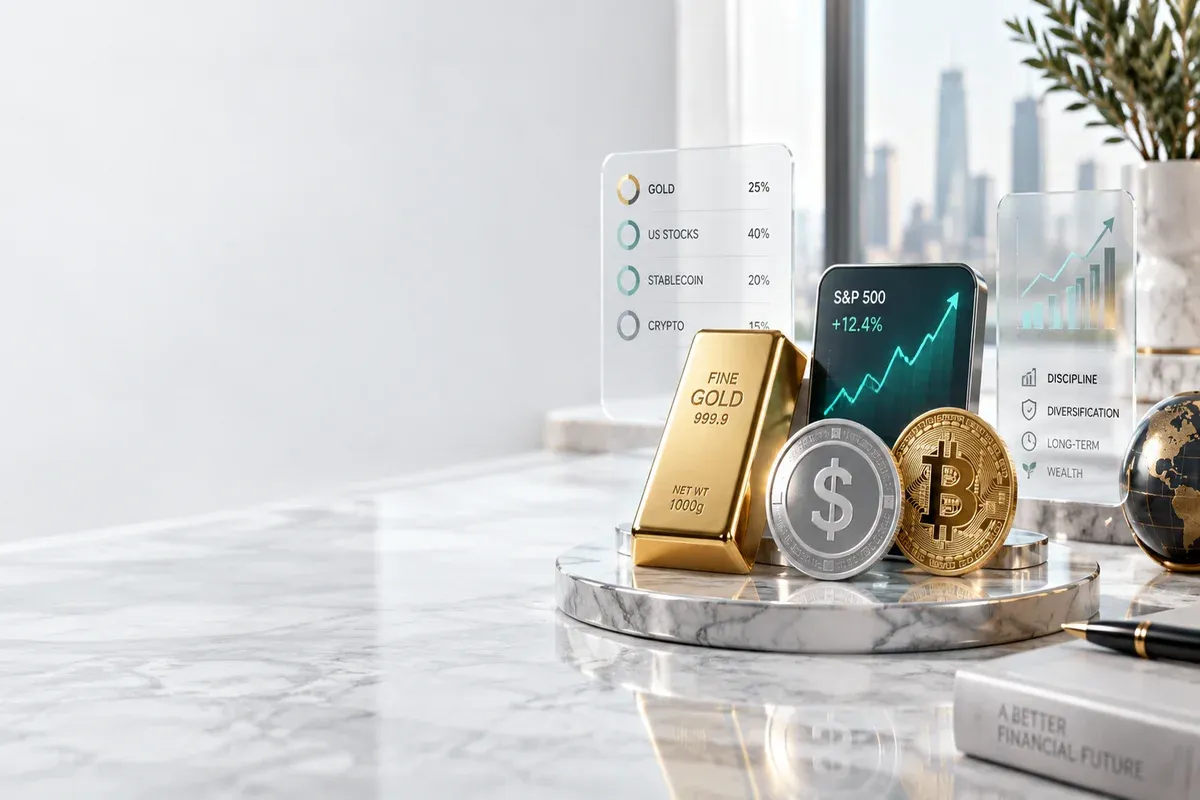
Asset selection is the process of choosing investment instruments that best align with your goals, time horizon, and risk tolerance. In 2026, the range of assets is broader than ever, spanning US stocks, ETFs, crypto, stablecoins, and digital gold. Because of this, asset selection cannot rely solely on social media trends.
You need a framework that combines macro data, fundamentals, liquidity, and risk management. This guide covers how to select assets with discipline, the metrics you need to check, and the risks you must avoid. Before you begin, first understand the basics of an investment portfolio so your allocation is more focused.
Key Takeaways
-
Define your goals: Asset selection must start with your financial objectives, time horizon, and the level of risk you are prepared to take.
-
Assess liquidity: Assets with high daily trading volume are easier to buy and sell without extreme price slippage.
-
Check fundamentals: Revenue data, TVL, cash flow, and adoption rates help distinguish productive assets from hype-driven ones.
-
Manage risk: Limit position sizes to 5-10% for speculative assets so that a single mistake doesn't derail your entire portfolio.
-
Review periodically: Evaluate your allocation every quarter, as 2026 macro conditions can shift the appeal of any given asset.
What is asset selection and why is it the foundation of a portfolio
Asset selection is the core of any investment strategy because it determines the majority of your long-term portfolio performance. In 2026, you need to map out your core, satellite, and defensive assets to ensure you aren't overexposed to a single category.
Core assets are typically liquid with a long track record, while satellite assets are used to pursue higher returns.
• Core assets: Bitcoin, Ethereum, S&P 500 ETFs, or digital gold for stability.
• Satellite assets: AI tokens, memecoins, or growth stocks for higher return potential.
• Defensive assets: Stablecoins and short-term bonds to maintain liquidity.
Asset selection framework
Use a five-step framework to keep your decisions objective. Start with your goals, then filter assets using measurable criteria and clear position sizing. This approach allows you to compare stocks, crypto, and gold on an even playing field.
1. Define your goals: Are you looking for growth, income, or a hedge against inflation?
2. Set your horizon: Volatile assets are suitable for a 3-5 year horizon, not for funds you need in 6 months.
3. Choose asset classes: Compare stocks, crypto, and gold based on correlation and liquidity.
4. Filter candidates: Use metrics such as market cap, volume, and valuation ratios.
5. Determine position size: Use a maximum risk rule of 1-2% of capital per trading idea.
Also learn the basics of crypto analysis to make asset screening more objective.
Key criteria for evaluating crypto assets and stocks
Each asset class has different metrics. For crypto, focus on liquidity, tokenomics, and adoption. For stocks, fundamental analysis helps assess business health. Do not evaluate all assets with the same yardstick.
• Liquidity: Daily volume above $10 million reduces slippage risk when entering and exiting.
• Tokenomics: Unlock schedules and supply inflation affect selling pressure in the market.
• Stock fundamentals: Consistent revenue and net profit growth from quarter to quarter.
• Valuation: P/E, P/S, or market cap/TVL to determine relative price fairness.
• Sector narratives: AI, RWA, and infrastructure remain major themes for 2026.
Data and metrics to check in 2026
Certain macro and market data can serve as an initial filter before buying. According to CoinGecko as of February 2026, the total crypto market cap is around $2.8 trillion, indicating high liquidity but continued volatility.
Based on the World Gold Council report from January 2026, gold prices remain above $2,600 per ounce, driving interest in safe-haven assets. DeFiLlama data from March 2026 shows DeFi TVL at approximately $120 billion, a sign that protocol adoption continues to grow.
• Crypto market cap: $2.8 trillion as of February 2026, meaning a 10% correction equals $280 billion.
• Gold price: above $2,600 per ounce as of January 2026, serving as an inflation hedge.
• DeFi TVL: approximately $120 billion as of March 2026; check protocols with stable TVL.
• Indonesia's inflation: approximately 2.8% year-on-year as of January 2026 according to BPS, impacting purchasing power.
• Nvidia data center revenue: $22 billion in Q4 FY2026 according to the company's report, supporting the AI narrative.
Use risk management principles when translating this data into buy or hold decisions.
Comparison of popular asset classes
This table summarizes key characteristics so you don't misallocate your assets. Also, compare crypto assets with other classes before determining your weighting.
| Asset Class | Liquidity | Volatility | Portfolio Function |
|---|---|---|---|
| U.S. Stocks | High | Moderate-High | Long-term growth |
| Major Cryptocurrencies | High | High | Aggressive growth opportunities |
| Stablecoins | Very High | Very Low | Liquidity and reserves |
| Digital Gold | Moderate | Low-Moderate | Inflation hedge |
Strategies for building a watchlist and position sizing
A watchlist helps you focus on assets that truly meet your criteria. Don't add assets just because they are trending upward. Create a list, score them, and then choose the ones that best fit your risk profile.
1. Gather 10-15 candidates: Combine core, satellite, and defensive assets.
2. Score them: Rate liquidity, fundamentals, narrative, and risk on a scale of 1-5 for each.
3. Select 5-7 assets: Avoid over-diversifying your portfolio so it remains easy to monitor.
4. Determine weighting: Core assets 50-60%, satellite 20-30%, defensive 10-20%.
5. Simulate drawdown: Ensure you are prepared if the portfolio drops by 30% in a bearish scenario.
See the crypto portfolio guide for more practical allocation examples.
Key risks in asset selection
Risk isn't just about price drops. Liquidity, regulatory, and valuation risks can all erode your capital. Each risk requires a clear monitoring strategy.
• Liquidity risk: Small assets can be difficult to sell during market panics, forcing you to accept prices well below market value.
• Regulatory risk: Changes in tax laws or exchange policies can impact access and transaction costs.
• Concentration risk: Holding too much of a single asset makes your portfolio fragile when that sector corrects.
• Narrative risk: AI or memecoin hype can vanish faster than expected, causing volume to dry up.
• Psychological risk: FOMO and panic selling often undermine decisions, even when the analysis is correct.
Monitor local and global news, and use stop-loss orders to limit potential losses.
Common mistakes beginners make when choosing assets
Many beginners choose assets based on social media recommendations without verifying them. As a result, they buy at the peak and sell during a correction. Avoid this pattern by following a consistent process.
• Chasing returns without calculating risk: High returns always come with high volatility.
• Ignoring costs: Trading fees, gas fees, and taxes eat into your net profit.
• Lack of diversification: Putting 100% of your portfolio into one asset is extremely risky when the market turns.
• No exit plan: Without profit targets and stop-losses, your decisions become emotional.
• Overtrading: Excessive activity increases costs and the likelihood of execution errors.
Asset selection checklist before execution
Use this checklist every time you want to buy a new asset. This process prevents impulsive decisions and helps you compare options fairly.
• Clear objective: Is this asset for growth, income, or hedging?
• Sufficient liquidity: Are the daily volume and spreads reasonable?
• Healthy fundamentals: Are the revenue, TVL, or cash flow supportive?
• Measured risk: Maximum position size of 5-10% for speculative assets.
• Exit plan: Do you have profit targets and stop-loss levels in place?
• Verified sources: Check whitepapers, financial reports, and official news.
Conclusion
Disciplined asset selection separates investors who endure from traders who get carried away by emotion. In 2026, you need to combine macro data, on-chain metrics, and fundamental analysis. Start with your goals, filter by criteria, measure risk, and then review periodically. By doing so, your portfolio will be more resilient against volatility and better positioned for new opportunities.
FAQ
What is asset selection?
Asset selection is the process of choosing investment instruments based on your objectives, risk, liquidity, and fundamentals. In 2026, you can compare U.S. stocks, cryptocurrencies, stablecoins, and digital gold. Focus on assets you understand and verify the latest data before making decisions.
How do you choose safer crypto assets?
Check liquidity with at least $10 million in daily trading volume, tokenomics, and token unlock schedules. Avoid tokens with very small market capitalizations and thin trading volume. Use reliable sources such as CoinGecko and the project's official whitepaper.
What is the ideal position size for each asset?
For speculative assets, limit exposure to around 5-10% of the total portfolio. For core assets such as Bitcoin or ETFs, the allocation may reach 20-30% depending on your risk tolerance. Avoid investing money that you may need within the next six months.
Is technical analysis enough for asset selection?
No. Technical analysis can help with timing, while fundamentals and macroeconomic conditions can influence longer-term direction. Consider combining indicators such as RSI and volume with revenue data and inflation figures. In 2026, themes such as AI and RWA are also worth monitoring.
When should you review your portfolio?
Review your portfolio every quarter or when major developments occur, such as Federal Reserve decisions or changes in OJK regulations. Avoid reviewing it too frequently if it encourages emotional decisions. Rebalance the portfolio if one asset becomes disproportionately large.
Get started with Mobee
Mobee is a digital asset platform licensed and supervised by the OJK, allowing you to monitor market opportunities and investment products more effectively. Begin your investment journey through Mobee and choose products that align with your goals and risk profile.
 Direct market access from the app
 Start exploring digital assets with Mobee
Track the market, learn about digital assets, and start trading more conveniently with the Mobee App.
Mobee is licensed and supervised by the OJK. Not a solicitation to buy or sell any asset.