Tokenized ETFs: How They Differ From Regular ETFs
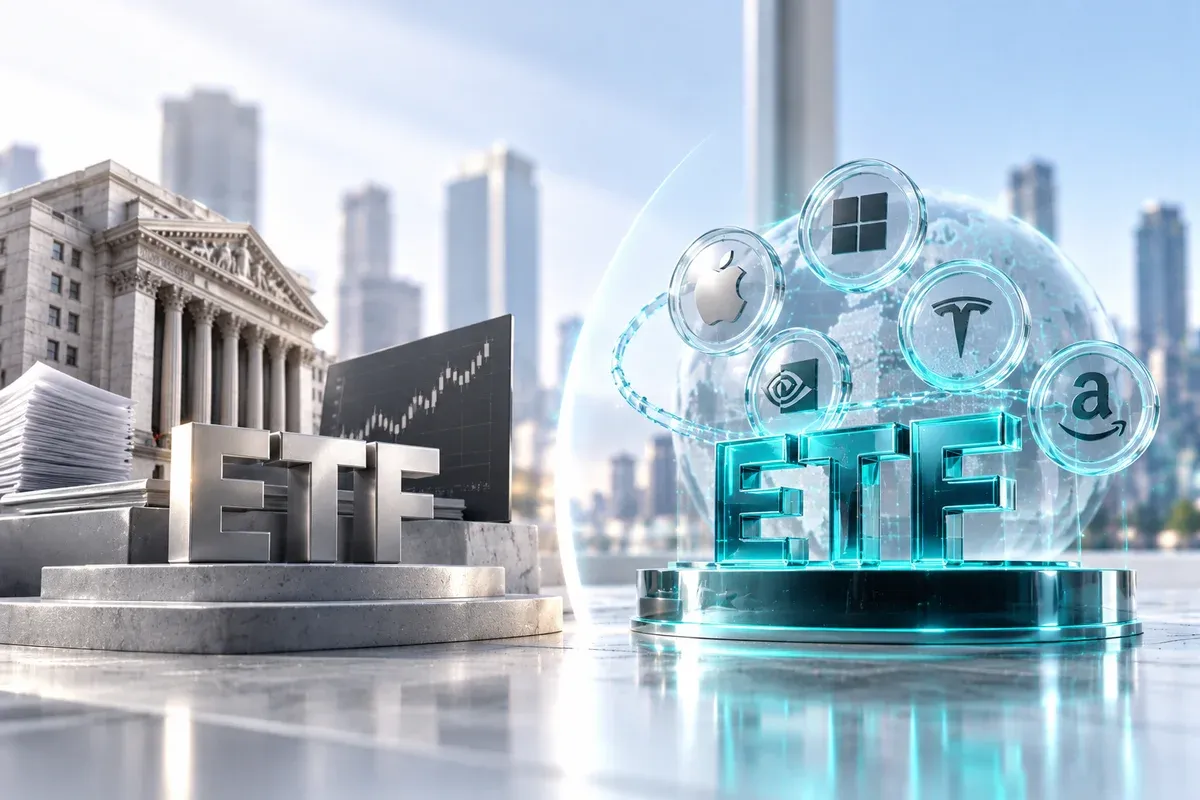
The two look similar from the outside, but they differ in ownership, rights, trading hours, and risk. This article explains both from the basics, then shows how tokenized ETFs relate to portfolio tokens such as Ondo Intelligent Portfolios.
Key Takeaways
- An ETF (exchange-traded fund) is a fund that holds a basket of assets and trades on an exchange like a stock.
- A tokenized ETF is a token designed to track the price of a real ETF and give you economic exposure, not ownership of ETF units in a brokerage account in your name.
- The main differences are in rights, trading hours, issuer, and access.
- A portfolio token such as Ondo IP is a single token that holds many ETFs and stocks at once, not a single ETF.
What Is an ETF
An ETF is a fund that holds a basket of assets, such as the stocks in an index, bonds, or commodities, and its units trade on an exchange during exchange hours. The unit price follows the value of the assets inside. Because one unit represents many assets, ETFs are used to diversify with a single purchase. A full guide is in the Mobee Academy ETF article.
For example, an ETF that tracks the Nasdaq-100 index gives exposure to dozens of large technology companies at once. For a Mobee Academy example, read about the QQQ ETF.
What Is a Tokenized ETF
A tokenized ETF is a token on a blockchain designed to track the price of a real ETF. The token issuer holds the ETF or an equivalent exposure and issues a token that represents it. Token holders get economic exposure to the ETF's price. Ondo is one issuer: in July 2026 it tokenized the iShares Core S&P 500 (IVV) and Micron stock on Ethereum, according to a report by Ajaib.
As of September 17, 2026, Mobee lists several tokenized ETFs issued by Ondo on its spot trade page, including SPY (S&P 500), QQQ (Nasdaq), SOXX (semiconductors), EWJ (Japan), and SLV (silver). Availability can change, so check the app directly.
Regular ETFs vs Tokenized ETFs
| Aspect | Regular ETF | Tokenized ETF |
|---|---|---|
| What you hold | ETF units in a brokerage account | A token that gives economic exposure to the ETF |
| Issuer | The ETF's fund manager | The token issuer (for example, Ondo) |
| Rights | Unitholder rights under the ETF's terms | Follows the token's terms, with no shareholder voting rights |
| Trading hours | Exchange hours | Depends on the product. Some tokens trade longer hours, others follow the home market's hours |
| Currency | The exchange's currency | Depends on the platform |
| Access | A brokerage account on the relevant exchange | A supporting platform account that meets the issuer's requirements |
| Added risks | ETF and market risk | Plus issuer, custodian, and smart contract risk |
Tokenized ETFs vs Portfolio Tokens
A tokenized ETF represents one ETF. A portfolio token such as Ondo IP represents a basket that holds several ETFs and stocks at once with target weights. For example, BLKGRWon holds six ETFs with their own weights, while MAG7Xon holds seven stocks and two crypto ETFs. Portfolio tokens also rebalance every quarter.
Trading hours differ by product. Orders for Mobee Bundles portfolio tokens execute during US market hours. Check the Mobee Bundles order hours in the app before you trade.
Risks of Tokenized ETFs
- Market risk. The price follows the ETF and can fall.
- Issuer and custodian risk. A token is only as sound as the parties that issue it and hold the assets behind it.
- Smart contract risk. Audits reduce, but do not eliminate, the chance of vulnerabilities.
- Price gaps. The token price can differ from the real ETF's price, especially when the home exchange is closed.
- Regulatory risk. As of October 6, 2026, OJK is still drafting specific rules for offering tokenized assets. Read about regulation, tax, and RWA risks.
- Currency risk. The underlying assets are denominated in US dollars.
- Access. The issuer's terms can restrict certain regions.
For a broader picture, read about the difference between US stock tokens and regular stocks and what RWA is.
Frequently Asked Questions
What is an ETF?
An ETF, or exchange-traded fund, is a fund that holds a basket of assets, and its units trade on an exchange like a stock.
What is a tokenized ETF?
A token on a blockchain designed to track the price of a real ETF and give economic exposure to it.
Is a tokenized ETF the same as owning an ETF?
No. The token gives economic exposure, not ETF units in a brokerage account in your name, and it does not carry shareholder voting rights.
Can you trade tokenized ETFs 24 hours a day?
It depends on the product. Some tokens trade longer hours than their home exchange, while Mobee Bundles portfolio tokens execute during US market hours. Check the terms of each product.
What is the difference between a tokenized ETF and a portfolio token?
A tokenized ETF represents one ETF. A portfolio token represents a basket of several ETFs and stocks with target weights and periodic rebalancing.
Disclaimer
This article is for information and education only and is not investment, legal, or tax advice. Crypto assets and real-world asset tokens are high-risk instruments with large volatility. Token values can rise or fall, and you may get back less than you invest. Do your own research and use only funds whose risk you can afford. Mobee is operated by PT CTXG Indonesia Berkarya, which is licensed and supervised by the Indonesian Financial Services Authority (OJK).
 Direct market access from the app
Start exploring digital assets with Mobee
Track the market, learn about digital assets, and start trading more conveniently with the Mobee App.
Mobee is licensed and supervised by the OJK. Not a solicitation to buy or sell any asset.